

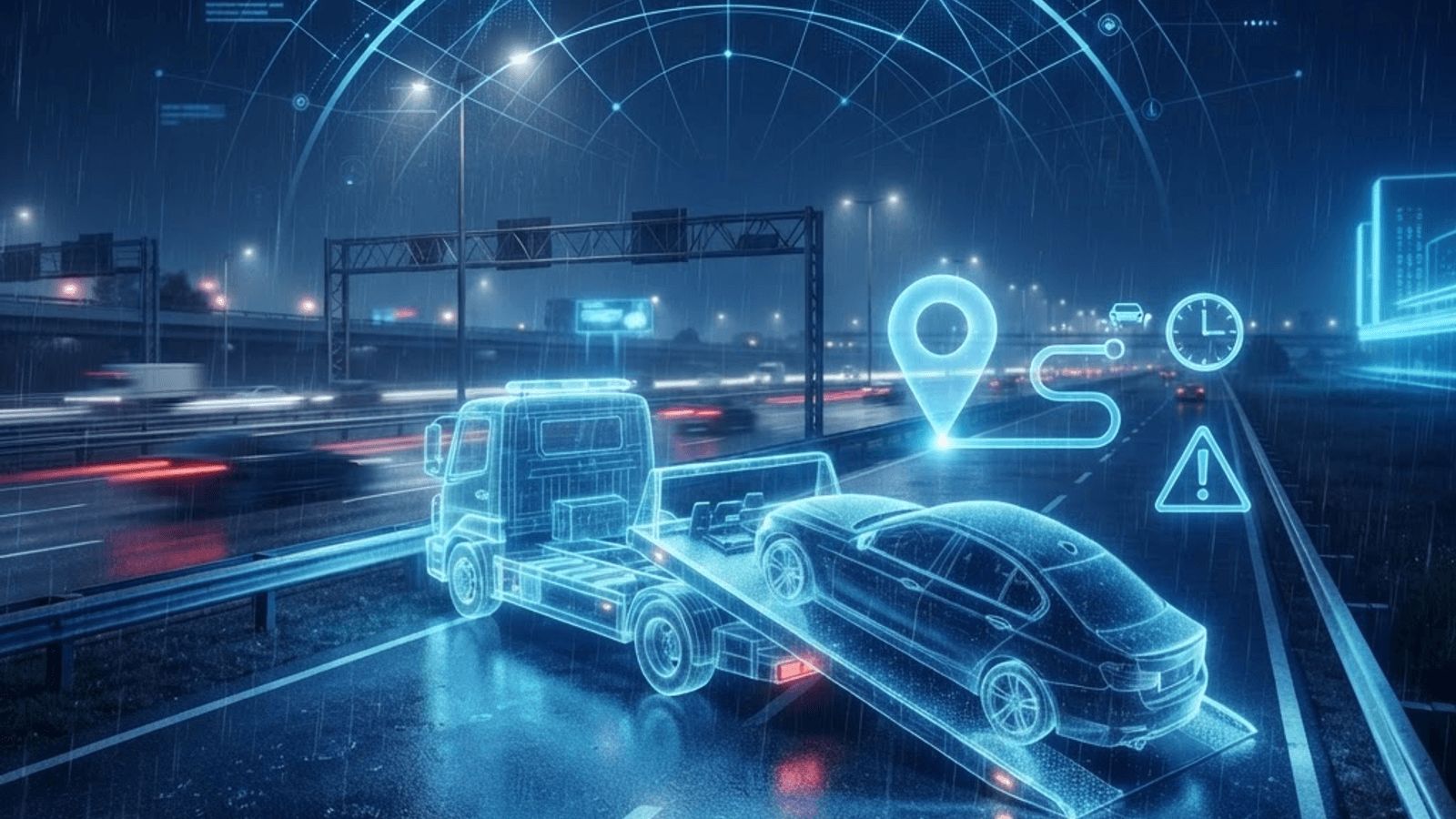
Vehicle Recovery in and Around Warwick
Warwick's road network creates a particular recovery profile. The M40 runs close to the town, carrying high-speed traffic where a breakdown is genuinely dangerous. The A46 and A425 handle heavy local volumes. And the surrounding countryside is threaded with narrow lanes where a stranded vehicle can block a route entirely and where large recovery vehicles struggle to manoeuvre.
Good local recovery operators understand this geography intimately. They know which lanes a flatbed cannot enter, where the safe refuges are on the motorway, which routes flood after heavy rain and how long it realistically takes to reach a rural location at night. That knowledge is what separates a competent operator from a dispatch number.
What to Look for in a Recovery Service
Response time is the obvious criterion, but it should be understood realistically. A guaranteed forty-minute response is meaningless if the operator has one truck covering a wide area at three in the morning. Ask about coverage hours, fleet size and how priority is determined.
Equipment type matters considerably. A flatbed or tilt-and-slide transporter is the safest option for most modern vehicles, particularly all-wheel drive, low-slung, automatic and electric cars, which can be damaged by conventional towing. Specialist recovery for vehicles off the carriageway or in ditches requires winching capability and appropriate training.
Insurance and accreditation are essential. Operators should carry goods-in-transit and public liability cover, hold appropriate operator licensing and preferably belong to a recognised recovery trade association. Ask what happens if your vehicle is damaged in transit, and get the answer before you need it.
Transparent pricing prevents a bad situation becoming worse. Establish the callout charge, mileage rate, any out-of-hours premium and storage fees at the point of booking rather than on arrival.
The Top 10 Towing Services in Warwick
1. Warwick Vehicle Recovery is the most established local operator, running a mixed fleet of flatbeds and spec-lift units with genuine twenty-four hour coverage. Its combination of local knowledge, response reliability and clear pricing has made it the default recommendation among local garages.
2. Castle Roadside Assistance emphasises repairing at the roadside where possible rather than recovering by default. Battery testing and replacement, fuel delivery, tyre changes, jump starts and lockout assistance resolve a large proportion of callouts without the vehicle needing to move, which is faster and cheaper for the customer.
3. Avon Valley Accident Recovery specialises in collision scenes, working with police and insurers to clear carriageways safely, secure damaged vehicles and transport them to approved repairers or storage. Its experience with spill containment and scene safety is what makes it suitable for this work.
4. Emscote Motorway Recovery concentrates on high-speed road incidents, where correct positioning, high-visibility protocols and rapid clearance are safety-critical. Its crews are trained specifically for motorway working, which is a genuinely different discipline from urban recovery.
5. Saltisford Heavy Recovery handles commercial vehicles, coaches, horseboxes and heavy plant, using underlift and rotator equipment capable of recovering overturned or heavily laden vehicles. This is specialist work requiring substantial equipment investment and experienced operators.
6. Heart of England Enclosed Transport serves classic, competition and high-value vehicles, using covered transporters with soft strapping and low-angle loading. Collectors and dealers use it precisely because it eliminates road debris, weather exposure and the risk of ramp damage to low vehicles.
7. Myton EV Recovery Specialists is equipped for electric and hybrid vehicles, which must generally be transported on a flatbed with all wheels off the ground to avoid damaging drive motors. Its crews are trained in high-voltage isolation procedures and thermal event awareness, which conventional operators may not be.
8. Bridge House Local Towing operates smaller vehicles suited to Warwick's narrow historic streets and tight residential parking, where a full-size transporter simply cannot access. For town-centre recoveries this manoeuvrability is decisive.
9. Warwickshire Fleet Recovery works on contract with commercial operators, offering priority response, consolidated invoicing and reporting. Businesses with vehicles on the road value the predictability and the reduced administrative burden.
10. Warwick Auction and Trade Transport moves vehicles for dealers, auctions and private buyers on planned schedules rather than emergency callouts, handling multi-vehicle loads and longer-distance movements at considerably lower cost than emergency recovery rates.
Trends in Vehicle Recovery
Electrification has changed the sector significantly. Electric vehicles are heavier, cannot be towed conventionally, and in rare thermal incidents require specialised handling and isolated storage. Operators are investing in higher-capacity flatbeds, specialist skates and high-voltage training, and this capability is becoming a standard expectation rather than a differentiator.
Technology has improved the customer experience considerably. Live tracking of the approaching recovery vehicle, digital job dispatch, photographic condition recording at collection and delivery, and telematics-triggered breakdown alerts have all reduced uncertainty and disputes.
Safety standards for roadside working have also tightened, with greater emphasis on operator training, protective equipment, vehicle conspicuity and formal risk assessment at the scene. This is a welcome development in an occupation with genuine hazards.
Being Prepared
Store a recovery number in your phone before you need it, and know whether your insurance, vehicle warranty, breakdown policy or bank account already includes recovery cover, because many people pay twice without realising. Note that policies vary in whether they cover recovery to a destination of your choice or only to the nearest garage.
If you break down, prioritise safety over the vehicle. On a motorway, get behind a barrier if you can do so safely and use hazard lights and a warning triangle only where it is safe to deploy one. Provide the operator with your precise location, vehicle details, whether it is electric or automatic, and whether the wheels turn freely, because all of these determine which vehicle they send.
Warwick's recovery sector covers roadside repair, motorway response, heavy and enclosed transport and electric vehicle handling with real competence. Choosing a properly insured, appropriately equipped operator, and knowing the pricing before they arrive, turns a genuinely stressful event into a manageable inconvenience.
Want your brand featured in front of decision-makers? Publish a guest post or get a link insertion in our guides through AAMAX's guest post and link insertion service.
Helpful Links
 SponsoredAAMAX — Full-Service Digital Agency
Write for Us
Share your expertise with our readers. We welcome guest contributions from industry specialists.
Pitch your idea

