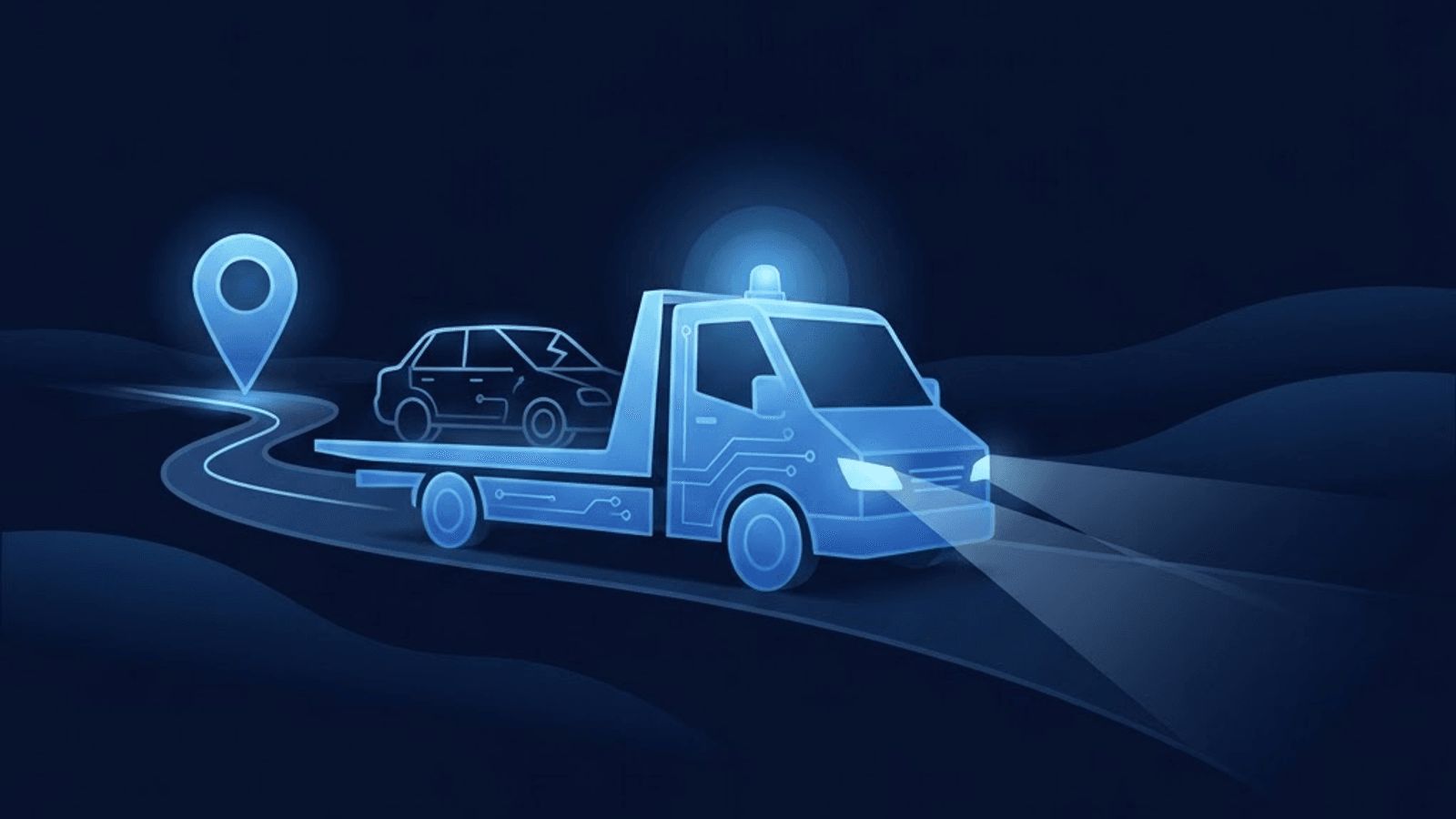
Recovery in Challenging Terrain
Vehicle recovery around Stroud presents difficulties that operators in flatter regions rarely encounter. The town's five valleys are served by single-track lanes with high banks, blind bends and gradients that challenge even fully functioning vehicles. Add a broken-down car blocking a narrow road, limited turning space and often poor mobile signal, and the job becomes a genuine technical exercise.
This environment rewards experience. A recovery operator who knows which lanes a flatbed can physically navigate, where a spectacle lift is the only viable option, and how to extract a vehicle from a soft verge without causing further damage delivers a fundamentally better service than one relying on a satnav and hope.
Understanding the Types of Recovery Service
Several distinct services fall under the towing umbrella. Roadside assistance attempts to fix the vehicle in place, resolving flat batteries, punctures, fuel issues and minor electrical faults. Vehicle recovery transports a non-functioning car to a garage or home address. Accident recovery involves removing damaged vehicles safely, often working with police and insurers. Specialist recovery covers off-road extraction, motorcycles, classic vehicles, commercial vans and increasingly electric vehicles requiring specific handling.
Ten Qualities of an Excellent Recovery Operator
1. Genuine Local Knowledge
Knowing the district intimately reduces response times dramatically. An operator familiar with the lanes around Slad, Bisley, Sheepscombe and Amberley can plan access before arriving rather than discovering an impassable route at the scene.
2. Appropriate Fleet for the Terrain
The strongest businesses run a mixed fleet including compact flatbeds capable of navigating narrow lanes, heavier recovery trucks for commercial vehicles, and vehicles equipped with winches for verge and ditch extraction. A single large transporter cannot serve this district adequately.
3. Realistic Response Times
Honest estimates matter more than optimistic ones. Reputable operators provide a genuine timescale and update the customer if circumstances change, rather than quoting an unachievable arrival to secure the job.
4. Round-the-Clock Availability
Breakdowns rarely respect business hours. Genuine twenty-four-hour operation, with a person rather than a voicemail answering at three in the morning, is a defining feature of a serious recovery business.
5. Proper Licensing and Insurance
Operators should hold appropriate operator licensing where required, comprehensive goods-in-transit insurance covering the customer's vehicle, and public liability cover. Customers are entitled to ask for evidence of this before handing over a vehicle.
6. Electric Vehicle Competence
EVs must generally be transported on a flatbed with all wheels off the ground, since towing can damage drivetrains and regenerative systems. Operators also need awareness of high-voltage safety and damaged battery protocols. This capability is now essential rather than optional.
7. Careful Vehicle Handling
Correct strapping points, awareness of low-clearance bumpers and sensitivity to classic or prestige vehicles prevent secondary damage. Skilled operators photograph vehicle condition before loading, protecting both parties.
8. Clear, Upfront Pricing
Recovery pricing varies with distance, time of day, vehicle type and complexity, but it should never be a mystery. Trustworthy operators quote before dispatch and explain any circumstances that could alter the figure.
9. Safety-First Scene Management
Proper warning beacons, cones, high-visibility equipment and, where necessary, coordination with the police protect everyone at the roadside. On fast sections of the A419 and A46, this competence is genuinely life-saving.
10. Customer Care Under Stress
People calling a recovery service are often anxious, cold and sometimes shaken after an accident. Operators who communicate calmly, arrange onward transport for passengers and treat customers with patience earn lasting loyalty.
Common Reasons for Breakdown in the Area
Battery failure remains the leading cause nationally and locally, particularly in winter and among vehicles used mainly for short journeys. Tyre damage is disproportionately common here, with potholes and sharp verge stones taking a steady toll on sidewalls.
Clutch and gearbox problems occur more frequently than average because of repeated hill starts on steep gradients. Overheating affects older vehicles climbing long ascents in summer. Misfuelling, running out of fuel and locking keys inside vehicles round out the most frequent call-outs.
Winter introduces additional hazards. Ice on untreated valley lanes causes vehicles to slide into banks and ditches, requiring winch extraction rather than simple towing. Snow occasionally isolates hillside villages entirely, and operators with four-wheel-drive capability become invaluable.
Trends in Vehicle Recovery
Technology has improved the customer experience substantially. GPS dispatch, live arrival tracking and digital job documentation have become common even among smaller independents. Many now accept card payment at the roadside rather than requiring cash.
The composition of call-outs is also shifting. As electric vehicles proliferate, recovery for depleted batteries and charging failures has become a recognised category, while traditional mechanical failures decline proportionally. Some operators now carry mobile charging capability able to add sufficient range to reach a charge point.
How to Prepare and What to Do
Keep your breakdown cover details accessible, ideally saved in your phone and in the glovebox. Note that many insurance policies and bank accounts include recovery cover that owners forget they hold.
If you break down, prioritise safety. On a fast road, exit via the passenger side where possible and wait beyond the barrier. On a narrow lane, position warning triangles far enough back to give approaching drivers time to react on blind bends.
When calling, provide your precise location using a what3words reference or a nearby landmark, describe the fault clearly, state your vehicle type and confirm whether it is electric. This information allows the operator to dispatch the right equipment first time.
Final Thoughts
Towing and recovery in Stroud demands more than a truck and a tow rope. The best operators combine intimate local knowledge, appropriate equipment for narrow valley lanes, proper insurance and licensing, electric vehicle competence and genuine care for customers at a stressful moment. Identifying a reliable local provider before you need one is a small piece of preparation that pays for itself the first time something goes wrong.
Want your brand featured in front of decision-makers? Publish a guest post or get a link insertion in our guides through AAMAX's guest post and link insertion service.
Helpful Links
 SponsoredAAMAX — Full-Service Digital Agency
Write for Us
Share your expertise with our readers. We welcome guest contributions from industry specialists.
Pitch your idea