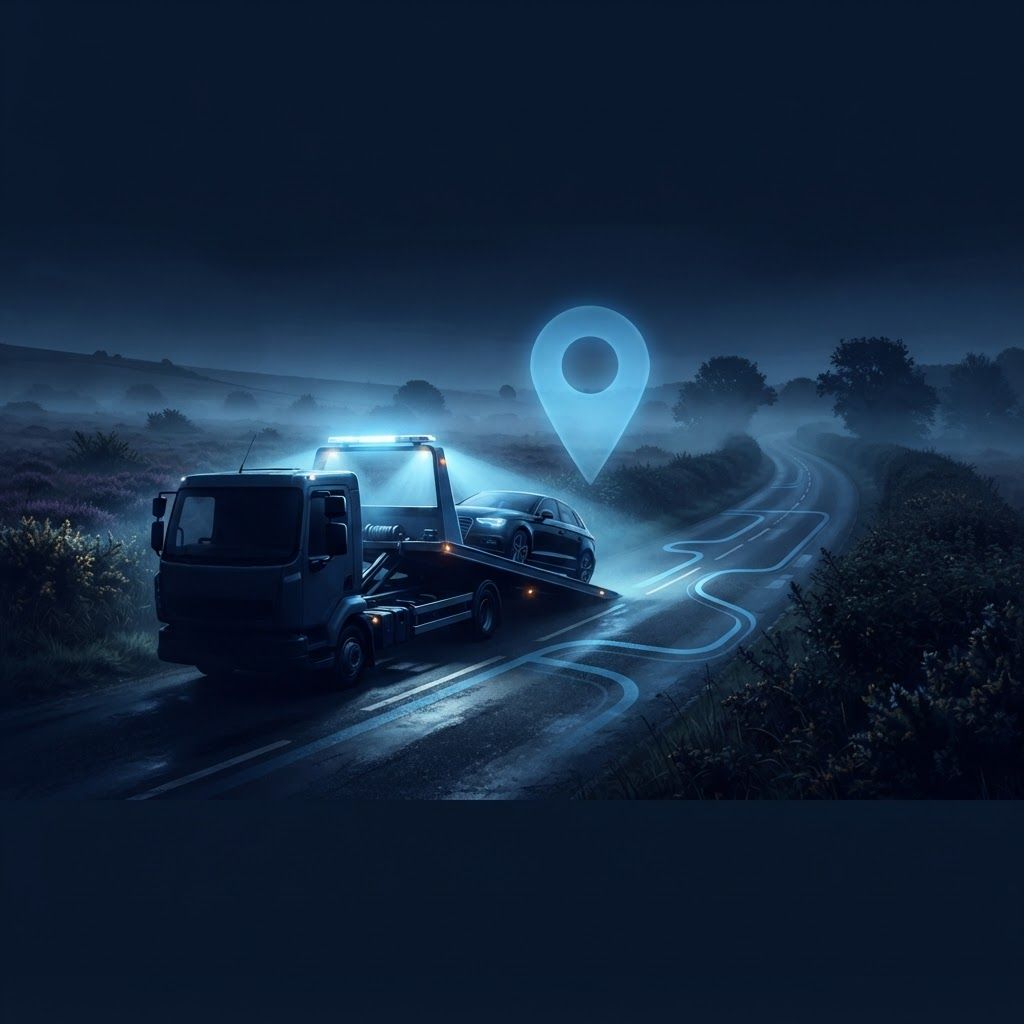
Recovery in a Rural District
Breakdown recovery in Breckland is a different proposition from recovery in a city. Distances between towns are longer, many incidents occur on unlit rural roads with narrow verges, mobile signal can be inconsistent in outlying areas, and agricultural traffic complicates access. A recovery operator working here needs local route knowledge, appropriate equipment for soft verges and field entrances, and the ability to reach remote locations without excessive delay.
The district's road network shapes demand. The A11 corridor carries substantial through traffic between Norwich and Cambridge, generating motorway-style incidents involving cars, vans and heavy goods vehicles. The A47 and A1075 link market towns with heavier local movement. Beyond these, a dense network of minor roads and farm tracks produces recoveries that require winching, off-road capability and careful handling.
Types of Towing and Recovery Service
Understanding the categories helps in choosing correctly. Roadside assistance attempts a repair at the scene, resolving common issues such as flat batteries, wheel changes, fuel problems and minor electrical faults. Flatbed recovery transports a vehicle on a tilt-bed truck, which is the safest option for four-wheel-drive vehicles, low-slung cars, electric vehicles and any vehicle with drivetrain damage. Spec-lift or wheel-lift towing suspends one axle and is quicker for short moves. Heavy recovery uses larger units with cranes and rotators for lorries, buses and agricultural machinery. Specialist transport covers classic, prestige and non-running vehicles requiring enclosed or covered carriage.
Top 10 Best Towing Services in Breckland
1. Breckland Recovery Services — A well-equipped operator running flatbed and wheel-lift units with twenty-four hour availability across the district. Known for realistic arrival estimates and for handling both roadside assistance and full recovery from a single call.
2. Thetford Vehicle Recovery — Positioned close to the A11 corridor, making it one of the faster responders to incidents on the district's busiest route. Handles cars, vans and light commercials, with secure storage available for accident-damaged vehicles.
3. Dereham Breakdown Assistance — Focused on roadside repair before recovery, which frequently gets drivers moving without a tow. Strong on battery, jump start, tyre change and lockout situations, with mobile diagnostic capability.
4. Attleborough Accident Recovery — Specialises in collision recovery, including scene clearance, debris management and coordination with insurers and repairers. Reputation built on calm, methodical handling of stressful situations.
5. Swaffham Heavy Haulage Recovery — Operates heavier units suitable for lorries, trailers, plant equipment and agricultural machinery. Essential for the district's farming and construction sectors, particularly during harvest when large vehicles are on rural roads constantly.
6. Watton Roadside Rescue — A community-focused operator serving Watton and surrounding villages, valued for rapid local response and reasonable pricing on short-distance recoveries. Frequently used for domestic breakdowns and non-starters at home.
7. Norfolk 24 Hour Towing — Provides genuine round-the-clock coverage, including overnight and public holiday response. Particularly useful for drivers stranded outside standard working hours, when many smaller operators are unavailable.
8. Brecks Off-Road and 4x4 Recovery — Equipped with winching gear and off-road capable vehicles for recoveries from fields, tracks, ditches and soft verges. A common requirement in Breckland after heavy rain or during agricultural work.
9. Market Town Classic Car Transport — Offers covered and enclosed transport for classic, prestige and project vehicles, including non-runners. Emphasis on soft strapping, careful loading and protection from road grime during transit.
10. Breckland EV Recovery Specialists — Focused on electric and hybrid vehicles, using flatbed transport exclusively and following manufacturer guidance on high-voltage safety, disabling procedures and damaged battery handling. An increasingly important capability as electrified vehicle numbers grow.
What to Do When You Break Down
Safety comes before anything else. On a fast rural road, move the vehicle as far left as possible, switch on hazard lights, and if it is safe to do so, exit through the passenger side and wait well away from the carriageway behind a barrier or hedge. Wear a high-visibility item if available, since visibility on unlit Norfolk roads is poor at night. Note a landmark, junction name or nearby property to help the recovery operator locate you accurately, as rural postcodes cover wide areas.
When calling, provide the vehicle make, model, fuel type, whether it is drivable, whether wheels turn freely and whether the vehicle is loaded or towing. This determines the equipment sent and avoids a wasted first visit.
Understanding Costs
Recovery pricing typically reflects distance, time of day, vehicle weight and complexity. Overnight, weekend and holiday callouts cost more, as do winching, off-road extraction and heavy vehicle work. Membership-based breakdown cover spreads this cost and usually includes onward travel or vehicle transport home, which is worthwhile for drivers covering high rural mileage. Independent operators often charge less for a straightforward local tow, so both routes have their place.
Choosing a Reliable Operator
Check that the operator holds appropriate insurance, including cover for the vehicle while under their care, and that recovery staff are trained and licensed for the equipment they use. Ask for a price estimate before dispatch, and confirm whether storage charges apply if the vehicle is taken to their yard. For accident recovery, clarify who authorises onward movement, since insurers frequently direct vehicles to approved repairers.
Prevention Reduces Callouts
Many rural recoveries are avoidable. Batteries fail disproportionately after short winter journeys, so testing before cold weather is worthwhile. Tyres suffer from potholes and verge damage, making regular pressure and tread checks valuable. Fuel planning matters in a district where filling stations are sparse in the evenings. Keeping a torch, warm layers, water and a charged phone in the vehicle turns a long wait on an isolated road into an inconvenience rather than a genuine risk.
Final Thoughts
Breckland's recovery network is well matched to its geography, combining rapid roadside assistance, heavy haulage capability, off-road extraction and specialist transport. The best outcome comes from knowing in advance which operator suits your vehicle type, keeping a number saved, and giving clear location and vehicle information when the call is made.
Want your brand featured in front of decision-makers? Publish a guest post or get a link insertion in our guides through AAMAX's guest post and link insertion service.
Helpful Links
 SponsoredAAMAX — Full-Service Digital Agency
Write for Us
Share your expertise with our readers. We welcome guest contributions from industry specialists.
Pitch your idea