Textiles in South West Wales: A Living Tradition
Wool was once the backbone of the Welsh rural economy, with mills lining the rivers of Carmarthenshire, Ceredigion and the Swansea valleys. Water power, abundant fleece and skilled hand-weaving created a product recognised internationally: the double-cloth Welsh blanket, with its geometric tapestry patterns, remains a design icon and a collector's item. Industrialisation, imports and changing consumer habits reduced the number of working mills dramatically during the twentieth century, but the tradition never disappeared.
Around Swansea today the textile sector has two faces. One is heritage and craft manufacture — woollen mills, hand weavers and small-batch producers supplying interiors, fashion accessories and gift markets, often with strong export appeal. The other is technical and industrial textiles: workwear and uniform manufacture, upholstery and contract furnishing fabrics, geotextiles, filtration media, marine and outdoor covers, composite reinforcement fabrics and medical textiles. The second category is where most of the region's genuine manufacturing employment sits, and it benefits from the same engineering and materials expertise that supports Swansea's wider industrial base.
What Modern Textile Manufacturing Involves
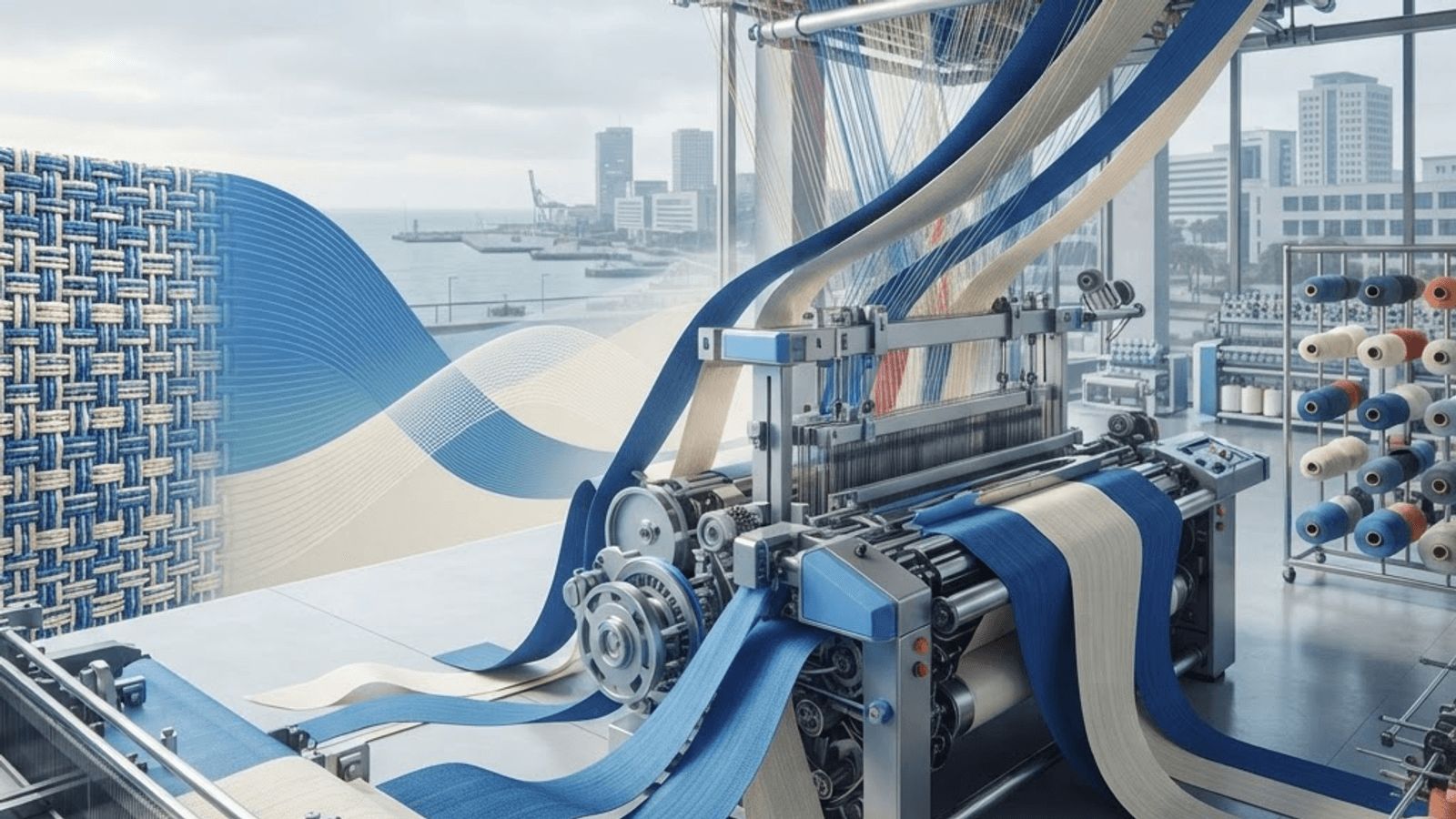
Contemporary production is far more technical than the word textile suggests. Processes include spinning and yarn preparation, weaving and knitting, non-woven manufacture, dyeing and finishing, coating and laminating, cut-and-sew assembly, embroidery and heat-transfer decoration, and increasingly digital printing that allows short runs without minimum-order penalties. Quality systems matter: contract furnishing fabrics must meet fire performance standards, workwear may require high-visibility or flame-resistant certification, and medical textiles face regulatory scrutiny. Traceability of fibre origin has become a commercial requirement rather than a marketing bonus.
The Top 10 Textile Manufacturers and Suppliers Serving Swansea
1. Melin Tregwynt — Perhaps the best-known Welsh woollen mill, based in West Wales and widely stocked in Swansea. It produces distinctive double-weave blankets, cushions and accessories using traditional Welsh patterns reinterpreted in contemporary colourways, and exports internationally with a strong design-led reputation.
2. Curlew Weavers — A long-established West Wales mill producing woollen and blended cloth, blankets and throws, valued for consistent quality and for maintaining traditional weaving capability at commercially viable scale.
3. Cambrian Mountains Wool Producers — Representative of the Welsh wool supply chain that feeds regional manufacture, connecting hill farms with graders and spinners and increasingly promoting traceable, native-breed British wool for interiors and insulation.
4. Trefriw Woollen Mills Style Heritage Producers — Wales retains several working heritage mills whose products reach Swansea retailers and visitor markets. Their significance is cultural and commercial: they preserve pattern archives, spinning skills and dyeing knowledge that would otherwise be lost.
5. Alexandra and Regional Workwear Manufacturers — Workwear and uniform supply is one of the largest textile categories in South Wales, serving healthcare, hospitality, food production, construction and local authority customers with garment manufacture, bespoke branding and managed laundry services.
6. Panaz and Contract Furnishing Fabric Suppliers — Contract textiles for hotels, care homes and healthcare settings around Swansea Bay require antimicrobial finishes, heavy-duty abrasion performance and fire compliance. Specialist contract fabric manufacturers dominate this technical niche.
7. Gower Coast Marine Textiles — Illustrative of the marine and outdoor textile fabricators serving Swansea Marina, sailing clubs and coastal leisure operators with covers, canopies, sail repair and heavy-duty PVC and acrylic fabrication — a specialised trade requiring industrial machinery and pattern skill.
8. Technical Fibre and Composite Reinforcement Suppliers — Swansea's engineering and marine sectors consume glass, carbon and aramid reinforcement fabrics. Suppliers serving these customers link textile manufacture to composites, one of the fastest-growing applications of woven materials.
9. Swansea Bay Embroidery and Garment Decoration Businesses — A cluster of local firms provides embroidery, screen printing and direct-to-garment decoration for schools, sports clubs, tradespeople and small businesses. Small in scale individually, collectively they represent significant local textile activity and short-run flexibility.
10. Swansea University Materials and Textile Research Links — Academic research in coatings, functional surfaces and sustainable materials increasingly overlaps with textiles, supporting product development in areas such as antimicrobial finishes, recycled fibre processing and technical performance testing.
Trends Shaping the Sector
Sustainability now drives specification. Buyers ask about recycled content, mono-material construction for recyclability, water and chemical use in dyeing, and end-of-life takeback. British wool has gained renewed interest as a natural, biodegradable and flame-resistant fibre, which favours Welsh producers. Second, reshoring and shorter supply chains have improved the competitive position of UK manufacturers, particularly for time-sensitive contract work where long lead times from overseas suppliers carry real cost. Third, digital printing and automated cutting have made small-batch production viable, allowing local manufacturers to serve niche markets profitably rather than competing on volume.
Working With a Textile Manufacturer
Buyers should define performance requirements before discussing price: abrasion resistance, colour fastness, fire performance, shrinkage and weight per square metre determine suitability far more than appearance. Request physical samples and, for contract work, test certificates. Clarify minimum order quantities, lead times and tolerance for colour variation between production runs. For bespoke garment or product development, expect and budget for prototyping. And discuss fibre provenance explicitly if traceability matters to your brand, because verified British wool commands a premium for good reason.
Want your brand featured in front of decision-makers? Publish a guest post or get a link insertion in our guides through AAMAX's guest post and link insertion service.
Helpful Links
 SponsoredAAMAX — Full-Service Digital Agency
Write for Us
Share your expertise with our readers. We welcome guest contributions from industry specialists.
Pitch your idea