

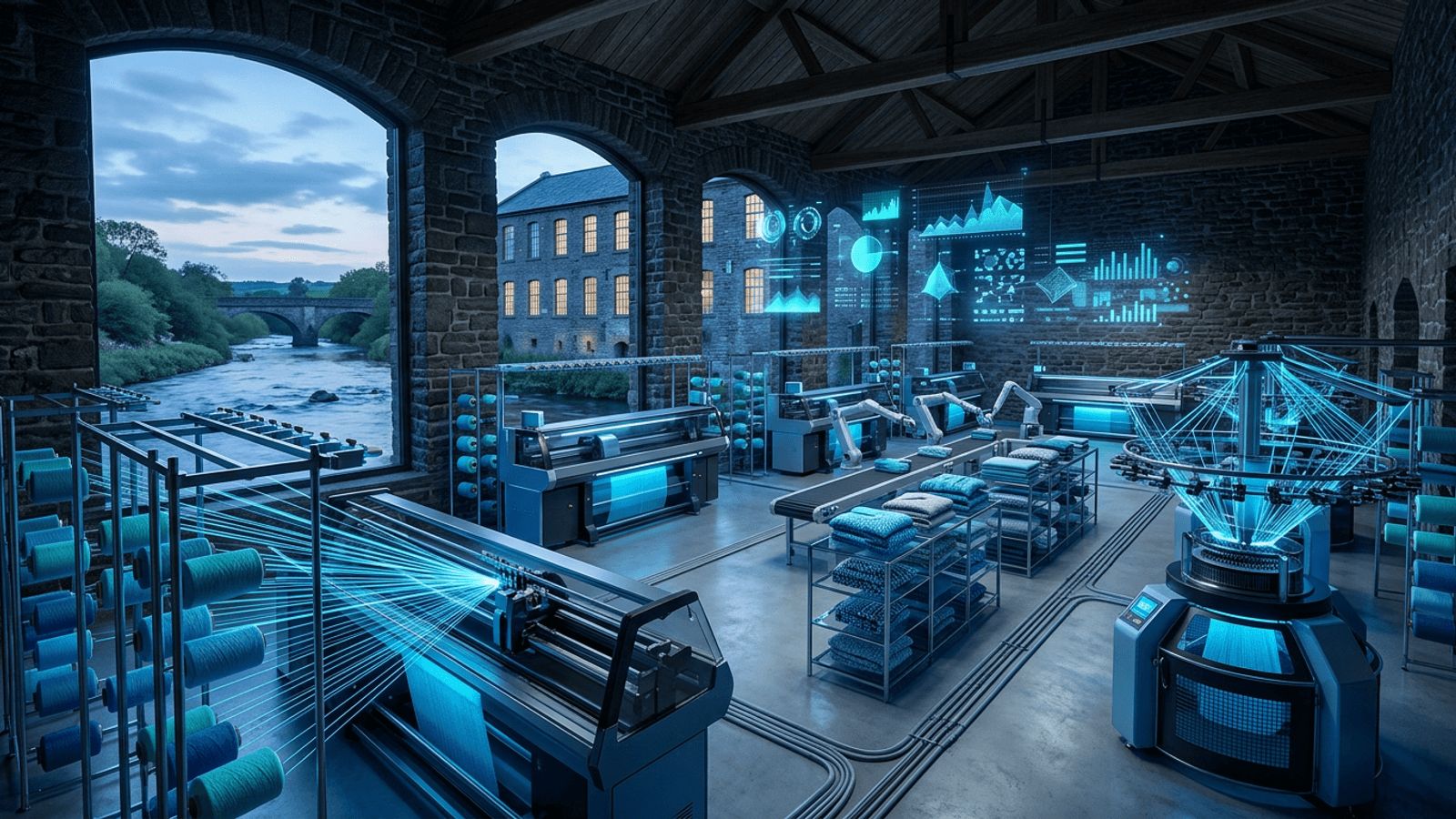
The Cradle of the Industrial Revolution
Few places in the world can claim a textile heritage as significant as the Derbyshire Dales. In 1771, Richard Arkwright built his water-powered cotton spinning mill at Cromford, creating a model of factory production that spread around the world. The Derwent Valley Mills, stretching from Matlock Bath through Cromford and Belper to Derby, are now a UNESCO World Heritage Site, and Masson Mills and Cromford Mill remain powerful reminders of this industrial story.
Today, textile manufacturing in and around the Dales is smaller in scale but rich in quality and craftsmanship. Luxury knitwear, hosiery, lace, technical textiles and woollen cloth produced in Derbyshire and the wider region continue to win admirers at home and abroad. British-made textiles are increasingly valued for their provenance, durability and lower environmental footprint compared with fast fashion.
How We Selected These Manufacturers
We focused on companies with strong reputations for quality, heritage and innovation, a manufacturing presence in Derbyshire or the surrounding region, sustainability practices and relevance to buyers and businesses in the Dales.
The Top 10 Textile Manufacturers Serving Derbyshire Dales
1. John Smedley
John Smedley has manufactured fine knitwear at Lea Mills near Matlock since 1784, making it one of the oldest manufacturing companies in the world still operating from its original site. Its sea island cotton and merino wool garments are prized globally for their softness, precision and longevity, and the brand remains a proud symbol of Derbyshire craftsmanship.
2. Charnos
Charnos has deep roots in Derbyshire's hosiery and lingerie industry, with origins in Ilkeston. The brand is known for quality hosiery and intimate apparel and reflects the county's long tradition in knitted textiles.
3. Cluny Lace
Cluny Lace in Ilkeston is one of the last remaining manufacturers of traditional Leavers lace in the UK. Using historic machinery, it produces exquisite lace for fashion, bridal and interior design, preserving a craft that once defined the East Midlands.
4. Pretty Polly
Pretty Polly is an iconic British hosiery brand with a manufacturing history in the East Midlands. Its tights and stockings remain popular for their comfort and quality.
5. Wolsey
Wolsey, founded in Leicester in the eighteenth century, is one of the world's oldest clothing brands. Its knitwear, underwear and outerwear reflect a long heritage in Midlands textile manufacturing.
6. Pantherella
Pantherella is a luxury sock manufacturer with a proud Leicestershire heritage. Its fine socks in merino, cashmere and cotton are favoured by discerning customers worldwide.
7. AW Hainsworth
AW Hainsworth, based in Yorkshire, is a historic woollen mill producing cloth for ceremonial uniforms, fashion, interiors and technical applications such as fire-resistant fabrics.
8. Abraham Moon and Sons
Abraham Moon is one of the last remaining vertical woollen mills in the UK, controlling every stage from raw wool to finished fabric. Its tweeds and throws are popular with country retailers across the Peak District.
9. English Fine Cottons
English Fine Cottons revived commercial cotton spinning in England, producing premium yarns for British clothing brands. It represents a modern continuation of the cotton heritage that began at Cromford.
10. Morton Young and Borland
Morton Young and Borland is a historic lace and textile manufacturer whose Madras weaving and lace machines produce distinctive curtains and fabrics for heritage and contemporary interiors.
Trends in British Textile Manufacturing
Sustainability is reshaping the textile industry. Consumers increasingly seek garments made from natural, traceable fibres and produced under fair working conditions. British manufacturers are responding with transparent supply chains, repair services, recycled fibres and reduced water and chemical use. Brands such as John Smedley highlight the longevity of well-made garments as an antidote to throwaway fashion.
Reshoring is another trend. Some fashion brands are moving production back to the UK to reduce lead times, improve quality control and appeal to customers who value British-made products. Technical textiles, including protective and performance fabrics, are also a growth area, supported by advances in fibre science and digital knitting technology.
Heritage tourism plays a role in the Dales, too. Visitors to Cromford Mill, Masson Mills and the Derwent Valley learn about the region's textile story, creating opportunities for local brands to connect with customers through factory shops, exhibitions and craft workshops.
Supporting Local Textile Skills
One challenge facing the sector is the loss of specialist skills. Apprenticeships, partnerships with colleges and initiatives by industry bodies aim to train new generations of knitters, weavers and technicians. Manufacturers with strong training programmes help secure the future of textile craftsmanship in Derbyshire.
Frequently Asked Questions
Can I visit textile heritage sites in the Derbyshire Dales?
Yes. Cromford Mill, Masson Mills and other sites along the Derwent Valley Mills World Heritage Site welcome visitors and tell the story of the factory system.
Why are British-made textiles more expensive?
Higher wages, quality materials and smaller production runs increase costs, but garments are typically more durable, offering better value over their lifetime.
Conclusion
From Arkwright's pioneering mill at Cromford to John Smedley's world-renowned knitwear at Lea Mills, the Derbyshire Dales has shaped the global textile industry. The ten manufacturers above carry that legacy forward, blending heritage craftsmanship with modern innovation and sustainability.
Want your brand featured in front of decision-makers? Publish a guest post or get a link insertion in our guides through AAMAX's guest post and link insertion service.
Helpful Links
 SponsoredAAMAX — Full-Service Digital Agency
Write for Us
Share your expertise with our readers. We welcome guest contributions from industry specialists.
Pitch your idea

