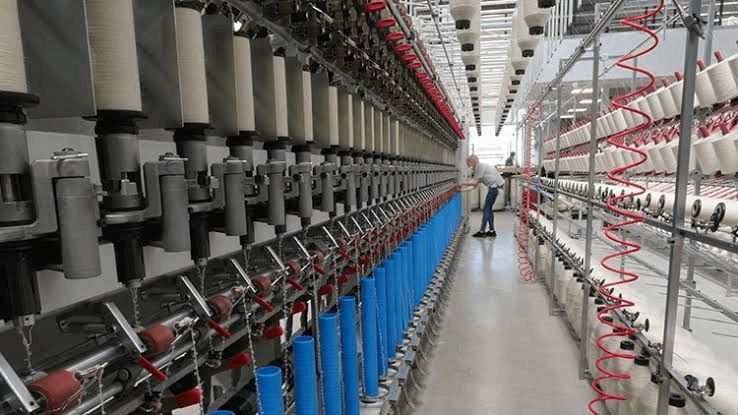
Textiles in the Yorkshire Tradition
Yorkshire's textile heritage is world famous, and while the great mills of the West Riding dominate the popular imagination, Barnsley has its own substantial place in that story. The borough was historically renowned for linen weaving, with Barnsley linen achieving international recognition for quality, and it later developed a strong wire, thread and industrial fabric capability alongside its mining and glass industries. That inheritance has left the borough with a workforce culture that understands material processing, machinery operation and the exacting quality standards that textile production demands.
The modern reality is that volume commodity textile production largely left the United Kingdom decades ago. What survived, and in places genuinely thrived, is specialist manufacturing where technical performance, short lead times, small batch flexibility, design collaboration and provenance matter more than the lowest possible unit cost. Barnsley's textile companies operate almost entirely in that space, serving industrial, medical, automotive, contract interiors and premium apparel markets where getting it right matters more than getting it cheap.
What Distinguishes a Strong Textile Manufacturer
Assessing a textile manufacturer requires looking well beyond price per metre. Technical capability is fundamental: the range of fibres and yarns handled, the finishing processes available in-house, and the testing regime applied to output. Certification matters enormously in this sector, with standards covering chemical safety, environmental management, quality systems and, for technical fabrics, performance criteria such as flame retardancy or antimicrobial efficacy. Minimum order quantities and lead times determine whether a manufacturer suits your business model, and sampling capability determines how quickly you can develop and iterate a product.
Increasingly, sustainability credentials are also decisive. Buyers now routinely ask about water and energy consumption, chemical management, recycled content, traceability of raw materials and end-of-life recyclability. The best manufacturers can answer those questions with data rather than generalities.
1. Barnsley Technical Textiles
Barnsley Technical Textiles operates at the performance end of the market, producing engineered fabrics for filtration, geotextile, protective clothing and industrial belting applications. Its capability covers coated and laminated fabrics, specialist finishing for flame retardancy and chemical resistance, and narrow width tapes and webbings. The company invests seriously in testing, with in-house facilities for tensile strength, abrasion resistance, permeability and flammability assessment, which allows it to certify performance rather than simply claim it. Its engineering-led approach makes it a natural partner for product development work.
2. Pennine Weaving Company
Pennine Weaving Company specialises in woven fabrics for contract interiors, upholstery and transport applications. Working with wool, wool blends and high-performance synthetics, it produces materials engineered for the severe wear and flammability requirements of hospitality, healthcare, office and public transport environments. The company's design studio collaborates closely with specifiers on bespoke constructions, colourways and patterns, and its ability to run relatively short production lengths makes it accessible to designers who cannot commit to container-scale volumes.
3. Dearne Valley Knitwear
Dearne Valley Knitwear focuses on circular and flat-bed knitted fabrics and garments, serving apparel brands, sportswear labels and workwear suppliers. Its equipment supports jersey, interlock, rib, fleece and technical performance constructions, and it handles the full route from yarn selection through knitting, dyeing coordination, cutting and make-up. The company's willingness to work with emerging brands on small initial runs, combined with genuine pattern and sampling support, has made it an important resource for UK-based apparel start-ups seeking domestic production.
4. Silkstone Industrial Fabrics
Silkstone Industrial Fabrics produces nonwoven and needle-punched materials for insulation, automotive interiors, geotextiles and filtration media. Nonwoven manufacturing is a quietly enormous part of the modern textile industry, and this company's capability spans fibre blending, web formation, needle punching, thermal bonding and calendering. It works extensively with recycled fibre content, including reclaimed post-industrial textile waste, which supports both cost efficiency and circular economy objectives for its customers.
5. Yorkshire Linen Works
Yorkshire Linen Works consciously reconnects with Barnsley's historic linen reputation, producing linen and linen-blend fabrics for homeware, table linen, interiors and premium apparel. Working with flax fibre requires particular expertise in preparation, weaving tension and finishing, and the company has retained and developed that knowledge. It supplies interior designers, hospitality groups and heritage-focused retail brands who value the provenance story alongside the material's genuine performance qualities of strength, breathability and longevity.
6. Hoyland Garment Manufacturing
Hoyland Garment Manufacturing is a cut, make and trim operation serving workwear, uniform, corporate clothing and small-batch fashion clients. Its capability includes pattern cutting and grading, sample development, industrial sewing across a range of machine types, embroidery and heat-applied branding, and finished goods packing. Domestic garment manufacturing has become strategically valuable as brands seek shorter, more resilient supply chains, and this company's flexibility on batch size and rapid turnaround directly answers that demand.
7. Penistone Yarn and Thread
Penistone Yarn and Thread supplies the upstream side of the industry, producing and distributing industrial sewing threads, technical yarns and specialist twines. Its range covers high-tenacity polyester and nylon threads, flame-retardant and para-aramid yarns for protective applications, and bonded threads for heavy-duty stitching. Thread selection has an outsized effect on the durability of any sewn product, and the company's technical advisory service helps manufacturers match thread specification to end-use requirements accurately.
8. Cudworth Dyeing and Finishing
Cudworth Dyeing and Finishing provides commission dyeing, printing and finishing services to manufacturers across the region. Its processes include piece dyeing, digital printing, calendering, brushing, water-repellent and antimicrobial treatments, and heat setting. The company has invested significantly in water recycling, heat recovery and low-impact chemistry, which addresses what has historically been the most environmentally intensive stage of textile production. For brands under pressure to demonstrate responsible manufacturing, that investment is a meaningful advantage.
9. Wombwell Medical Textiles
Wombwell Medical Textiles serves the healthcare sector, producing fabrics and components for wound care, surgical drapes, compression garments, hospital bedding and patient handling equipment. Medical textile manufacturing demands exceptional process control, full traceability, cleanroom handling for certain products and rigorous documentation to satisfy regulatory requirements. The company's quality management systems reflect that environment, and its expertise in antimicrobial finishes and skin-contact safety makes it a trusted supplier to healthcare product manufacturers.
10. Circular Fibre Barnsley
Circular Fibre Barnsley operates in textile recycling and recovered fibre production, sorting and processing post-industrial and post-consumer textile waste into fibre suitable for reuse in nonwovens, insulation, wipers and industrial felts. Textile waste is one of the more difficult streams to handle because of mixed fibre content, and the company's sorting and mechanical recycling capability keeps significant volumes out of landfill. It works with manufacturers on closed-loop arrangements where production waste returns as input material, which is precisely the model the industry needs to develop at scale.
Industry Trends Shaping Barnsley Textiles
Several forces are reshaping the sector locally. Supply chain resilience has become a board-level concern following pandemic and geopolitical disruption, and brands are actively reshoring at least a portion of production to shorten lead times and reduce risk. Sustainability regulation and buyer expectations are driving investment in water reduction, chemical management and recycled content. Technical textiles continue to be the strongest growth area, since performance requirements in medical, protective, filtration and transport applications cannot easily be met by low-cost commodity production. Digital printing is enabling shorter runs and customisation that traditional screen printing could never justify economically.
Working Effectively with a Manufacturer
Approach a textile manufacturer with as much clarity as you can provide. Define the performance requirements of your end product, including washing regime, abrasion exposure, flammability standards and any regulatory obligations. Be realistic about volumes and honest about growth expectations, since manufacturers plan capacity around forecasts. Budget properly for sampling and expect to iterate, as first samples rarely land perfectly. Discuss certification requirements at the outset rather than discovering a compliance gap after production. Finally, visit the facility if you can, because seeing the machinery, the housekeeping and the quality control process in person tells you a great deal that no specification sheet conveys.
Final Thoughts
Barnsley's textile industry is smaller than in its linen-weaving heyday, but it is considerably more sophisticated. The companies profiled here compete on technical performance, responsiveness, design collaboration and environmental credentials rather than on price alone, and they serve markets where those attributes genuinely command a premium. For brands and product developers seeking capable, well-certified UK manufacturing with real material expertise behind it, the borough remains a serious place to look.
Want your brand featured in front of decision-makers? Publish a guest post or get a link insertion in our guides through AAMAX's guest post and link insertion service.
Helpful Links
 SponsoredAAMAX — Full-Service Digital Agency
Write for Us
Share your expertise with our readers. We welcome guest contributions from industry specialists.
Pitch your idea