

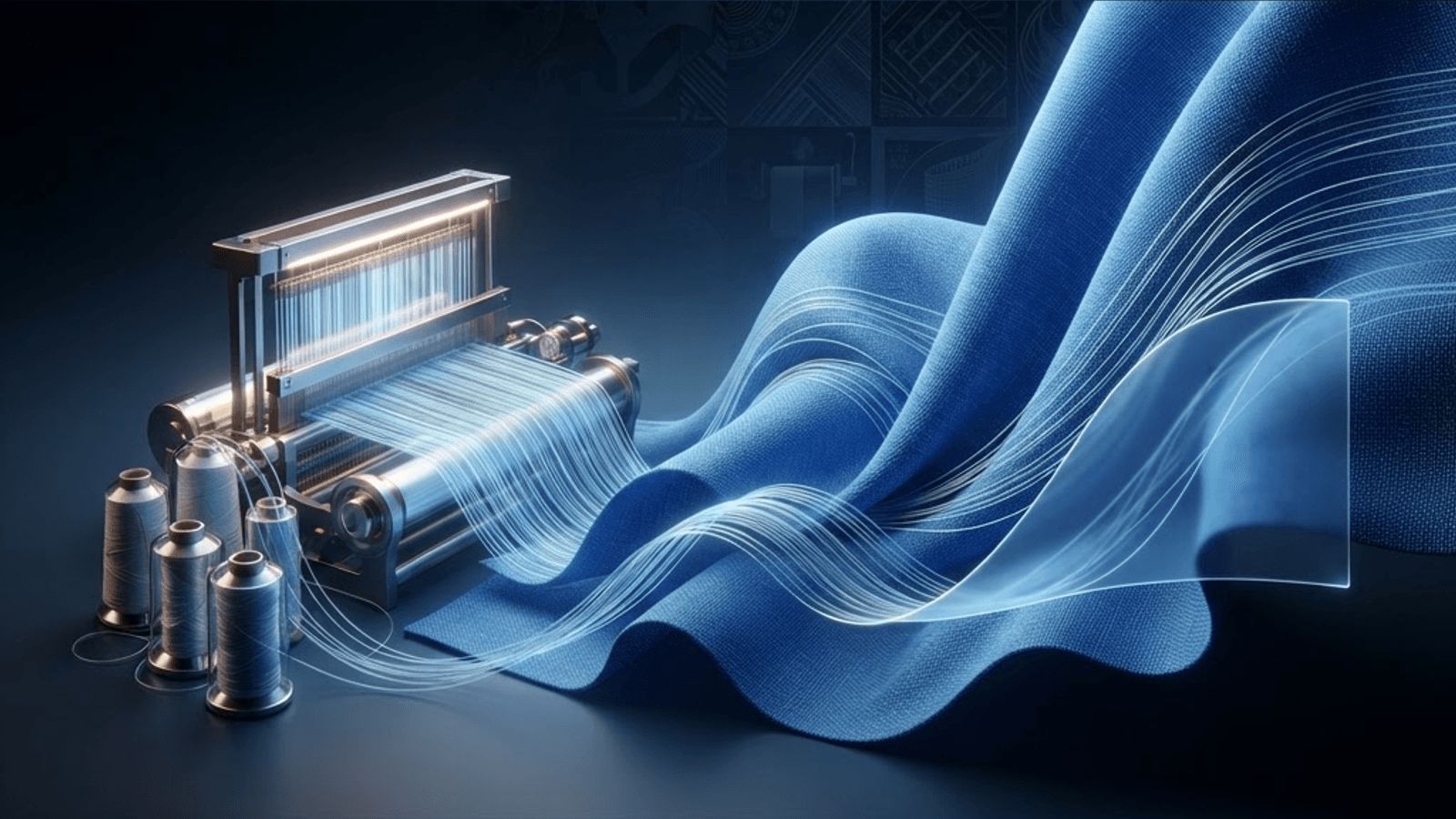
From Linen Heartland to Technical Textiles
No industry shaped County Antrim more profoundly than linen. The Lagan and Six Mile Water valleys were lined with beetling mills, bleach greens and spinning works, and towns across the county grew around them. Antrim itself had significant mill activity, and generations of families in the borough earned their living from flax, spinning, weaving and finishing. At its height, Ulster linen was a globally recognised product with a reputation for quality that has outlived the industry that created it.
The mass production era ended, as it did across western Europe, when lower cost manufacturing regions and synthetic fibres transformed the economics. What survived and what has since grown back is different in character. Today's textile manufacturing in and around Antrim and Newtownabbey is smaller in headcount but higher in value, concentrated in technical textiles, contract furnishing, workwear, embroidery and specialist heritage production.
What the Sector Looks Like Now
Modern textile operations in the borough fall into several groups. Technical and performance textiles serve construction, transport, medical and safety markets, where the fabric must meet defined standards for flame retardancy, tensile strength or filtration. Contract furnishing textiles supply hospitality, healthcare and commercial interiors. Workwear and uniform manufacturers combine garment production with branding, embroidery and print. Heritage weavers maintain traditional linen and wool production for premium markets where provenance carries real commercial value. Finally, a substantial converting and finishing sector cuts, sews, laminates and assembles fabric into finished products.
Top 10 Textile Manufacturers Serving the Borough
1. Ulster Weavers
Ulster Weavers is one of the most recognisable names in Irish textiles, producing home textiles, kitchen linens and accessories with design led collections sold internationally. The company has successfully translated the heritage of Ulster linen into a contemporary lifestyle brand, combining print design capability with a global distribution reach.
2. Thomas Ferguson Irish Linen
Thomas Ferguson is the last remaining commercial damask linen weaver in Ireland, continuing a craft that once defined the region. The company produces double damask table linen and gift items using traditional Jacquard weaving, and its survival makes it culturally as well as commercially significant to the linen story of County Antrim.
3. Mourne Textiles
Mourne Textiles is a family run weaving business producing handwoven throws, cushions and upholstery fabrics with a distinctive mid century design heritage. Its work is stocked by design retailers internationally and demonstrates how small scale Northern Ireland weaving can compete on design authenticity rather than price.
4. Wilsons of Antrim
Wilsons of Antrim represents the local contract textile and furnishing tradition, supplying fabrics and finished textile products to commercial interiors, hospitality and institutional clients. Businesses in the borough value having a nearby supplier able to handle bespoke specification and shorter runs than large importers accommodate.
5. Ballyclare Limited
Ballyclare Limited takes its name from the borough town and manufactures technical protective clothing for emergency services, defence and industry. Producing garments that must perform under fire, chemical and impact hazards demands rigorous testing, certification and quality control, and this segment is among the most technically demanding in textiles.
6. Herbert Workwear
Herbert Workwear supplies and manufactures corporate uniforms, industrial workwear and personal protective clothing with embroidery and print branding. For the many manufacturing, logistics and food processing employers in Mallusk and Antrim, a local supplier able to manage sizing, reordering and branding consistently is a practical operational asset.
7. Northern Ireland Embroidery Company
Embroidery and garment decoration form an important part of the local textile economy, serving sports clubs, schools, hospitality businesses and corporate customers. Digitising logos, matching thread colours and maintaining registration across large orders is skilled work, and specialists in this field support hundreds of small businesses across the borough.
8. Belfast Textile Finishers
Fabric finishing, including coating, laminating, dyeing and treatment, is the less visible half of textile manufacturing. Finishers in the greater Belfast and Newtownabbey area provide the processing steps that turn base cloth into performance material, and their capability determines what local manufacturers can offer.
9. Andor Technology Cleanroom Textiles
The presence of precision manufacturing and life sciences in the region has created demand for cleanroom garments, wipes and controlled environment textiles. This niche requires particulate control, validated laundering and full traceability, and it illustrates how textile supply follows advanced manufacturing.
10. Antrim Canvas and Covers
Industrial canvas, tarpaulin, vehicle covers, marquees and heavy duty fabric fabrication represent a durable local trade serving agriculture, haulage and events. Working with heavy technical fabrics requires industrial sewing capability, welding of coated materials and pattern engineering that general clothing manufacturers do not possess.
Why the Sector Still Matters
Textile manufacturing sustains a specific and hard to replace skill base: pattern cutting, industrial machining, loom operation, colour matching, technical specification and quality inspection. These skills underpin adjacent industries, from automotive interiors to medical devices, and once lost they are extremely difficult to rebuild.
There is also a strategic dimension. Recent supply chain disruption taught many buyers the cost of extended lead times and single source dependence on distant suppliers. Local manufacturers offering shorter runs, faster turnaround and direct communication have found renewed interest from customers who previously bought purely on unit price.
Choosing a Textile Manufacturer
Define your requirement precisely before approaching suppliers: fibre composition, weight, width, colour fastness, shrinkage tolerance, flame retardancy standard and any certification your market requires. Ambiguity at specification stage causes most disputes later.
Ask about minimum order quantities, lead times and whether sampling is available before committing to a production run. Verify quality systems and relevant standards accreditation, particularly for protective or medical applications. Discuss sustainability credentials honestly, including fibre sourcing, water and energy use, and waste handling, because these questions now appear routinely in commercial tenders.
Trends Shaping the Future
Sustainability is reshaping the industry, with growing interest in natural fibres, recycled polyester, reduced water dyeing and circular design that anticipates repair and recycling. Linen, which requires far less water and pesticide than cotton, has benefited from this shift, giving the region's heritage renewed commercial relevance.
Technical performance continues to drive value, with fabrics engineered for filtration, insulation, antimicrobial protection and composite reinforcement. Digital printing has reduced minimum runs and enabled customisation. And automation in cutting and sewing is slowly narrowing the labour cost gap that pushed volume production overseas.
Textile manufacturing in Antrim and Newtownabbey will never again employ the numbers it did during the linen era, but the sector that remains is more technically advanced, better paid and considerably more resilient than the one it replaced.
Want your brand featured in front of decision-makers? Publish a guest post or get a link insertion in our guides through AAMAX's guest post and link insertion service.
Helpful Links
 SponsoredAAMAX — Full-Service Digital Agency
Write for Us
Share your expertise with our readers. We welcome guest contributions from industry specialists.
Pitch your idea

