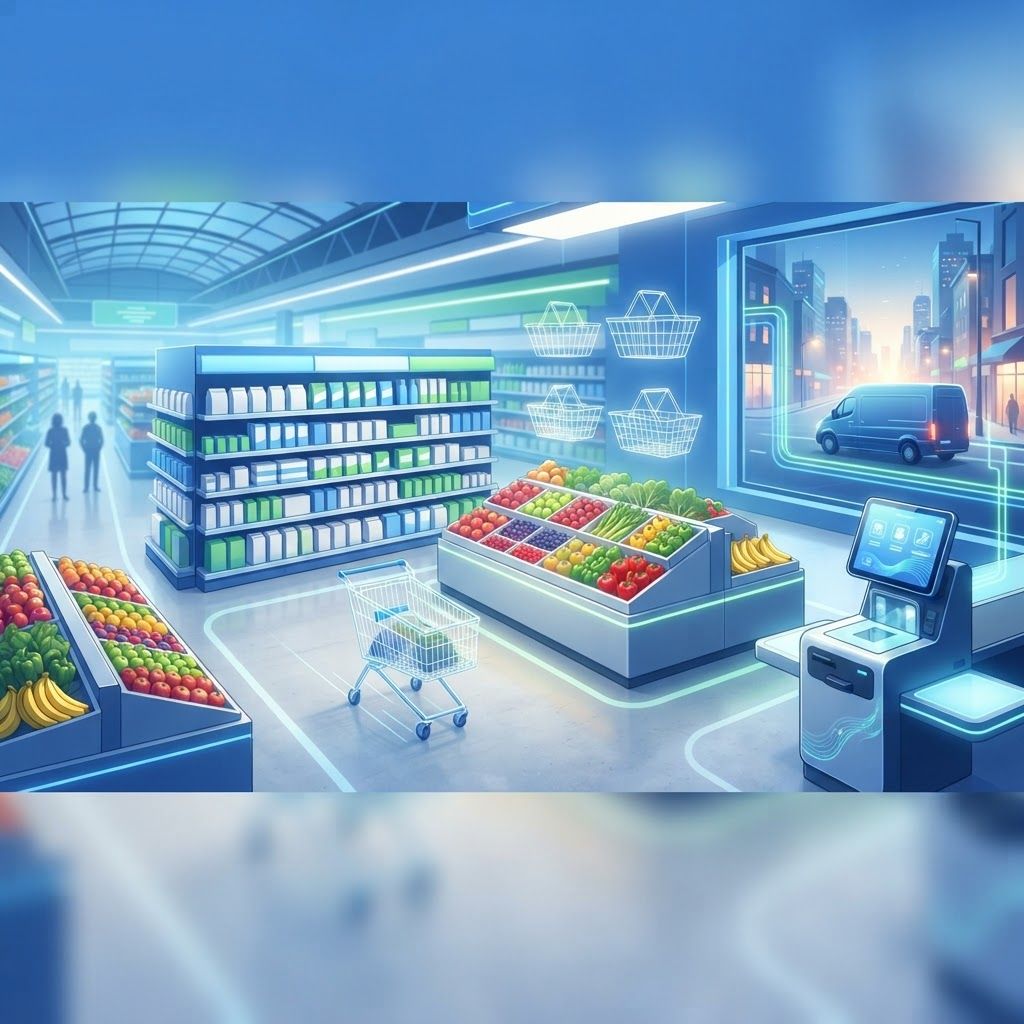
Grocery Retail Across Solihull
Solihull enjoys unusually good grocery provision. Large superstores serve the main population centres, discount chains have expanded significantly across the borough, premium grocers cater to the affluent villages, and convenience formats fill in around the town centre, residential areas and transport routes. Add online delivery from virtually every major chain and a network of independent butchers, greengrocers, bakers and delicatessens, and residents have genuine choice.
This density has practical consequences. Competition keeps prices comparatively keen, and it means most households can operate a hybrid strategy, buying staples and household goods at a discounter, fresh produce and specialist items elsewhere, and topping up locally, rather than depending on a single store.
How to Compare Supermarkets Meaningfully
Price per unit rather than headline price is the only sound basis for comparison. Shelf labels showing price per kilogram, litre or hundred grams allow genuine comparison between pack sizes and brands, and using them consistently reveals that larger packs are not always cheaper and that promotional pricing frequently exceeds the standard price of a competing product.
Own-label quality varies considerably and has improved dramatically across the sector. Most chains now operate tiered own-label ranges, with entry-level lines offering real savings on staples and premium lines competing credibly with branded products at lower cost. For many categories, own-label is the rational default.
Fresh produce quality and turnover matter more than price for perishables. High-turnover stores generally have fresher stock, and shorter supply chains show in the shelf life of dairy, meat, fish and vegetables. Buying perishables where turnover is highest reduces waste, which is a larger household saving than most price differences.
Convenience factors carry real value too. Parking, opening hours, store layout, checkout speed, delivery slot availability and click and collect provision all affect the practical cost of shopping in time as well as money.
Ten Leading Supermarket Chains Serving Solihull
1. Tesco operates across multiple formats in the area, from large superstores with full non-food ranges to convenience stores, offering the broadest overall selection alongside a well-established loyalty scheme with member pricing.
2. Sainsbury's is strongly represented locally and known for consistent fresh produce quality, a well-regarded premium own-label range and reliable online delivery with good slot availability.
3. Aldi has expanded considerably across the borough with a deliberately limited range that keeps prices low, and its fresh produce, bakery and award-winning own-label lines have converted many households from traditional superstores.
4. Lidl follows a similar efficient model with particular strengths in bakery, seasonal specials and a rotating middle-aisle non-food offer that generates genuine customer interest.
5. Waitrose serves Solihull's more affluent areas with high-quality fresh produce, strong provenance and animal welfare standards, an extensive delicatessen offer and specialist ranges that other chains do not stock.
6. Marks & Spencer Food occupies a distinctive position with prepared meals, quality convenience food and premium ingredients, used by many households alongside a main shop elsewhere rather than instead of it.
7. Asda provides competitive pricing across a broad grocery and non-food range in large-format stores, appealing particularly to larger households buying in volume.
8. Morrisons differentiates through its fresh food counters, including butchery, fishmongery and bakery staffed by trained specialists, which allows genuine customisation of cuts and quantities.
9. Co-op operates convenience stores across Solihull's residential areas and villages, valued for accessibility, extended hours, local sourcing initiatives and its member-owned structure supporting community funds.
10. Solihull Independent Food Retailers collectively including butchers, greengrocers, bakers, fishmongers and delicatessens offer quality, provenance knowledge and personal service that complements supermarket shopping, particularly for meat, fish and specialist ingredients.
Trends Reshaping Grocery Retail
Loyalty-based pricing has become the dominant promotional mechanism, with member-only prices replacing much traditional discounting. This effectively requires customers to hold loyalty accounts to access standard pricing, and households not enrolled are paying materially more on many lines.
Discounter growth has permanently altered the competitive landscape, forcing established chains to invest heavily in price matching and entry-level own-label. The practical result for shoppers is genuinely narrowed price gaps on staples.
Plant-based and health-focused ranges have expanded substantially, alongside clearer nutritional labelling and reformulation to reduce sugar and salt. Free-from ranges for gluten, dairy and other intolerances are now comprehensive rather than token.
Sustainability initiatives are increasingly visible, including reduced plastic packaging, refill stations in some stores, food waste reduction through discounted short-dated stock and surplus redistribution partnerships with local charities. Loose fruit and vegetable provision has improved after years of decline.
Online grocery has stabilised into a substantial and profitable channel, with rapid delivery services filling the convenience gap and click and collect proving popular among households wanting to avoid delivery charges.
Practical Shopping Advice
Adopt a hybrid approach rather than loyalty to a single chain. Buying staples, cleaning products and store-cupboard items at a discounter while sourcing fresh produce, meat and fish where quality is highest typically reduces both cost and waste. The saving from reduced food waste often exceeds the saving from price shopping.
Plan meals before shopping and use a list, since unplanned purchases account for a substantial share of both overspending and waste. Check unit pricing habitually, and be willing to trade down on own-label for ingredients used in cooked dishes where brand differences are negligible.
Shop later in the day for reduced short-dated items, and freeze what you cannot use immediately. Join the loyalty schemes of the chains you use, since member pricing is now too significant to forgo.
Solihull's grocery provision is genuinely strong, and households that shop deliberately across formats rather than habitually at one store consistently eat better for less.
Want your brand featured in front of decision-makers? Publish a guest post or get a link insertion in our guides through AAMAX's guest post and link insertion service.
Helpful Links
 SponsoredAAMAX — Full-Service Digital Agency
Write for Us
Share your expertise with our readers. We welcome guest contributions from industry specialists.
Pitch your idea