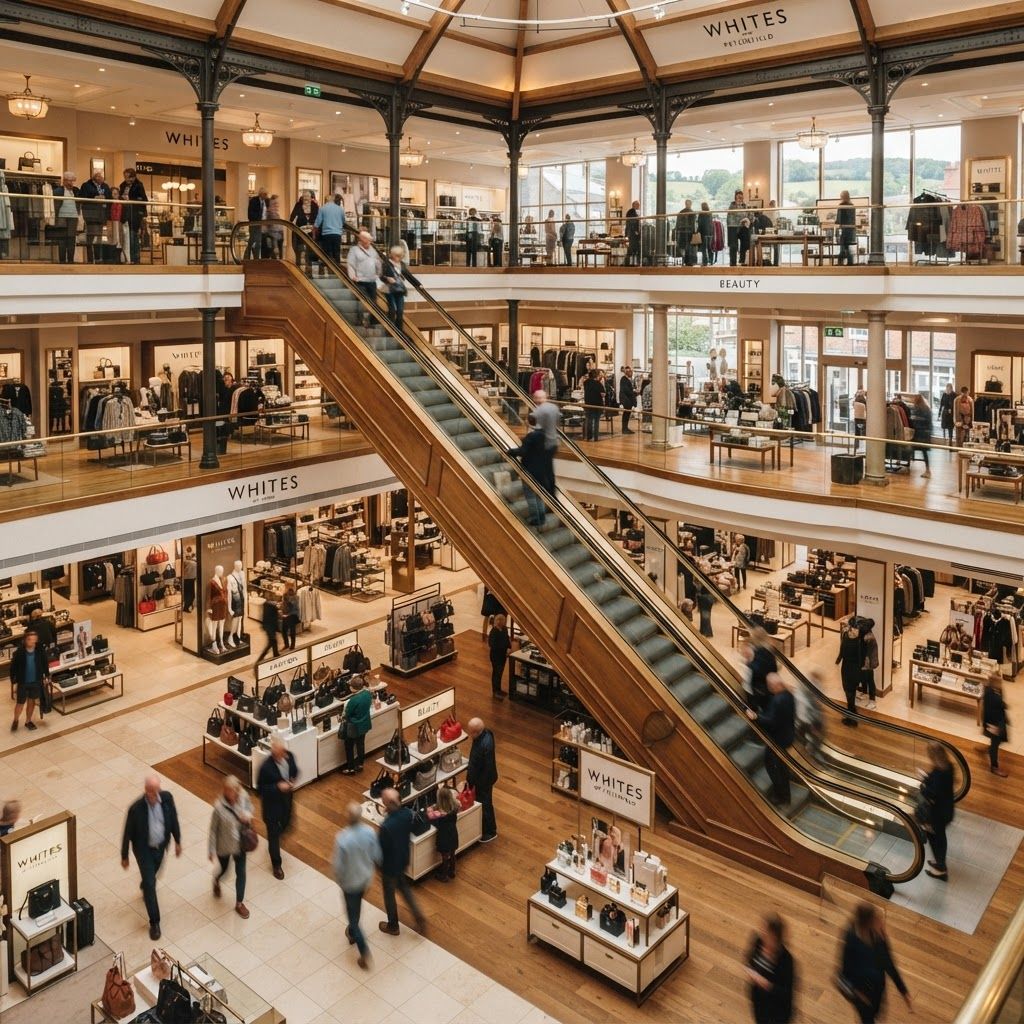
Grocery Shopping Across North Hertfordshire
North Hertfordshire is unusually well provisioned for grocery shopping. The district's four main towns, Hitchin, Letchworth Garden City, Baldock and Royston, each support multiple supermarket formats, and the surrounding villages are covered by convenience stores and delivery services. Competition is genuinely strong here, which is good news for shoppers: price matching, loyalty pricing and frequent promotions are all more aggressive in contested catchments like this one.
The district also has a distinct shopping culture. Hitchin's long-established market operates several days a week and keeps a strong independent food presence alive, while Letchworth's garden city planning placed retail centrally within walking distance of housing. Many households therefore combine a large supermarket shop with market and independent purchases, rather than relying on a single weekly trip.
Ten Supermarket Chains Serving the District
1. Tesco operates the broadest presence across North Hertfordshire, spanning large superstores, Metro formats and Express convenience branches. Its combination of range depth, Clubcard pricing, and reliable delivery slots makes it the default choice for a significant share of local households.
2. Sainsbury's competes closely, with a particularly strong reputation locally for fresh produce and its own-label premium ranges. Nectar pricing has sharpened its value proposition considerably, and its stores in the district tend to be well laid out for larger family shops.
3. Waitrose serves the district's premium grocery demand, with strengths in meat, fish, bakery and prepared foods. For many North Hertfordshire households it functions as a top-up destination for specific categories rather than a full weekly shop, which is a perfectly sensible use of it.
4. Aldi has changed local shopping habits substantially. Its limited-range model keeps prices low, and its fresh produce, bakery and weekly special-buy aisles have built genuine loyalty among shoppers who previously stayed with the traditional big four.
5. Lidl offers a similar discount proposition with particular strengths in bakery, European specialty foods and its rotating middle-aisle stock. Many local households now split their shopping between a discounter and a full-range supermarket, which is measurably the cheapest strategy available.
6. Morrisons differentiates through fresh counters, in-store butchery, fishmongery and bakery. For shoppers who want to buy meat and fish cut to order rather than pre-packed, it remains one of the strongest mainstream options in the area.
7. Marks and Spencer Food occupies the convenience-premium space, especially for prepared meals, entertaining and lunchtime trade. Its presence in and around the district's town centres and travel points suits commuters particularly well.
8. Co-op stores across North Hertfordshire's smaller towns and villages provide essential local coverage. Member pricing, extended opening hours and community fund contributions make them an important part of the district's food infrastructure, particularly outside the main towns.
9. Iceland and The Food Warehouse serve the frozen and bulk segment, and have become increasingly relevant as households look to reduce food waste and manage budgets. Frozen fresh produce and fish in particular offer strong value.
10. Ocado covers the district for pure online grocery delivery, with an extensive range including many brands not stocked in local stores. For households without a car or with tight schedules, it removes the supermarket trip entirely.
Trends Shaping Grocery in the District
Loyalty-scheme pricing is now the dominant competitive mechanism. The gap between shelf price and member price on promoted lines can be substantial, which effectively penalises shoppers who do not sign up. Anyone shopping regularly in North Hertfordshire should hold cards for the chains they use most.
Convenience format growth is the second trend. Smaller-footprint stores in town centres and residential areas have expanded rapidly, serving the shift towards smaller, more frequent shops. Prices in these formats are generally higher than in superstores, which is worth factoring into weekly budgeting.
Local and sustainable sourcing is the third. Hertfordshire produce, British meat labelling, packaging reduction and refill options have all gained prominence, driven by customer demand. Hitchin Market and the district's farm shops complement this, and many households now buy produce locally while using supermarkets for packaged goods.
Choosing the Right Supermarket for Your Household
For families managing a tight budget, the strongest approach is a discounter for staples, produce and household goods, topped up with a full-range supermarket for brands and specialist items. This routinely produces meaningful savings without compromising on quality.
For time-poor commuting households, a weekly online delivery combined with town-centre convenience stores is usually more efficient than a large in-person shop. Delivery passes pay for themselves quickly if you order weekly.
For those who prioritise food quality, splitting between a premium grocer for fresh categories and a mainstream supermarket for everything else delivers most of the benefit at a fraction of the cost of shopping exclusively at the top end.
Practical Tips for Local Shoppers
Check unit pricing rather than pack price, particularly on promotions, as multi-buys are not always cheaper. Shop late in the day for reduced fresh items, which the district's larger stores discount substantially. Use click-and-collect where delivery slots are scarce, as it is usually cheaper and available at short notice.
Plan around parking and traffic. The district's larger stores get busy at weekends and around school pickup times, and Hitchin town centre in particular benefits from an early or mid-morning visit.
The Bigger Picture
North Hertfordshire's grocery market is competitive, well-covered and improving. The combination of discounters, full-range superstores, premium grocers, convenience formats and a genuinely good market tradition means residents have more control over food cost and quality than in many comparable districts. The households who benefit most are those willing to use two or three sources rather than defaulting to one.
Want your brand featured in front of decision-makers? Publish a guest post or get a link insertion in our guides through AAMAX's guest post and link insertion service.
Helpful Links
 SponsoredAAMAX — Full-Service Digital Agency
Write for Us
Share your expertise with our readers. We welcome guest contributions from industry specialists.
Pitch your idea