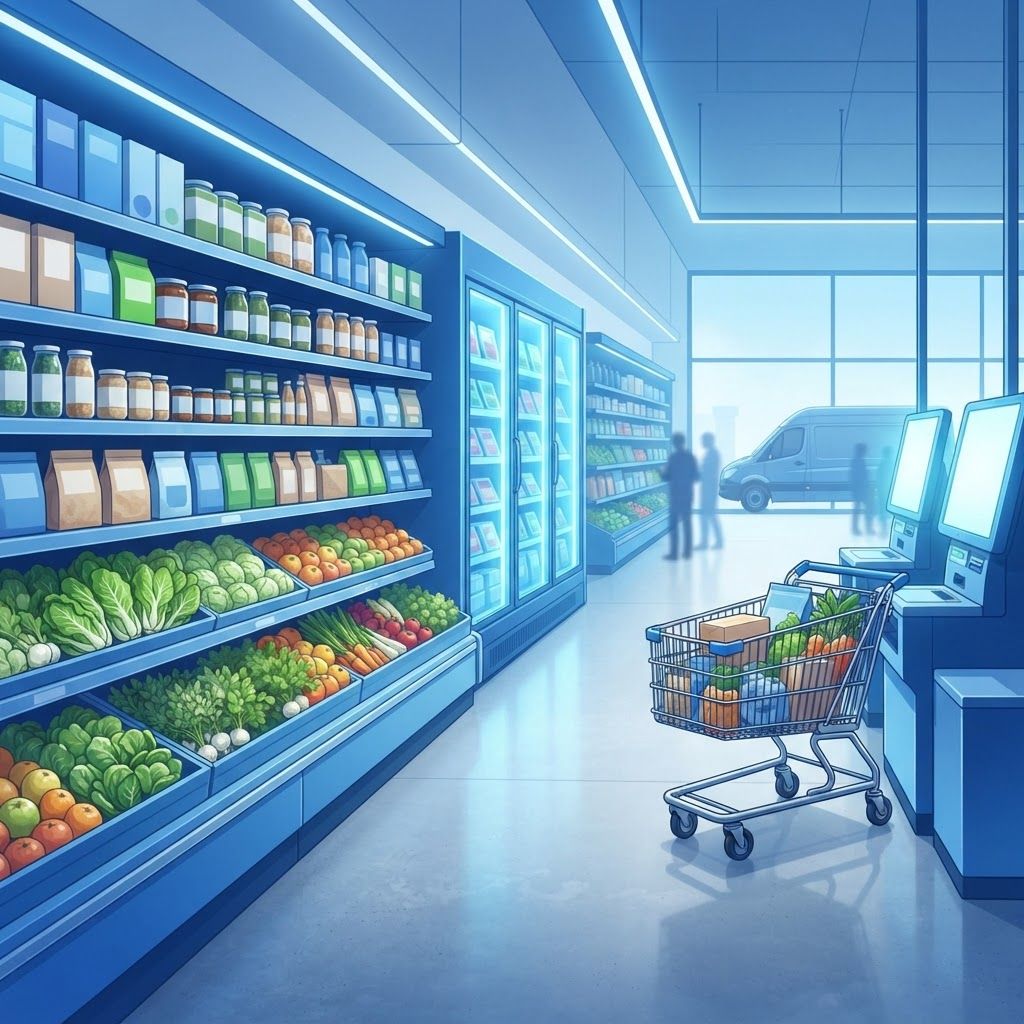
Grocery Shopping in a Dense Urban Borough
Supermarket shopping in Hammersmith and Fulham is shaped by two local realities. First, car ownership is relatively low and parking is difficult, which means many residents shop on foot or by public transport and buy in smaller, more frequent quantities. Second, household composition varies enormously across the borough, from affluent family homes in Fulham to student and young professional flat shares near Hammersmith and Shepherd's Bush.
Those factors reward a mixed approach. Most residents use two or three retailers: a main shop for staples, a convenience store for top-ups, and often a market or specialist grocer for fresh produce. The chains below have been assessed on price, product quality, own-brand strength, store accessibility across the borough and delivery reliability.
1. Sainsbury's
Sainsbury's is well represented across the borough in both large-format and Local convenience sizes, which is a genuine practical advantage. Own-brand quality is consistently reliable, with the Taste the Difference range competing credibly against premium retailers on cheese, bakery and prepared meals. Fresh produce standards are good, and the Nectar pricing scheme delivers meaningful savings for regular shoppers. Delivery slots are generally plentiful across borough postcodes.
2. Tesco
Tesco offers the widest overall range and the deepest coverage, from large stores to Express branches on residential high streets. Clubcard pricing has become a substantial factor in real basket cost, and the Finest range performs well on meat, fish and ready meals. The retailer's strength is completeness; it is the most reliable place to find a specific or unusual item without visiting a specialist. Store standards vary between branches, with the smaller Express stores understandably more limited.
3. Waitrose
Waitrose suits the borough's more affluent households and anyone prioritising quality over price. Fresh meat, fish, bakery and produce are consistently among the best available from a mainstream retailer, and animal welfare and sourcing standards are genuinely higher than sector norms. Own-brand ranges are strong across the board. Basket costs are noticeably higher, though the Essential range is competitively priced and the free coffee and newspaper benefits partially offset the premium for regular customers.
4. Aldi
Aldi delivers the lowest overall basket cost through a deliberately restricted range, roughly a tenth of the product count of a large full-service supermarket. That constraint is the source of its efficiency, and own-brand quality frequently matches branded equivalents in blind comparison, particularly on dairy, fresh produce, bakery and store cupboard staples. The trade-off is inflexibility; if you need a specific brand or an unusual ingredient, it will not be there. Many borough shoppers use Aldi for staples and supplement elsewhere.
5. Lidl
Lidl follows a similar discount model with a slightly different emphasis. Its bakery counter is a genuine strength, producing fresh bread and pastries throughout the day at very low prices. The middle aisle rotating non-food range offers unpredictable but often excellent value on kitchenware, tools and seasonal items. Fresh produce pricing is aggressive and quality is generally good, though variety is narrower than at full-service competitors.
6. Marks & Spencer Food
Marks and Spencer Food occupies a distinct position, functioning less as a full grocery shop and more as a high-quality prepared food and ingredient specialist. Ready meals, prepared vegetables, bakery, desserts and party food are the standout categories, with quality that justifies the pricing for occasion and convenience shopping. Simply Food stores at transport hubs serve commuters returning through Hammersmith effectively, and the food-to-order service for celebrations is widely used.
7. Co-op
The Co-op serves the borough through small convenience stores in residential locations, which is exactly where its value lies. Opening hours are generous, essentials are always stocked, and the fresh produce and bakery offer is better than most convenience formats. Pricing is higher than the large-format supermarkets, which is the normal convenience trade-off. The member dividend and the retailer's community funding of local causes are genuine differentiators for ethically minded shoppers.
8. Iceland
Iceland concentrates on frozen food and delivers real value in that category, which is more useful than it is often given credit for. Frozen vegetables, fish and fruit are nutritionally comparable to fresh, dramatically reduce waste and suit small households buying for one or two people. Bulk frozen meat and prepared meals are competitively priced, and free delivery over a modest spend threshold is genuinely helpful for shoppers without a car.
9. Whole Foods Market and Premium Organic Grocers
Premium organic retailers serve a committed segment of the borough concerned with sourcing, additives and dietary requirements. Range depth on organic produce, plant-based products, gluten-free ranges, supplements and specialist ingredients far exceeds mainstream supermarkets. Prepared food counters and juice bars extend the offer. Prices are high, so most customers shop selectively here for specific items rather than completing a full weekly shop.
10. Shepherd's Bush Market and Independent Grocers
No honest assessment of grocery shopping in the borough can omit the markets and independent grocers. Shepherd's Bush Market and the shops along North End Road offer fresh fruit and vegetables at prices well below supermarket levels, along with excellent Middle Eastern, African, Caribbean and South Asian ingredients that chains stock sparsely if at all. Halal butchers, fishmongers and spice merchants provide quality and specialist knowledge that no supermarket counter matches.
Shopping Strategically Across the Borough
The most economical approach for most households is deliberate splitting. Buy staples, cupboard goods and cleaning products at a discounter, fresh produce at a market or independent grocer, and specific quality items such as meat, fish or cheese wherever standards are highest. The savings on a typical weekly basket are substantial and the quality is often better than a single-retailer shop.
For those without a car, home delivery for heavy and bulky goods, including drinks, tins, pet food and cleaning products, makes practical sense while fresh items are bought locally on foot. Most chains offer delivery passes that become economical at two or more deliveries monthly.
Pay attention to loyalty pricing, which now determines real cost far more than headline shelf price at both Tesco and Sainsbury's. Shopping without a scheme card at those retailers means paying a meaningful premium on a large share of the range.
Trends in Local Grocery Shopping
Smaller, more frequent shopping continues to grow in dense urban boroughs, favouring convenience formats and reducing food waste. Rapid delivery services have added another layer of top-up convenience, though at a pricing premium most households use selectively.
Own-brand penetration keeps rising as quality gaps with branded goods narrow, and plant-based and international ranges continue to expand in response to the borough's genuinely diverse population. For residents, the combination of major chains, discounters and thriving independent markets makes Hammersmith and Fulham one of the better-served boroughs for anyone willing to shop with a little strategy.
Want your brand featured in front of decision-makers? Publish a guest post or get a link insertion in our guides through AAMAX's guest post and link insertion service.
Helpful Links
 SponsoredAAMAX — Full-Service Digital Agency
Write for Us
Share your expertise with our readers. We welcome guest contributions from industry specialists.
Pitch your idea