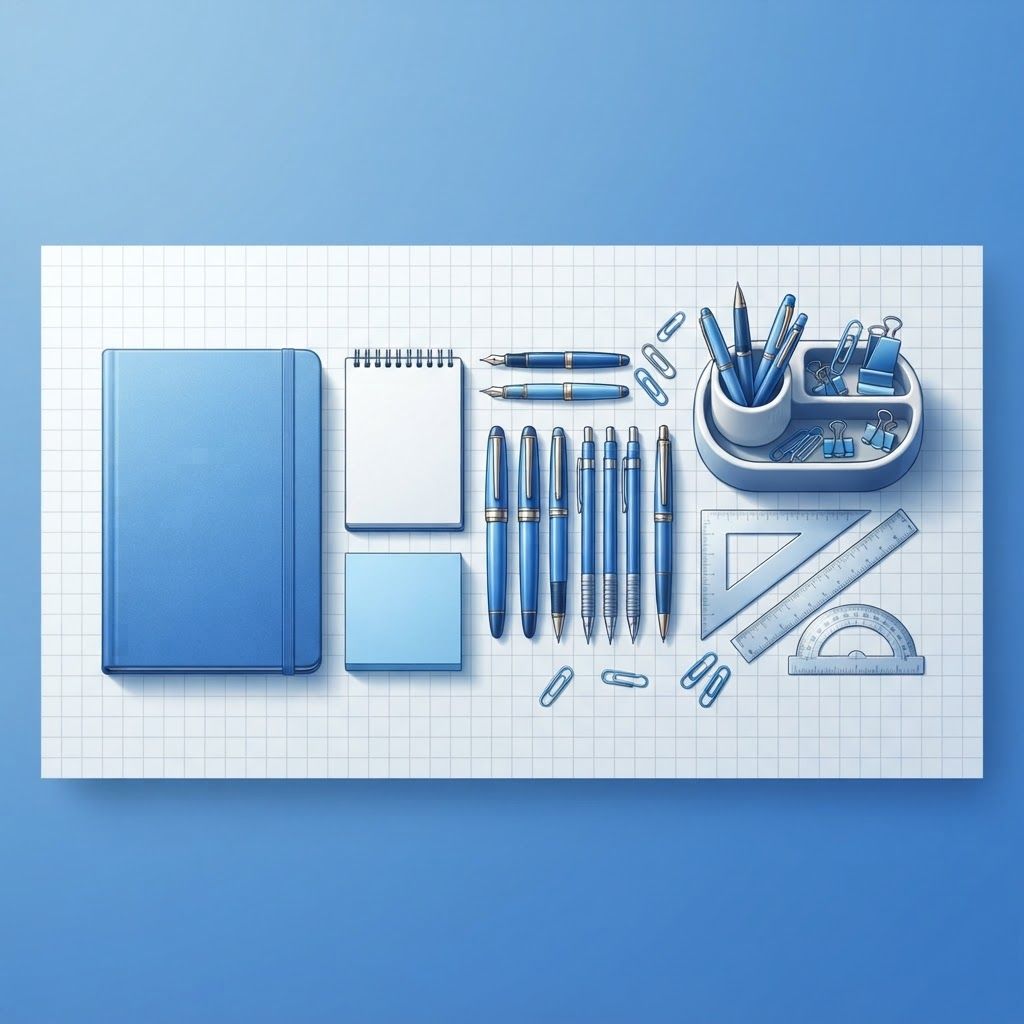
Why Stationery Still Matters in Hammersmith and Fulham
Despite two decades of predictions about the paperless office, stationery demand in Hammersmith and Fulham remains robust, and the reasons are specific to the area. The borough has a large population of home workers who have set up permanent desks in Victorian back bedrooms and riverside apartments. It has schools, colleges and a substantial student population commuting to west London institutions. It has creative and media businesses clustered around Hammersmith and White City where sketching, storyboarding and physical planning remain part of daily practice.
There is also a genuine cultural shift behind the demand. Handwritten notes improve retention, paper planners avoid the distraction of notification-heavy devices, and journalling has become a mainstream wellbeing practice. The brands below have been assessed on paper quality, ink performance, durability, refillability and availability across the borough.
1. Moleskine
Moleskine has become the default notebook for professionals, and its reputation rests on consistency. Every notebook offers the same paper weight, the same elastic closure, the same ribbon marker and the same expandable rear pocket, which means users can standardise across years of note-taking. The hardback classic notebook lies reasonably flat and survives daily bag transit well. Paper handles pencil, ballpoint and rollerball cleanly, though heavy fountain pen users will notice some show-through.
2. Leuchtturm1917
Leuchtturm1917 is the notebook of choice for anyone serious about paper quality. The German-made books use eighty gsm acid-free paper that handles fountain pen ink with minimal bleed, and each notebook includes numbered pages, a blank contents index and page-marker stickers. These details make the notebook genuinely functional as a long-term reference archive rather than a disposable pad. The dotted grid variant has become the standard for bullet journalling.
3. Rhodia
Rhodia produces what many writers consider the best value paper available. The famous orange pads use eighty gsm vellum paper that is remarkably smooth and resistant to feathering, with microperforated pages that tear away cleanly. The stapled top-bound pads suit drafting, calculation and disposable note-taking, while the Webnotebook range covers permanent journalling. For anyone testing fountain pens or working in fineliner, Rhodia paper is unusually forgiving.
4. Muji
Muji occupies an important position in the borough for functional, unbranded stationery at accessible prices. Gel ink pens, recycled paper notebooks, clear document folders, storage boxes and desk organisers all follow a consistent minimal design language that looks orderly when combined. The gel pens in particular offer smooth writing and quick drying at a fraction of premium brand pricing. For students setting up a workspace economically, Muji covers almost everything needed.
5. Pilot
Pilot manufactures some of the most reliable writing instruments available at everyday prices. The G2 gel pen is a genuine workhorse, the V5 and V7 liquid ink rollerballs deliver consistently clean lines, and the FriXion erasable range has become invaluable for planners and diaries where changes are constant. At the enthusiast end, the Metropolitan fountain pen offers an exceptionally good entry point into fountain pen writing, with a smooth nib and solid brass body.
6. Lamy
Lamy brings German engineering and Bauhaus-influenced design to writing instruments. The Safari fountain pen is arguably the best learning pen available, with a moulded grip section that teaches correct finger positioning, an ink window and interchangeable steel nibs in multiple widths. Build quality is robust enough for daily carry, cartridges and converters are widely stocked, and the whole system is designed around long-term refilling rather than replacement.
7. Faber-Castell
Faber-Castell serves the borough's creative and student population with drawing and colouring products of consistently high standard. Polychromos coloured pencils use oil-based leads that layer without waxy build-up, the Pitt artist pens deliver waterproof pigment lines suitable for illustration and technical drawing, and the graphite pencil range covers the full hardness spectrum reliably. For architecture and design students in particular, these are working tools rather than accessories.
8. Paperchase Style Design Stationery Retailers
Design-led stationery retailers cover the gift and decorative end of the market, offering patterned notebooks, greetings cards, wrapping paper, desk accessories and planners with genuine visual appeal. This category serves an important practical function, since stationery is one of the most common gift purchases and these retailers curate specifically for that. Quality varies across the range, so it is worth checking paper weight on notebooks intended for actual daily use.
9. Ryman and Office Supply Retailers
Business-focused stationery retailers handle the unglamorous essentials that keep offices and home workspaces running: printer paper, toner, lever arch files, labels, envelopes, laminating supplies and binding services. Print, copy and document finishing services are available in store, which is genuinely useful for residents needing occasional professional output without owning the equipment. Bulk pricing on consumables is considerably better than supermarket alternatives.
10. Independent Art and Stationery Shops
The borough retains independent art supply and stationery shops, particularly around Hammersmith and Fulham high streets, and they offer something the chains cannot. Individual pens and pencils can be tested before purchase, paper can be bought by the sheet, and staff can advise on materials for specific techniques. These shops also stock specialist items such as bookbinding materials, calligraphy nibs, technical drawing equipment and archival supplies that no general retailer carries.
Choosing Stationery That Suits Your Work
Match paper to your writing instrument rather than the other way round. Fountain pen users should look for eighty gsm or heavier paper with a smooth coating, which means Rhodia, Leuchtturm or Clairefontaine. Ballpoint and pencil users have far more latitude and can prioritise price and format. Fineliner users on thin paper will find bleed-through frustrating regardless of pen quality.
Consider refillability as a cost and waste decision. A fountain pen with a converter and bottled ink, or a refillable rollerball, reduces both long-term cost and plastic waste substantially compared with disposable pens. The same principle applies to notebook systems with replaceable inserts.
Think about format honestly. A5 notebooks fit bags and suit meeting notes; A4 suits detailed work and drafting; pocket notebooks only get used if they genuinely fit in a pocket. Buying a beautiful notebook in the wrong size guarantees it stays unused.
Trends in the Local Stationery Market
Analogue planning has grown steadily as a deliberate counterweight to screen fatigue, driving demand for dotted notebooks, undated planners and habit trackers. Journalling for wellbeing has expanded the market well beyond traditional office and student buyers.
Sustainability is a rising factor, with interest in recycled paper, FSC certification, refillable pens and plastic-free packaging. Several brands now publish sourcing information as standard.
Finally, hybrid working has permanently changed buying patterns, shifting volume from bulk office ordering towards individual purchases for home workspaces. That trend particularly benefits the borough's independent shops and design-led retailers, which are better suited to serving one person setting up one desk well than to fulfilling a corporate contract.
Want your brand featured in front of decision-makers? Publish a guest post or get a link insertion in our guides through AAMAX's guest post and link insertion service.
Helpful Links
 SponsoredAAMAX — Full-Service Digital Agency
Write for Us
Share your expertise with our readers. We welcome guest contributions from industry specialists.
Pitch your idea