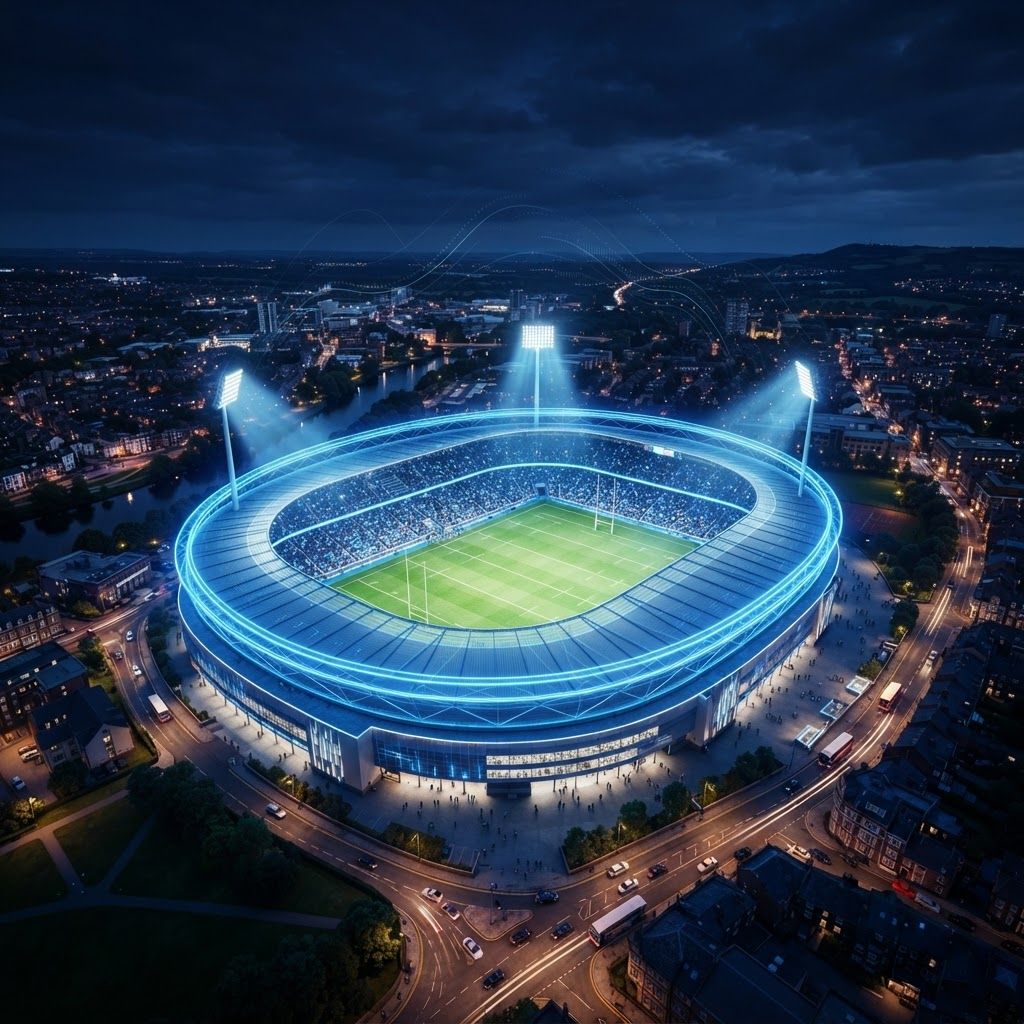
A Town Defined by Its Sporting Venues
Few English towns of comparable size have a sporting identity as pronounced as Warrington's. Rugby league has been woven into local culture for well over a century, and the town's principal stadium is a genuine regional landmark. Around it sits a wider ecosystem of football grounds, athletics tracks, community sports hubs and multi-use venues that collectively support tens of thousands of participants and spectators every year.
Understanding Warrington's stadiums means understanding how they function beyond match day. Modern venues are expected to host conferences, weddings, community programmes, education partnerships and commercial events. The most successful grounds in the area have embraced this dual role, generating year-round revenue that in turn funds facility improvement and grassroots outreach.
Ten Notable Stadiums and Sports Venues
1. Halliwell Jones Stadium The undisputed centrepiece of sport in the town and home to Warrington Wolves. Opened in the mid-2000s, the stadium replaced the club's long-standing former ground and transformed the spectator experience with covered stands, improved sightlines and modern hospitality. Its capacity of around fifteen thousand makes it one of the better-regarded venues in the professional rugby league calendar, and its conference and events business is substantial in its own right, hosting corporate functions, exhibitions and community gatherings throughout the year.
2. Victoria Park A long-established multi-sport site that has served Warrington for generations. The park incorporates athletics provision, pitches and space for a range of clubs and events. Its value lies in accessibility: this is where a large proportion of local participation genuinely happens, from school athletics meetings to running clubs and community fixtures.
3. Cantilever Park Home to Warrington Rylands, the site has undergone meaningful development as the club has progressed through the non-league football pyramid. Ground grading requirements at each level demand real investment in floodlighting, seating, covered accommodation and player facilities, and the venue's evolution is a good illustration of how non-league infrastructure improves alongside sporting success.
4. Bellhouse Park Associated with football in the town and known as a venue where competitive local and regional fixtures take place. Grounds of this type form the essential middle tier of English sport, offering better facilities than a public pitch while remaining accessible to community clubs.
5. Warrington Sports Club, Walton Lea A significant multi-sport site supporting cricket, hockey, tennis and other disciplines. Multi-sport clubs of this kind are increasingly valued because they allow shared clubhouse infrastructure, coaching resources and social facilities across several sports, improving financial resilience.
6. Latchford Albion Ground A community-focused venue with a strong grassroots reputation, particularly in youth football development. Facilities like this deliver enormous social value relative to their scale, providing structured activity for large numbers of young people.
7. Woolston Sports Complex A modern community sports hub combining pitches, indoor space and changing provision. Complexes of this kind reflect current best practice in facility planning, concentrating investment in a single well-maintained site rather than dispersing it across many under-resourced ones.
8. Orford Jubilee Neighbourhood Hub While primarily a leisure and community centre rather than a traditional stadium, this facility includes significant sporting provision including pitches, sports halls and an aquatics offer. It has become a template for integrated health, leisure and community development in the North West.
9. Broughton Recreation Ground A well-used open sports ground supporting cricket and football alongside general recreational use. Traditional recreation grounds remain the backbone of informal participation and continue to matter enormously for public health outcomes.
10. Padgate Community Sports Ground A local venue serving schools, junior clubs and adult leagues. Its combination of pitch provision and accessible location makes it a consistent fixture in the town's weekend sporting calendar.
What Makes a Good Stadium in the Modern Era
Spectator expectations have risen sharply. Covered seating, clear sightlines, reliable catering, contactless payment, decent toilets and safe circulation are now baseline requirements rather than luxuries. Accessibility is a legal and moral obligation, with dedicated wheelchair positions, accessible parking, audio commentary and sensory-friendly provision increasingly standard at better venues.
Pitch technology has also advanced considerably. Hybrid and reinforced natural surfaces, improved drainage, undersoil systems and grow-light rigs allow far greater usage in wet North West winters. For community facilities, third-generation artificial surfaces have been transformative, multiplying available playing hours and making winter training viable for junior sides.
Sustainability is now a live consideration too. LED floodlighting, rainwater harvesting, solar installation, waste reduction and public transport access all feature in modern venue planning, driven both by cost pressure and by growing expectations from supporters and funders.
The Wider Economic and Social Impact
Stadiums generate value well beyond ticket revenue. Match days support local hospitality, transport and retail, while conference and events business provides steady income during the off-season. Community trusts attached to professional clubs deliver education, health and inclusion programmes that reach thousands of residents annually, often in areas with significant deprivation. In Warrington, the link between the professional game and grassroots participation is unusually strong, with clear pathways from junior clubs into academy structures.
Visiting Warrington's Venues
For visitors, the town is straightforward to navigate. Central venues are walkable from the main transport interchanges, and larger fixtures are supported by additional public transport provision. Arriving early is sensible for high-profile matches, and checking fixture information in advance matters because scheduling in rugby league is frequently adjusted for broadcast requirements.
Final Thoughts
Warrington's stadium landscape is more diverse than its rugby league reputation alone might suggest. From a genuinely modern professional stadium to progressive community hubs and traditional recreation grounds, the town offers a full spectrum of sporting infrastructure. Continued investment across all tiers, rather than concentration at the top alone, is what keeps participation healthy and secures the town's sporting future.
Want your brand featured in front of decision-makers? Publish a guest post or get a link insertion in our guides through AAMAX's guest post and link insertion service.
Helpful Links
 SponsoredAAMAX — Full-Service Digital Agency
Write for Us
Share your expertise with our readers. We welcome guest contributions from industry specialists.
Pitch your idea