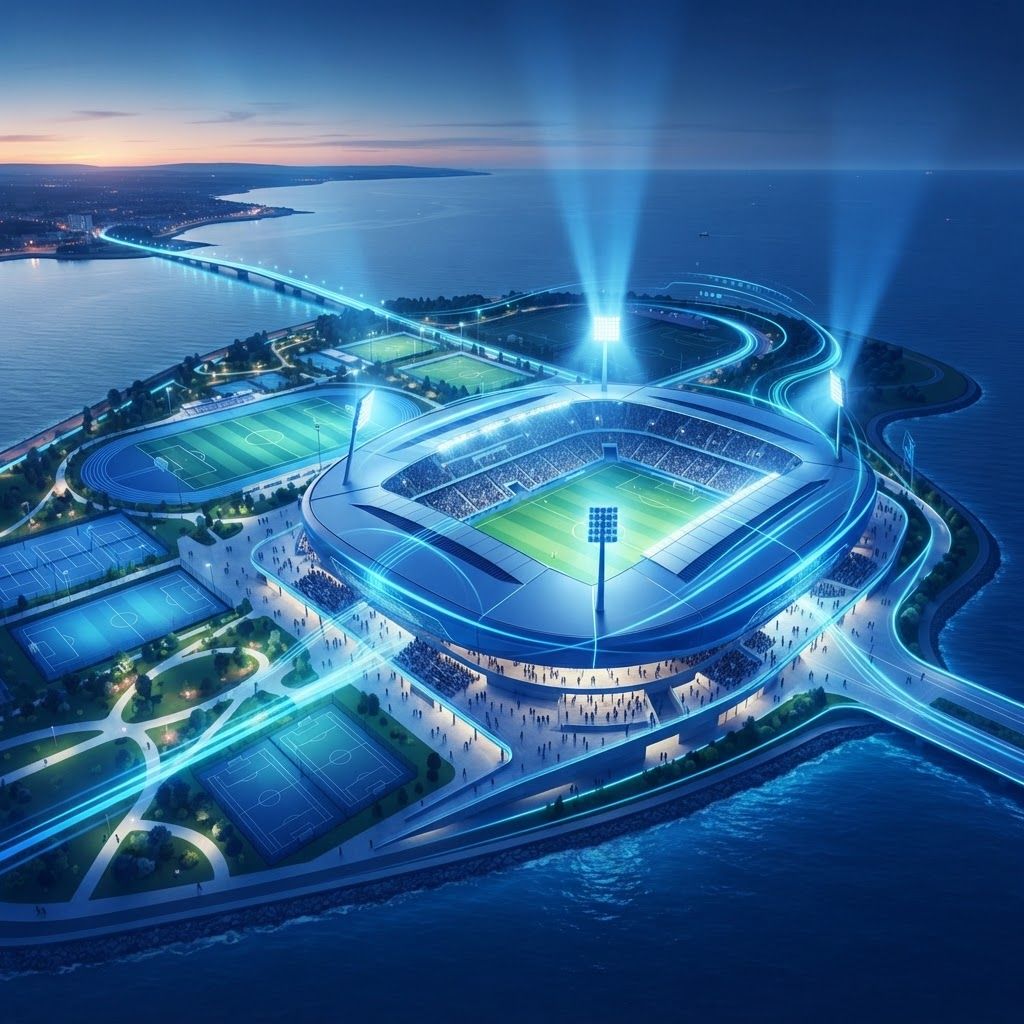
Sport and Stadiums on an Island
The Isle of Wight's sporting infrastructure reflects its size, its history and its geography. With a population of around 140,000 and no professional league club, the island does not have large-capacity arenas comparable with mainland cities. What it does have is a network of well-used community stadiums, club grounds, speedway and athletics venues that punch considerably above their weight in terms of participation, heritage and community importance.
Island sport also operates under a unique constraint: away fixtures usually involve a ferry. That reality shapes everything from fixture scheduling to youth development, and it makes home venues disproportionately important as social hubs. A stadium on the Isle of Wight is rarely just a playing surface; it is typically a clubhouse, a function venue, a training base and a community meeting point.
The Main Categories of Venue
Football grounds form the largest category. The island's senior clubs play in regional non-league pyramids, with grounds featuring covered terracing, floodlights, clubhouses and social facilities. These venues host league football, county cup competitions and the long-standing inter-island and inter-county fixtures that are a fixture of the local calendar.
Speedway and motorsport venues have a distinctive place in island sporting culture. Shale oval racing has a passionate following, and the associated stadium environment, with pit areas, safety fencing, terracing and floodlighting, differs markedly from conventional sports grounds.
Athletics and multi-sport stadiums provide synthetic running tracks, field event areas, floodlit training facilities and indoor provision. These sites underpin school competition, club athletics and general community fitness, and they are frequently co-located with leisure centres.
Cricket grounds across the island include some of the most attractive playing settings in southern England, with downland and coastal backdrops, traditional pavilions and well-maintained squares supported by dedicated groundstaff and volunteers.
Rugby clubs maintain grounds with floodlit pitches, training areas, clubhouses and increasingly all-weather surfaces that extend usage through winter.
Multi-use community sports hubs combine artificial grass pitches, courts, gyms and changing facilities. These are the workhorses of island sport, supporting football, hockey, netball, tennis and school programmes year-round.
What Makes a Good Island Stadium
Facility quality is judged differently at community level than in professional sport. Pitch quality and drainage top the list, since island winters are wet and windy and postponed fixtures are difficult to rearrange when ferry-dependent opposition is involved. Modern drainage, sand-slit construction and artificial surfaces have transformed availability at several island venues.
Floodlighting extends usable hours dramatically, enabling evening training and midweek fixtures. Modern LED installations have reduced running costs substantially, an important factor for volunteer-run clubs.
Spectator facilities including covered seating, accessible viewing positions, catering and clean changing rooms determine whether a ground attracts families and casual attendance rather than only committed supporters. Accessibility compliance is increasingly a funding condition as well as a moral expectation.
Finally, the clubhouse matters. Bar and function facilities generate the revenue that sustains grounds maintenance, and they make venues viable for weddings, conferences and community events outside the sporting calendar.
Heritage and Community Value
Several island grounds have long histories, with clubs founded in the nineteenth century and grounds that have hosted continuous competition for generations. That heritage carries real weight in a small community, where family connections to a club often span several generations.
Stadiums also serve as venues for the island's substantial events calendar. Sporting grounds and adjacent open space regularly host festivals, shows, charity events and large-scale community gatherings, adding economic value well beyond match days.
Challenges Facing Island Venues
Funding is the persistent issue. Grounds maintenance, floodlight upgrades, drainage improvement and changing-room modernisation are expensive, and island clubs compete for the same national grant funding as mainland organisations with larger catchments. Travel costs for away fixtures consume budgets that mainland clubs can direct into facilities.
Volunteer capacity is a second constraint. Most island venues rely on volunteer groundstaff, committee members and matchday staff. Succession planning for these roles is a genuine strategic concern for many clubs.
Coastal weather affects maintenance cycles, with salt exposure shortening the life of fencing, floodlight columns, seating and roofing. Sustainable design and corrosion-resistant materials are therefore priorities in any refurbishment.
Investment and Modernisation Trends
Recent years have seen meaningful investment across island sport. Third-generation artificial pitches have increased weekly usage capacity several times over compared with natural grass. LED floodlighting, solar panels on clubhouse roofs and improved insulation have reduced energy costs. Accessible changing places, improved disabled viewing and family-friendly facilities have broadened participation.
There is also a growing emphasis on multi-sport use. Venues that once served a single club now host several sports, school programmes, walking football, disability sport and community fitness sessions, improving both financial sustainability and public health outcomes.
Visiting and Using Island Sports Venues
For residents and visitors, island stadiums are highly accessible. Admission to community football, rugby and cricket is inexpensive or free, parking is generally straightforward outside peak tourist periods, and clubhouses welcome visitors. Many venues offer facility hire for five-a-side, training sessions, youth camps and private events.
For clubs planning to visit, early communication about ferry timings is essential, and island hosts are typically experienced at accommodating travelling teams with flexible kick-off times and post-match hospitality.
Final Thoughts
The best stadiums in the Isle of Wight are defined less by capacity than by community function, maintenance quality and versatility. They sustain grassroots participation, preserve sporting heritage and provide the social infrastructure that makes island sport resilient despite the logistical and financial challenges of playing beyond the Solent.
Want your brand featured in front of decision-makers? Publish a guest post or get a link insertion in our guides through AAMAX's guest post and link insertion service.
Helpful Links
 SponsoredAAMAX — Full-Service Digital Agency
Write for Us
Share your expertise with our readers. We welcome guest contributions from industry specialists.
Pitch your idea