Solar Power in Warrington: A Realistic Assessment
Solar is often dismissed in the North West on the assumption that there is not enough sunshine to justify the cost. In practice, photovoltaic panels generate electricity from daylight rather than direct heat, and modern modules perform well in the diffuse light conditions typical of Cheshire and Lancashire. Cooler temperatures actually improve panel efficiency, offsetting some of the loss from reduced irradiance compared with southern England.
Warrington is particularly well suited to solar for structural reasons. The borough contains an enormous stock of large-roofed warehousing, distribution centres and industrial units around Omega, Woolston, Winwick and Birchwood, alongside extensive post-war and modern housing with suitable roof pitches. Combined with high daytime electricity consumption in commercial buildings, that makes self-consumption economics genuinely attractive.
Types of Solar Installation
- Domestic rooftop systems typically between three and six kilowatts, often paired with a battery
- Commercial rooftop arrays from tens to hundreds of kilowatts on warehouse and factory roofs
- Ground-mounted arrays where land is available, usually for larger industrial or agricultural users
- Solar carports combining shaded parking with generation and electric vehicle charging
- Solar thermal systems for hot water rather than electricity
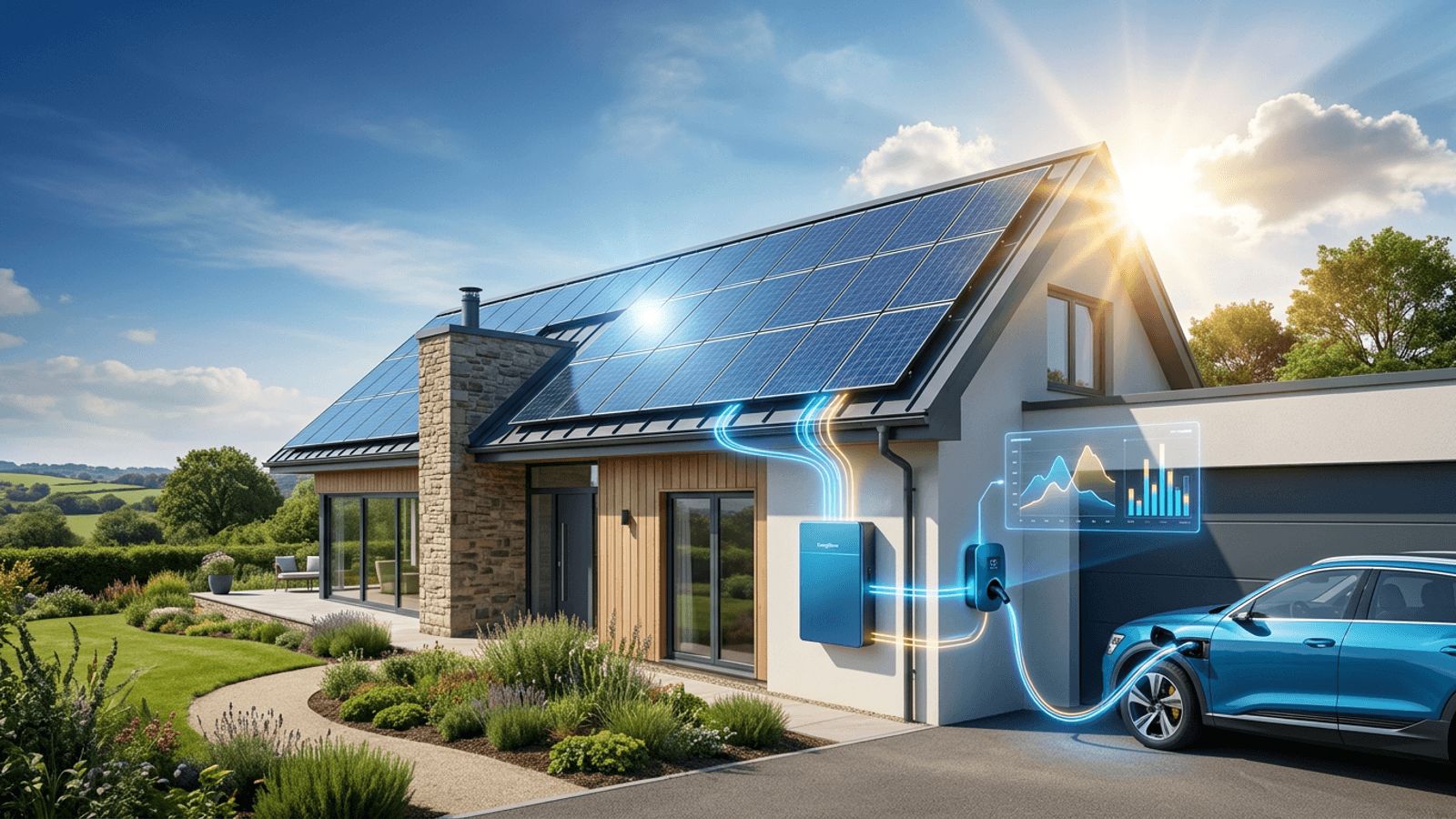
- Hybrid systems integrating photovoltaics, battery storage and heat pumps under one control strategy
Leading Solar Companies Serving Warrington
1. Regional MCS-accredited domestic installers
The core of Warrington's domestic solar market is served by certified installers operating across Cheshire and Greater Manchester. Accreditation under the recognised certification scheme is essential, since it governs eligibility for export payments and provides consumer protection through workmanship warranties.
2. Commercial solar EPC contractors
Engineering, procurement and construction specialists handle the larger rooftop schemes on Warrington's industrial estates. Their scope typically covers structural surveys, electrical design, grid application, installation, commissioning and long-term monitoring.
3. Wood
With a major Warrington presence, Wood contributes engineering and consultancy capability to large-scale solar and hybrid renewable developments, including grid integration studies and technical due diligence for investors.
4. Jacobs
Jacobs supports solar and wider clean energy programmes from its North West operations, providing design, feasibility and programme management services for utility-scale and public sector schemes.
5. Warrington Borough Council solar investment programme
The council has invested in renewable generation as part of its carbon reduction strategy, which has raised the profile of solar locally and encouraged supply chain development within the borough.
6. Battery storage and hybrid specialists
A growing group of installers focuses on pairing solar with lithium battery storage, allowing households and businesses to store midday generation for evening use. This is increasingly where the strongest financial returns are found.
7. Electrical contracting firms with renewable divisions
Established Warrington and Cheshire electrical contractors have added solar and EV charging capability. Their advantage is depth in electrical compliance and existing relationships with commercial building owners.
8. Roofing companies offering integrated solar
Where a roof requires replacement, combining reroofing with in-roof solar reduces scaffolding costs and produces a neater result. Several regional roofing specialists now offer this integrated service.
9. Energy consultancies advising on procurement
Independent consultants in the Warrington area model solar business cases, run competitive tenders and review contracts. For larger projects their fee is usually recovered through better commercial terms.
10. National solar providers serving the North West
Larger national installers operate throughout the region, offering standardised packages, finance options and manufacturer-backed warranties. They suit customers who prioritise process certainty and product guarantees.
How a Typical Installation Works
The process begins with a site assessment covering roof orientation, pitch, shading from trees or adjacent buildings, structural condition and available space for inverters and batteries. A design and yield estimate follows, showing expected annual generation and likely self-consumption. For commercial systems, a grid connection application may be required before installation can proceed.
Installation itself is usually quick, often one to three days for a domestic system, with commercial arrays taking several weeks depending on scale. Commissioning includes electrical testing, inverter configuration and registration with the network operator, after which monitoring provides ongoing performance data.
Financial Considerations
The economics of solar rest on three variables: system cost, the proportion of generation used on site and the value of exported electricity. Businesses with daytime operations typically consume most of what they generate, producing shorter payback periods. Homes with occupants away during the day benefit far more from adding a battery.
Other factors matter too. Panel degradation is gradual and predictable, inverters may need replacement partway through the system life, and maintenance requirements are minimal but not zero, since soiling and shading changes affect output. A credible provider will present these realities rather than a single optimistic figure.
What to Check Before Signing
- Confirm certification under the relevant microgeneration scheme and membership of a consumer code
- Insist on a structural assessment for older or lightweight roofs
- Review the yield calculation methodology and the assumptions behind savings figures
- Compare warranties separately for panels, inverters, batteries and workmanship
- Clarify who handles the grid application and export arrangements
- Understand what happens to the system if the property is sold, especially under any lease or finance arrangement
- Ask about monitoring, fault response times and maintenance costs
Trends Shaping the Market
Panel efficiency continues to improve, meaning more generation from the same roof area than systems installed a decade ago. Battery prices have fallen significantly, shifting the balance of typical installations toward storage. Smart tariffs that reward flexible consumption are making integrated control of solar, batteries, heat pumps and vehicle charging increasingly valuable. On the commercial side, private wire arrangements and power purchase agreements allow businesses to host generation without upfront capital.
Final Thoughts
Solar in Warrington is a mature, well-understood technology with a clear commercial case, particularly for buildings with large roofs and daytime demand. The differences between good and poor outcomes come down to design quality, honest yield modelling and reliable aftercare rather than the panels themselves. Choose accredited installers, verify the numbers independently where the investment is significant, and treat storage as part of the design rather than an afterthought.
Want your brand featured in front of decision-makers? Publish a guest post or get a link insertion in our guides through AAMAX's guest post and link insertion service.
Helpful Links
 SponsoredAAMAX — Full-Service Digital Agency
Write for Us
Share your expertise with our readers. We welcome guest contributions from industry specialists.
Pitch your idea