

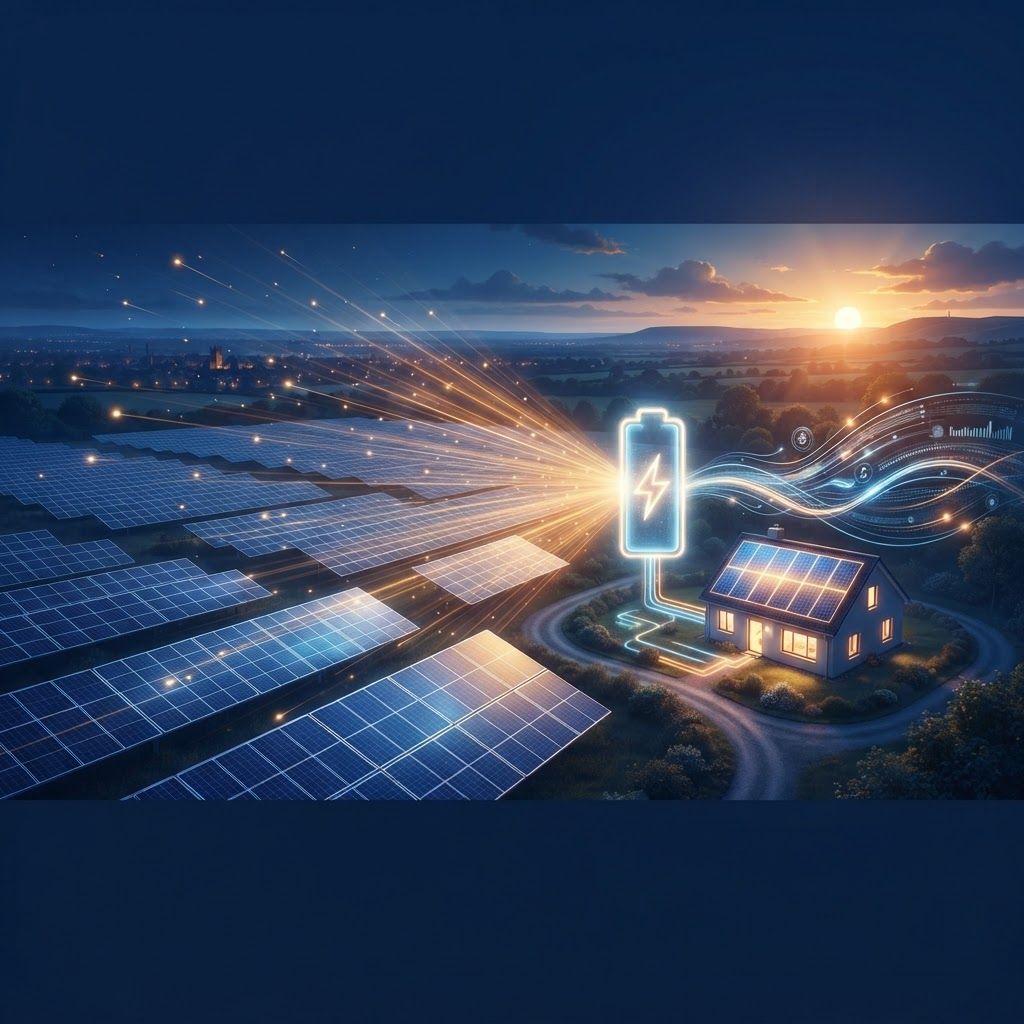
Solar Power in West Kent Conditions
Kent enjoys some of the highest solar irradiance levels in the United Kingdom, and Tonbridge and Malling benefits accordingly. While winter output is naturally modest, a well-designed system generates substantial electricity from spring through autumn, and combined with battery storage it can cover a large proportion of a household's annual consumption.
The borough offers varied opportunity. Modern estates at Kings Hill and Snodland have well-oriented roofs suited to straightforward installation. Older properties in Tonbridge and the villages may require structural assessment or conservation consideration. Farms and industrial units around Aylesford, Larkfield and the Medway valley have large roof areas that make commercial-scale arrays genuinely attractive.
How Solar Systems Work
Photovoltaic panels convert sunlight into direct current electricity, which an inverter converts to alternating current for use in the building. Electricity is consumed on site first, with any surplus either stored in a battery or exported to the grid under an export tariff.
System output depends on panel efficiency, roof orientation and pitch, shading, and total installed capacity. South-facing roofs produce the highest peak output, while east and west orientations generate a flatter curve that often matches household demand patterns better. Shading from trees, chimneys or neighbouring buildings can be mitigated with optimisers or microinverters.
Battery storage has become central to the economics. Without storage, households away during the day export most of their generation for modest return. With storage, that energy is used in the evening at full retail value, and batteries can also charge from cheap overnight tariffs.
Ten Solar Providers Serving the Borough
1. Kent Solar Installations offers domestic and commercial photovoltaic systems with detailed shading analysis and performance modelling, and is known for thorough pre-installation surveys.
2. Tonbridge Solar and Battery focuses on residential retrofit, combining panels with storage and smart tariff integration so households maximise self-consumption.
3. Kings Hill Commercial Solar designs large rooftop arrays for offices and business parks, including energy monitoring, carbon reporting and analysis of consumption profiles against generation.
4. Weald Agricultural Solar Group installs systems on barns, packhouses and farm buildings, and advises on ground-mounted arrays, grid connection and agricultural energy demand patterns.
5. Medway Valley Renewables serves Snodland, Aylesford and Larkfield with residential and small commercial installations, valued for straightforward quotations and reliable scheduling.
6. Larkfield Solar Maintenance Services concentrates on aftercare, including panel cleaning, inverter replacement, fault diagnosis and performance auditing of underperforming existing systems.
7. West Malling Heritage Solar Consultants handles installations on listed properties and in conservation areas, advising on discreet panel placement, in-roof systems and consent requirements.
8. Borough Green Off-Grid Solutions designs standalone systems for outbuildings, stables, workshops and rural sites without practical mains connection.
9. Aylesford Industrial Solar Systems works with warehouse and manufacturing operators on high-capacity arrays, often paired with electric vehicle charging and demand management.
10. Snodland Solar Energy Partners offers domestic installations with an emphasis on transparent modelling, providing realistic generation estimates rather than optimistic headline figures.
Costs, Returns and Practical Expectations
System cost depends on capacity, roof complexity, scaffolding requirements and whether storage is included. Batteries typically add substantially to the total but improve the proportion of generation used on site, which is where the value lies.
Returns come from three sources: avoided electricity purchase, export payments for surplus, and in some cases reduced standing demand charges for businesses. The strongest returns generally occur where daytime consumption is high, such as home workers, families, farms and commercial operations.
Realistic expectations matter. Output varies seasonally and by year, panels degrade slowly over decades, and inverters typically need replacement partway through the system's life. A credible installer will include these factors in projections rather than presenting a single optimistic figure.
Trends in Solar Technology
Panel efficiency has improved steadily, meaning more capacity fits on the same roof area. In-roof mounting systems have gained popularity for aesthetic reasons and suit new build and re-roofing projects.
Smart integration is the biggest shift. Systems now coordinate generation, storage, heat pumps, electric vehicle charging and variable tariffs automatically, optimising consumption in ways that manual operation cannot match.
Solar with electric vehicle charging has become a common combination, particularly in the borough's commuter households, where daytime generation can charge a vehicle at weekends or feed a battery for overnight charging.
Choosing a Solar Installer
Verify certification, which is necessary for export arrangements and any grant eligibility, and confirm the installer holds appropriate electrical qualifications and insurance.
Insist on a proper survey including roof structure, orientation, shading assessment through the year and electrical supply capacity. Quotes produced from satellite imagery alone are a warning sign.
Compare proposals on estimated annual generation and self-consumption rather than panel count, and ask what assumptions underpin the figures. Check warranty terms separately for panels, inverter, battery and workmanship, as these often differ considerably.
Finally, ask about aftercare. Monitoring, servicing and a clear route for fault resolution matter over a system lifetime measured in decades.
Conclusion
Solar energy suits Tonbridge and Malling well, with favourable irradiance, varied roof stock and strong opportunities across domestic, agricultural and commercial buildings. The installers above cover everything from heritage-sensitive residential work to large industrial arrays. Careful design, honest generation modelling and accredited installation are what turn a solar investment into long-term savings.
Want your brand featured in front of decision-makers? Publish a guest post or get a link insertion in our guides through AAMAX's guest post and link insertion service.
Helpful Links
 SponsoredAAMAX — Full-Service Digital Agency
Write for Us
Share your expertise with our readers. We welcome guest contributions from industry specialists.
Pitch your idea

