Why Solar Works in Southend-on-Sea
Solar photovoltaics perform better in Southend-on-Sea than most people expect. The south-east of England, and the Essex coast in particular, records some of the highest levels of annual solar irradiance in the United Kingdom. Long summer days, relatively low rainfall compared with western regions, and open coastal aspects with limited overshadowing along much of the seafront and suburban estates all contribute to strong generation figures.
Panels also benefit from cool, breezy conditions. Photovoltaic modules lose efficiency as they heat up, so the moderating sea breeze along the estuary can actually help output on hot days. Combined with falling equipment costs, mature installation practice and improved export payments, this has turned solar from an early-adopter statement into a mainstream property upgrade across the town.
The Solar Market in Southend
The local solar sector breaks down into several types of provider. Specialist renewable energy installers focus exclusively on solar, battery storage and related low-carbon technology, offering design, supply, installation, commissioning and aftercare. Electrical contracting firms across south Essex have added solar divisions, bringing strong wiring and compliance expertise. Roofing companies sometimes partner with electrical specialists to deliver integrated or in-roof systems. Energy consultancies advise commercial clients on larger rooftop and ground-mounted arrays, procurement routes and power purchase arrangements.
Alongside these, national installation brands and manufacturer-approved partner networks operate throughout Essex, offering the reassurance of scale. Well-known equipment manufacturers whose products commonly appear on Southend rooftops include established module makers, inverter specialists and battery brands with strong UK support networks. The installer, however, matters more than the badge on the panel: workmanship determines whether a system performs and lasts.
Understanding the Technology
Panels
Monocrystalline modules dominate the residential market, offering high efficiency per square metre, which matters on the compact roofs common in Southend's terraced and semi-detached housing. All-black modules are popular for aesthetic reasons, particularly in conservation-sensitive areas.
Inverters
The inverter converts direct current from the panels into alternating current for the property. String inverters are cost-effective for unshaded roofs. Where chimneys, dormers or neighbouring buildings cause partial shading, module-level electronics such as optimisers or microinverters preserve output from unaffected panels and improve per-panel monitoring.
Batteries
Storage transforms the economics of solar for most households. Without a battery, surplus midday generation is exported at modest rates. With one, that energy powers evening cooking, heating and charging. Batteries also enable arbitrage on time-of-use tariffs, charging cheaply overnight in winter when solar contribution is low.
Mounting and Roof Types
Southend's housing stock includes slate and tile pitched roofs, flat roofs on extensions and commercial units, and coastal properties exposed to significant wind loading. Correct fixing specification, wind uplift calculation and weatherproofing are essential, and salt-laden air makes corrosion-resistant components important near the seafront.
Benefits Beyond the Bill Savings
The primary attraction is lower electricity costs, with savings concentrated where daytime consumption is high, such as households with home workers, electric vehicles, heat pumps or hot tubs, and businesses operating standard hours. Export payments provide additional income for surplus generation.
Solar also improves energy performance ratings, which supports property marketability and helps landlords meet tightening efficiency requirements. For commercial premises, on-site generation reduces exposure to volatile wholesale prices and strengthens sustainability reporting, increasingly relevant when bidding for contracts with larger organisations.
There is a resilience dimension too. Paired with a battery and appropriate switching, solar can provide backup power during outages, valuable for home offices, medical equipment users and businesses with refrigeration or IT loads.
Trends in the Solar Sector
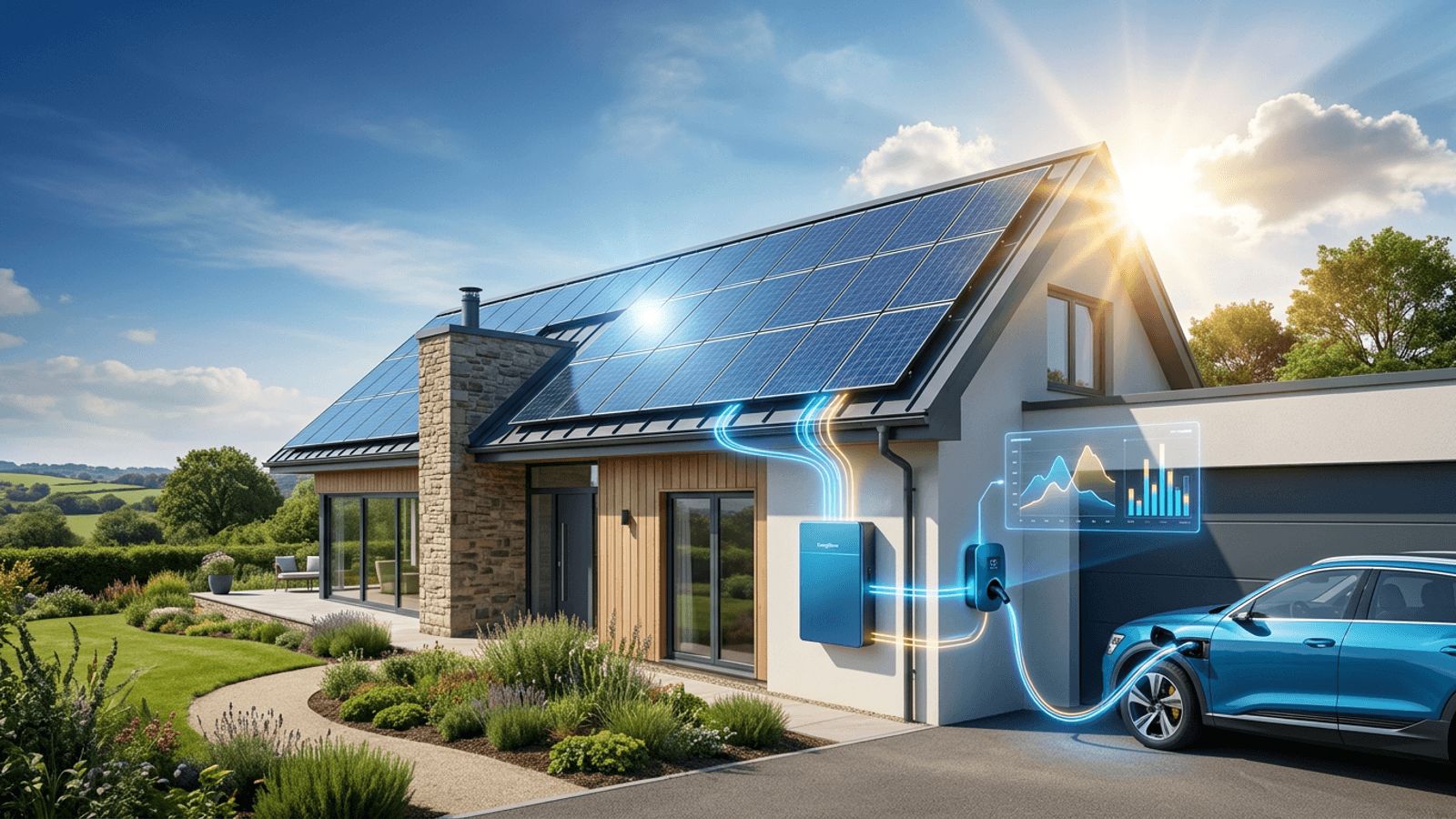
Solar and storage are now specified together as standard rather than as an upsell. Smart energy management is the second major trend, with controllers coordinating panels, batteries, heat pumps and EV chargers to optimise self-consumption automatically against tariff signals.
Commercial rooftop solar is expanding rapidly across Essex industrial estates, driven by attractive returns where consumption is coincident with generation. Larger sites increasingly explore private wire arrangements and power purchase agreements that require no upfront capital.
Panel efficiency continues to improve incrementally, and bifacial and higher-power modules are becoming common. Meanwhile, grid connection constraints and export limitation requirements are an increasing consideration on larger installations, making early engagement with the distribution network operator important.
Finally, the industry is professionalising. Certification, insurance-backed guarantees and clearer consumer protection standards have reduced, though not eliminated, the risk of poor-quality selling.
How to Choose a Solar Installer
Insist on Microgeneration Certification Scheme accreditation and membership of a recognised consumer code. These are conditions for export tariff eligibility and provide recourse if things go wrong.
Require a site survey. A serious quote follows a physical or thorough remote assessment covering roof orientation, pitch, structural condition, shading through the day and year, loft access, consumer unit suitability and cable routing.
Interrogate the generation estimate. Ask which modelling standard was used, what shading losses were applied and what self-consumption percentage underpins the savings figure. Optimistic assumptions inflate payback claims.
Compare like with like across quotes: panel wattage and count, inverter model, battery usable capacity and cycle warranty, scaffolding, bird protection, monitoring, and whether export application and building notification are handled for you.
Check warranties individually. Product warranties, performance warranties, inverter and battery terms, and workmanship guarantees all differ. Confirm the installer's trading history, insurance and whether guarantees are insurance-backed.
Beware high-pressure sales tactics, discounts that expire the same day, and finance packages presented without clear total cost. Reputable Southend installers provide written proposals and time to consider them.
Practical Considerations
Most domestic installations fall under permitted development rights, but conservation areas, listed buildings and flat-roof mounting can require planning consent, so confirm before ordering. Installation typically takes one to three days for a domestic system, with scaffolding erected beforehand. Systems need little maintenance beyond occasional cleaning and periodic inverter checks, though coastal dust and salt deposition may justify slightly more frequent attention.
Final Thoughts
Southend-on-Sea is genuinely well placed for solar generation, and the local market now offers a mature choice of accredited installers, from specialist renewable firms to established electrical contractors and national providers. The best outcomes come from choosing a company that surveys properly, designs for your actual consumption pattern, models returns conservatively and stands behind its workmanship for the long term.
Want your brand featured in front of decision-makers? Publish a guest post or get a link insertion in our guides through AAMAX's guest post and link insertion service.
Helpful Links
 SponsoredAAMAX — Full-Service Digital Agency
Write for Us
Share your expertise with our readers. We welcome guest contributions from industry specialists.
Pitch your idea