

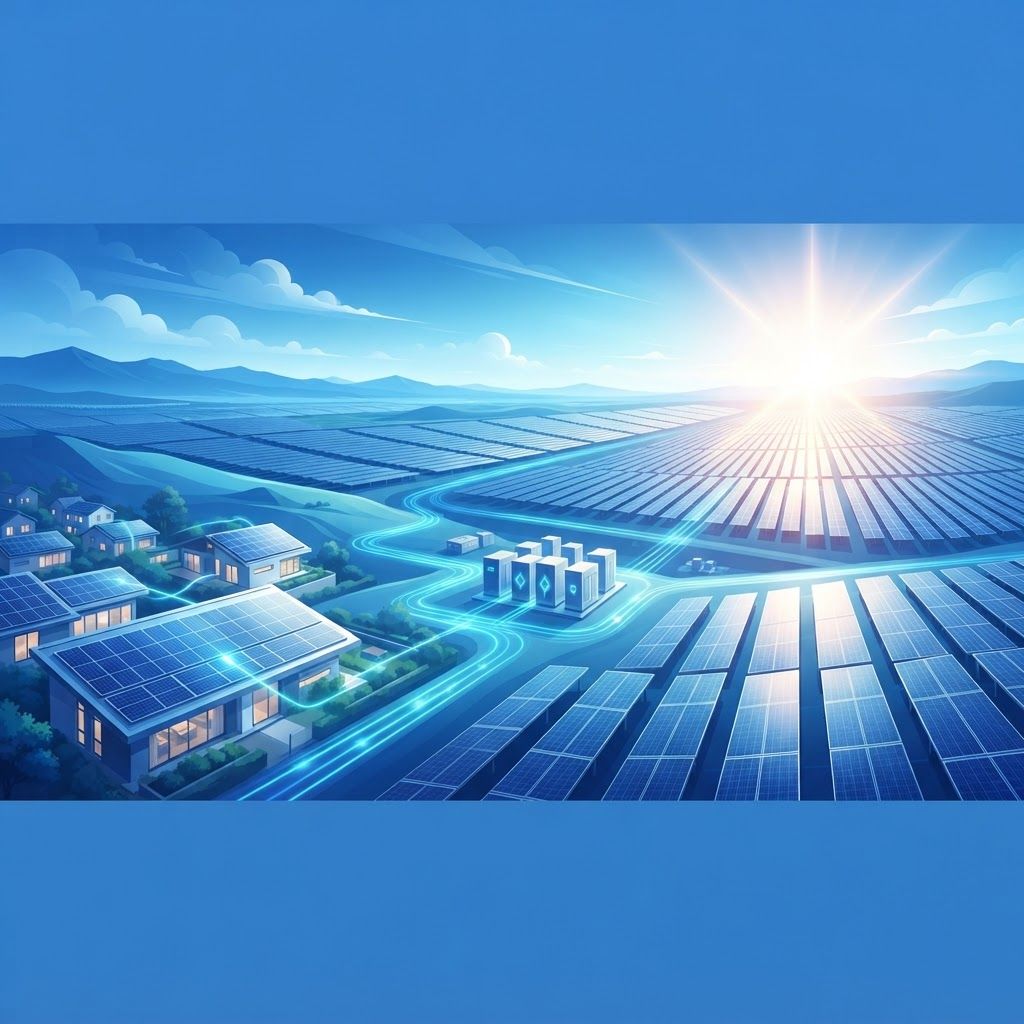
Solar Energy in the North East
A common misconception is that solar photovoltaic systems only make sense in sunny southern climates. In reality, solar panels generate electricity from daylight rather than heat, and modern panels perform well in the diffuse light conditions typical of the North East. Cooler temperatures actually improve panel efficiency slightly, offsetting some of the reduction from lower total irradiance.
For homes and businesses in Redcar and Cleveland, the economics have improved substantially. Panel costs have fallen dramatically over the past decade while electricity prices have risen, shortening payback periods considerably. Battery storage, which allows daytime generation to be used in the evening, has transformed the value proposition for households who are out during the day.
Types of Solar Installation
Domestic rooftop systems are the most common, typically ranging from a few kilowatts upwards depending on roof area and orientation. Commercial rooftop systems on warehouses, factories and retail units are often far larger and benefit from high daytime consumption that matches generation well. Ground-mounted arrays suit sites with available land, including farms and industrial plots. Solar carports combine parking shade with generation and electric vehicle charging. Hybrid systems integrate solar with battery storage and sometimes heat pumps or vehicle charging for whole-property energy management.
Ten Leading Solar Energy Companies
1. Cleveland Solar and Storage
Designs and installs commercial-scale solar arrays with integrated battery systems for industrial and warehouse clients, focusing on maximising self-consumption rather than export.
2. Redcar Renewable Home Energy
A domestic specialist handling rooftop installations, battery retrofits and system monitoring for homeowners across the borough. Emphasises clear performance modelling before purchase.
3. Tees Valley Solar Installations
Covers both residential and small commercial work, offering full design, scaffolding, installation, electrical certification and grid application management as a single package.
4. Northern Rooftop Photovoltaics
Focuses on larger roof-mounted commercial systems, including structural assessment, fire safety compliance and integration with existing electrical distribution.
5. Saltburn Green Energy Solutions
Serves coastal properties with attention to conservation area and listed building considerations, plus corrosion-resistant mounting systems suited to salt-laden marine air.
6. Guisborough Agricultural Solar
Specialises in farm installations, including barn roof arrays, ground-mounted systems and agricultural land dual-use projects, helping rural businesses cut operating costs.
7. Eston Battery Storage Specialists
Concentrates on battery systems, including retrofits to existing solar arrays, time-of-use tariff optimisation and backup power configurations for critical loads.
8. Coastal Solar Maintenance Services
Provides cleaning, inspection, inverter replacement, performance diagnostics and repair for existing installations. An often-overlooked service that materially affects long-term yield.
9. Tees Industrial Energy Systems
Delivers large-scale generation projects for industrial sites, including grid connection engineering, power purchase arrangements and integration with site demand profiles.
10. Northern Solar Carports and EV Charging
Combines canopy-mounted solar generation with electric vehicle charging infrastructure for workplaces, retail sites and public facilities.
Trends in Solar Technology
Panel efficiency continues to improve, with modern modules generating significantly more power per square metre than those installed a decade ago. This matters most where roof space is limited. Bifacial panels, which capture reflected light from both sides, are increasingly used in ground-mounted and flat-roof applications.
Battery costs have fallen sharply, and smart tariffs that charge batteries during cheap overnight periods have added a second revenue stream beyond solar self-consumption. Integrated energy management systems now coordinate solar, battery, heat pump and vehicle charging automatically.
On the commercial side, power purchase agreements allow businesses to host solar installations funded by a third party, paying for the electricity generated rather than the capital cost. This removes the upfront investment barrier for organisations unwilling to allocate capital.
Choosing a Solar Installer
Verify certification under the relevant microgeneration standards scheme, which is usually required for grid export arrangements and provides consumer protection. Ask for a detailed generation estimate based on your actual roof orientation, pitch and shading rather than a generic figure, and be sceptical of optimistic projections.
Check the warranty structure carefully, distinguishing panel performance warranties, inverter warranties and installation workmanship guarantees, which often have different durations. Confirm who handles the grid connection application and the electrical certification. Get at least three quotations and compare the specification of panels, inverter and mounting system, not just headline price.
Consider the roof itself. If it will need replacing within ten years, do that first, as removing and refitting an array is an avoidable expense.
Understanding Returns and Ongoing Performance
Solar investment decisions should be based on realistic modelling rather than headline figures. The most important variable is self-consumption: electricity used on site displaces the full retail price, whereas exported electricity earns a considerably lower rate. A household that is empty during the day will see a very different return from a workshop that runs machinery from morning to evening. Battery storage narrows that gap by shifting generation to when it is needed.
Ongoing performance also matters more than many owners expect. Inverters typically have a shorter working life than panels and represent a mid-life replacement cost that should be budgeted for. Soiling from dust, moss and bird droppings reduces output gradually, and in coastal locations salt deposits can accelerate this. Shading from a growing tree or a new extension can disproportionately affect output depending on how the array is wired. Monitoring systems that flag underperformance early prevent owners from losing years of generation without realising. Treating a solar array as a piece of operating equipment, rather than a fit-and-forget purchase, protects the return over its full lifetime.
Conclusion
Solar energy companies in Redcar and Cleveland now serve everything from modest domestic rooftops to substantial industrial arrays. With falling technology costs, improved battery economics and a strong regional focus on clean energy, solar has become a sound long-term investment for many property owners. The key is careful specification, realistic performance expectations and choosing an installer with verifiable accreditation and a track record of local work.
Want your brand featured in front of decision-makers? Publish a guest post or get a link insertion in our guides through AAMAX's guest post and link insertion service.
Helpful Links
 SponsoredAAMAX — Full-Service Digital Agency
Write for Us
Share your expertise with our readers. We welcome guest contributions from industry specialists.
Pitch your idea

