

Solar Energy in Mid-Wales
There is a persistent myth that Wales is too cloudy for solar. In practice, photovoltaic panels generate electricity from daylight rather than direct sunshine, and modern panels perform well in diffuse light and actually operate more efficiently at cooler temperatures. Powys receives sufficient irradiance to make solar a sound investment, and thousands of installations across the county demonstrate the point, from small domestic rooftops in Brecon to large barn-mounted arrays on farms near Welshpool.
Solar has a particular logic in Powys. Many properties are off the mains gas grid and rely on oil, LPG or electricity for heating, which makes self-generated electricity especially valuable. Agricultural buildings offer extensive south-facing roof area with no planning sensitivity and no shading. Rural businesses with daytime consumption, such as workshops, farm dairies, packing sheds and holiday parks, match their demand profile closely to solar output. And the growing availability of battery storage allows evening and overnight use of daytime generation.
Types of Solar Installation
Domestic rooftop systems typically range from three to six kilowatts and are designed to offset household consumption, with any excess exported. Battery storage is now commonly specified alongside, allowing self-consumption rates to rise substantially. Commercial rooftop systems on barns, factories and warehouses can be far larger, often between fifty kilowatts and several hundred, and are usually sized to on-site demand to maximise the value of every generated unit.
Ground-mounted arrays suit properties with available land and unsuitable roofs, and are common on Powys smallholdings. Utility-scale solar farms occupy larger land parcels and export directly to the grid, subject to planning and grid connection. Solar thermal, which heats water rather than generating electricity, remains a niche but effective option for properties with high hot water demand. Finally, solar carports and agricultural canopy systems combine generation with practical shelter.
The Top 10 Solar Energy Companies Serving Powys
1. Dulas. The Machynlleth-based renewable energy specialist has decades of solar engineering experience covering design, installation and specialist applications. Its technical depth and long presence in mid-Wales make it one of the most credible solar providers in the region.
2. Centre for Alternative Technology. While primarily an education and research body, CAT's influence on solar design standards, training and sustainable building practice across Powys is substantial, and its courses have trained many of the installers working in the county today.
3. Egni Co-op. A Welsh community solar cooperative that has installed rooftop solar across schools, community buildings and businesses throughout Wales. Its model allows organisations to host solar at no capital cost while benefiting from cheaper electricity, and returns surpluses to community purposes.
4. Joju Solar. Working across Wales on commercial and community solar projects, Joju brings strong technical capability in larger rooftop systems, electric vehicle charging integration and battery storage for organisations rather than households.
5. Solar Fast and regional installation companies. National and regional installers with coverage in mid-Wales offer competitive pricing on domestic systems, with structured surveys, standardised design and accredited installation teams.
6. Local Powys solar installers. Accredited independent installers based in Newtown, Brecon, Llandrindod Wells and Welshpool deliver domestic and small commercial systems. Their advantage is aftercare: a fault on a rural rooftop is resolved far faster by a company twenty minutes away than one based two counties distant.
7. Agricultural solar specialists. Companies focusing on farm installations understand barn roof structures, asbestos considerations, three-phase supply, agricultural electrical loads and the interaction between solar income and agricultural reliefs. For farm clients this expertise materially affects both safety and financial outcome.
8. Battery storage and hybrid system specialists. With time-of-use electricity tariffs now widely available, installers specialising in battery integration help Powys households and businesses charge cheaply overnight and use stored energy at peak times, improving returns considerably beyond generation alone.
9. Solar maintenance and operations providers. An often-overlooked category, these companies handle inverter replacement, panel cleaning, monitoring, fault diagnosis and performance optimisation for existing installations. Given how many Powys systems are now over a decade old, this service is increasingly in demand.
10. Utility-scale solar developers active in mid-Wales. Developers pursuing ground-mounted solar farms on lower grade agricultural land work with Powys landowners on long-term leases and option agreements, offering stable income alongside continued grazing in many cases.
Trends in Powys Solar
Battery attachment rates have risen dramatically. A few years ago batteries were unusual; now the majority of new domestic installations include storage, driven by falling battery prices and smart tariffs that reward flexible consumption.
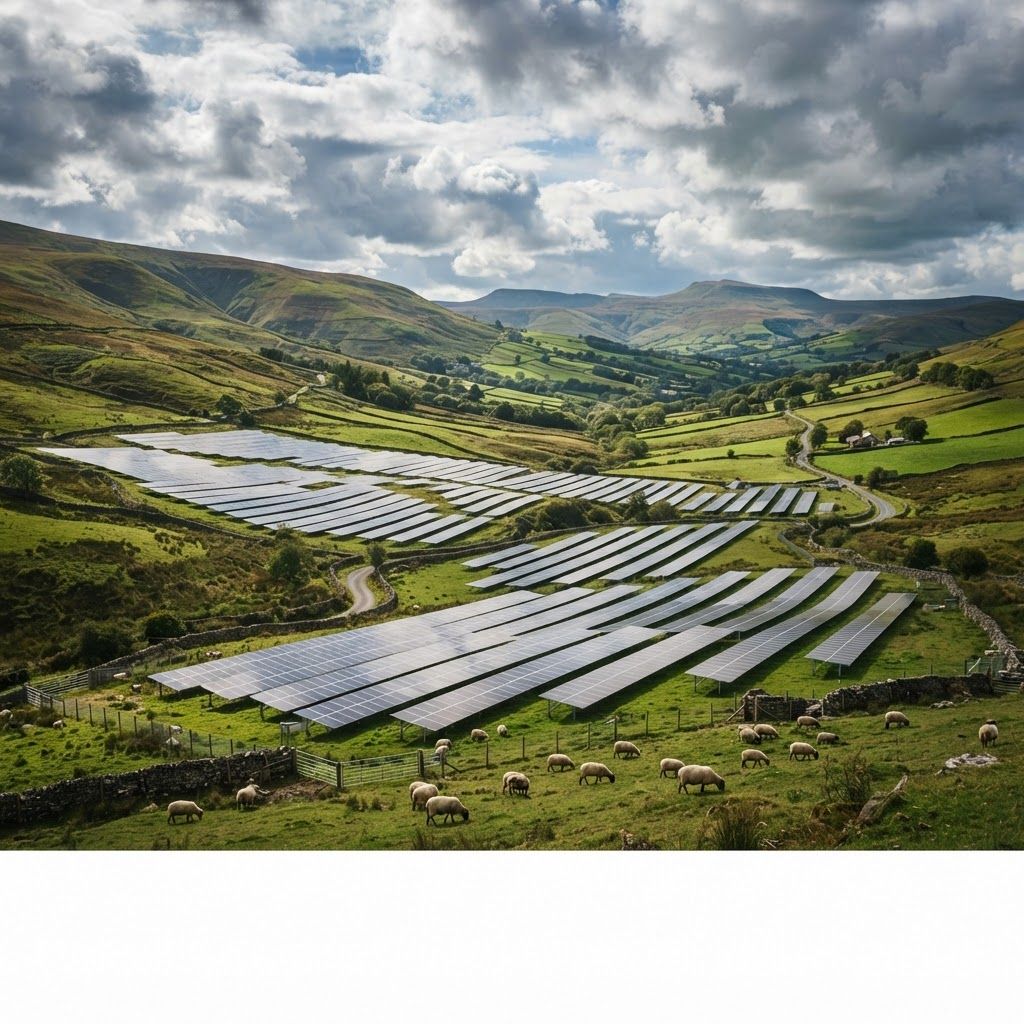
Agrivoltaics, the practice of combining solar generation with continued agricultural use such as sheep grazing or pollinator planting beneath panels, is gaining acceptance and helps address concerns about land use in a farming county.
Electric vehicle integration is another growth area, with solar, battery and vehicle charging designed as a single system. For rural households driving long distances, charging at home from self-generated electricity delivers substantial savings.
Grid export constraints have become a practical consideration in parts of mid-Wales, occasionally limiting the size of system that can be connected. Good installers check connection capacity early rather than after design.
What to Check Before Installing
Confirm the installer holds appropriate certification, which is required for most export payment arrangements. Obtain at least three quotations and compare them on specified equipment, warranties and estimated annual generation rather than headline price alone. Ask for a shading analysis, since even partial shading from trees, chimneys or hills significantly affects output in valley locations.
Check roof condition and structural suitability before committing, particularly on older agricultural buildings. Understand the export arrangement available to you and how it is paid. Review warranty terms separately for panels, inverter, battery and workmanship, as these commonly differ. For listed buildings or properties within Bannau Brycheiniog, confirm planning requirements at the outset. Finally, be realistic about payback, which depends far more on how much generation you consume yourself than on total output.
Final Thoughts
Solar in Powys is no longer experimental. It is a mature, well-understood technology delivering meaningful savings for households, farms and businesses across the county, particularly those off the gas grid with high daytime consumption. Choosing an accredited installer with genuine local presence, and sizing the system to your actual usage rather than your roof area, are the two decisions that determine whether the investment performs.
Want your brand featured in front of decision-makers? Publish a guest post or get a link insertion in our guides through AAMAX's guest post and link insertion service.
Helpful Links
 SponsoredAAMAX — Full-Service Digital Agency
Write for Us
Share your expertise with our readers. We welcome guest contributions from industry specialists.
Pitch your idea

