Solar Power in Northern Ireland: Better Than You Might Expect
A persistent myth holds that solar photovoltaic systems do not work well in Northern Ireland. The reality is more encouraging. Photovoltaic panels generate from daylight rather than direct heat, and they actually operate more efficiently at cooler temperatures. A well-oriented array in Newry, Mourne and Down typically produces a substantial annual yield per kilowatt installed — enough to cover a significant share of a household's electricity consumption and considerably more for businesses consuming power during daylight hours.
The district has particular advantages. South-facing slopes across south Down and the Mourne foothills provide good orientation. Agricultural buildings offer large, unshaded roof areas without planning complications in many cases. Industrial estates around Newry and Warrenpoint have extensive flat roofs. And the district's high proportion of properties heated by oil means electrification of heating, paired with solar generation, offers meaningful savings.
Economics have shifted decisively. Panel and inverter costs have fallen substantially over the past decade while electricity prices have risen and become volatile. Combined with battery storage and export arrangements, a properly designed solar installation now represents a sound long-term investment rather than a statement of principle.
How to Assess a Solar Installer
Microgeneration Certification Scheme accreditation should be your baseline requirement. It governs installation standards, generation estimation methodology and consumer protection, and it is generally necessary for export arrangements and any support schemes. Verify accreditation independently rather than accepting a logo on a brochure.
Insist on a site-specific generation estimate. Credible installers assess roof pitch, orientation, shading from trees, chimneys and neighbouring buildings, and local irradiance data. Estimates presented without a site visit or shading analysis are marketing rather than engineering.
Scrutinise equipment specification. Panel efficiency, degradation rate and warranty length vary considerably between manufacturers. Inverter quality and warranty are equally important since inverters are the component most likely to need replacement within a system's life. Ask what happens if the manufacturer exits the market.
Check structural and electrical competence. Roof loading assessment matters, especially on older buildings and agricultural structures. Consumer unit capacity, earthing arrangements and cable routing all need proper attention. Companies employing qualified electricians and structural input, rather than subcontracting everything to the lowest bidder, produce noticeably better installations.
The Top 10 Solar Energy Companies Serving the District
1. Solmatix Renewables — One of Northern Ireland's most established solar specialists, delivering photovoltaic, solar thermal and heat pump systems across domestic, commercial, agricultural and public sector projects. It is particularly strong on larger commercial rooftop arrays where structural analysis, three-phase electrical work and grid connection all require professional handling.
2. Kingspan Energy — Bringing substantial Irish manufacturing heritage to rooftop solar, Kingspan integrates generation with building envelope performance. Industrial and warehouse clients across the district benefit from an approach that considers insulation, roof condition and generation together rather than treating panels as a bolt-on.
3. Greenland Renewable Energy — Serving Northern Ireland with solar photovoltaic and battery storage installations for homes and businesses. The company is noted for designing systems around actual consumption profiles and for its emphasis on maximising self-consumption through storage rather than relying on export income.
4. Tandragee Renewables — A regional installer with strong coverage of County Down and County Armagh, offering solar photovoltaic alongside heat pumps and biomass. Its experience with rural properties, farm buildings and older housing stock suits much of the district's building profile.
5. Mourne Energy Solutions — A locally rooted provider serving the Mourne and south Down area with solar installation and complementary energy efficiency measures. Homeowners in Newcastle, Annalong, Kilkeel and surrounding villages value having an installer close enough to provide responsive aftercare.
6. Solar Panels NI — A Northern Ireland solar specialist focused on domestic and small commercial photovoltaic systems with battery storage. It offers clear system design, monitoring platforms and maintenance packages, and works extensively with homeowners upgrading from oil heating to electric solutions.
7. Action Renewables — Providing independent assessment and advice on solar feasibility across Northern Ireland. For farms, community buildings and businesses in the district, an impartial technical review before selecting an installer often prevents costly specification errors.
8. Eco Nrg Solutions — A Northern Ireland renewable installer delivering solar photovoltaic, heat pumps and energy efficiency work. It serves both residential and commercial clients and is experienced in combining technologies so that generation, heating and storage operate coherently.
9. Newry Solar Installations — A district-based installer focused on residential and small business photovoltaic systems around Newry, Warrenpoint and the surrounding area. Its local knowledge of roof types, planning sensitivities and grid conditions in the immediate area is a practical benefit.
10. Down Solar and Renewables — Serving Downpatrick, Ballynahinch and the Strangford area with solar photovoltaic and battery installations. The company works with rural homes, farms and small commercial premises, and is recognised for straightforward advice and thorough post-installation support.
What Is Driving Solar Growth Across the District
Battery storage integration has fundamentally changed the value proposition. Solar generation peaks around midday while household demand peaks in the evening. Without storage, surplus generation is exported at rates well below the cost of imported electricity. Batteries capture that surplus for evening use, and increasingly allow households on time-of-use tariffs to charge cheaply overnight as well. Most new domestic installations in the district now include storage.
Agricultural solar has expanded significantly. Farm buildings offer large roof areas, and agricultural electricity demand — milking parlours, refrigeration, grain drying, ventilation — often coincides with daylight generation. Payback periods on well-designed farm installations are frequently shorter than on domestic systems.
Commercial adoption is accelerating in the district's manufacturing and food processing sector, where high daytime consumption makes self-generation compelling. Hotels and hospitality businesses around Newcastle and the Mournes are also investing, both for cost control and because sustainability credentials increasingly influence customer choice.
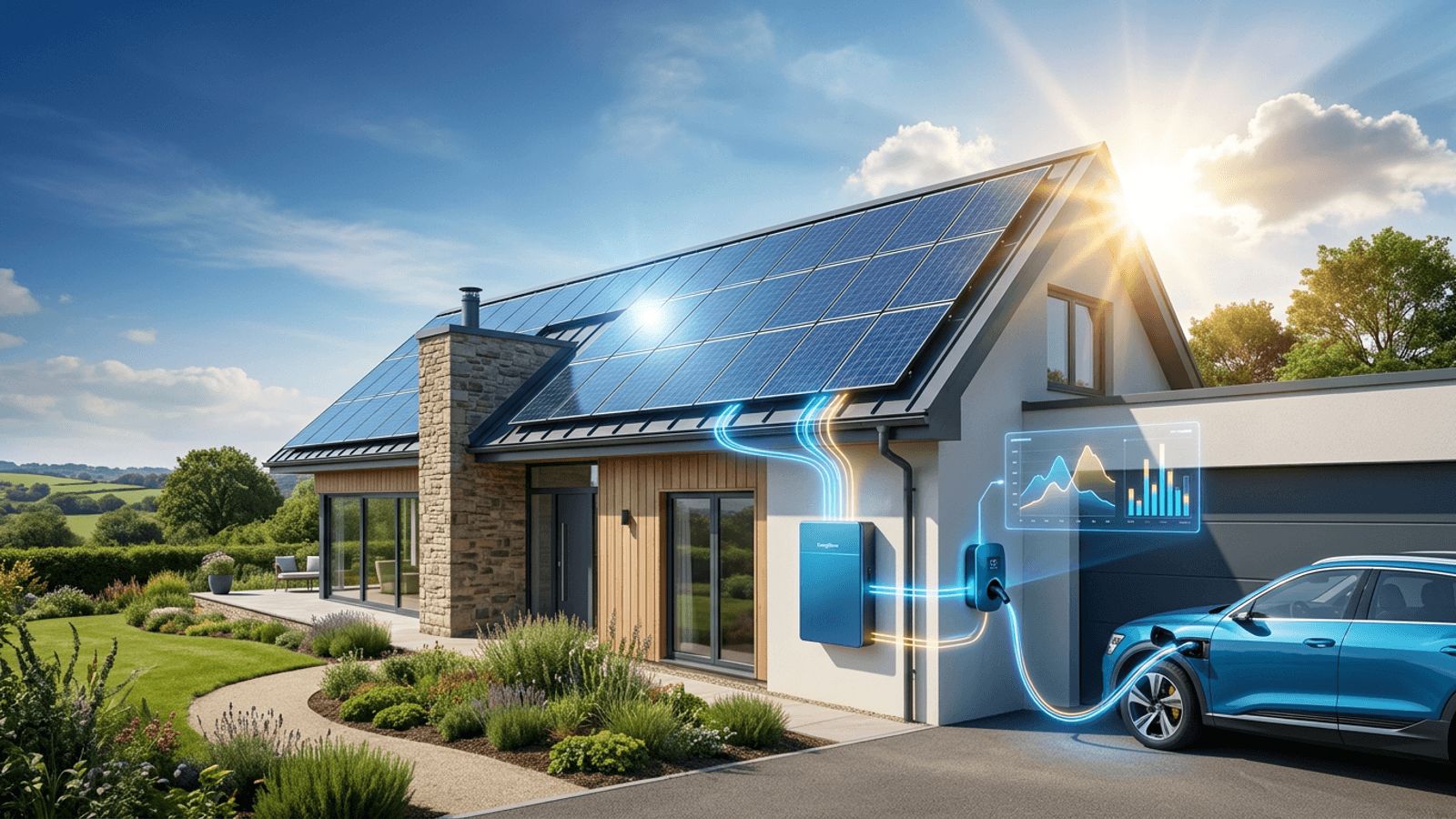
Electric vehicle charging is creating additional demand. Households installing home chargers find solar generation offsets a meaningful share of charging cost, and integrated systems that direct surplus generation to a vehicle rather than the grid are becoming common specifications.
Panel technology continues improving, with higher efficiency modules allowing more capacity on limited roof area — valuable on smaller terraced and semi-detached properties in Newry and the towns.
Specifying a System That Delivers
Begin with your consumption data. Obtain twelve months of electricity usage and understand when you use power. This determines optimal system size and whether storage is worthwhile. Oversizing a system for a household with low daytime consumption and no battery wastes capital.
Assess your roof honestly. Age, condition, covering type and structural capacity all matter. Installing panels on a roof needing replacement within a few years means paying twice for removal and reinstallation. Address roofing first where necessary.
Consider shading carefully. Trees, adjacent buildings and chimneys reduce output disproportionately on conventional string arrangements. Optimisers or microinverters mitigate this but add cost — a good installer will model the trade-off rather than applying a standard approach.
Check planning and conservation constraints. Most domestic solar in Northern Ireland falls within permitted development, but properties in the Mourne Area of Outstanding Natural Beauty, conservation areas or listed buildings may require consent or sympathetic design.
Finally, plan for monitoring and maintenance. Systems that are monitored catch faults early; unmonitored arrays can underperform for years unnoticed. Occasional cleaning, inverter checks and electrical inspection preserve output over the decades a good installation should last. The companies above have earned their reputations across Newry, Mourne and Down by delivering exactly that kind of durable, well-engineered work.
Want your brand featured in front of decision-makers? Publish a guest post or get a link insertion in our guides through AAMAX's guest post and link insertion service.
Helpful Links
 SponsoredAAMAX — Full-Service Digital Agency
Write for Us
Share your expertise with our readers. We welcome guest contributions from industry specialists.
Pitch your idea