Why Solar Works So Well in Merton
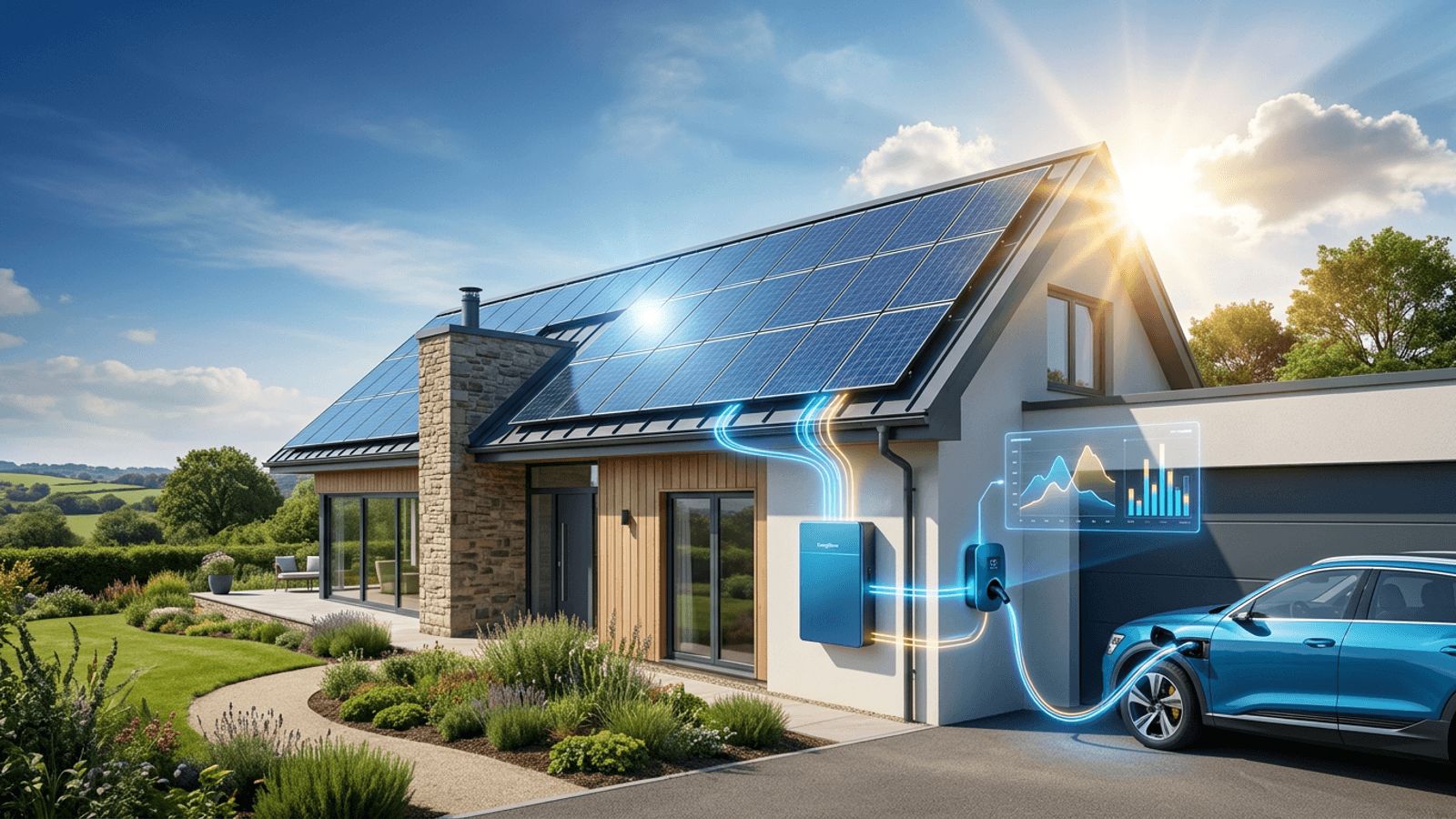
There is a persistent myth that London does not receive enough sunlight for solar power to make sense. In reality, solar photovoltaic panels generate electricity from daylight rather than direct heat, and south east England receives among the highest annual solar irradiation levels in the United Kingdom. A well-designed rooftop array in Merton can be expected to generate a substantial share of a typical household's annual electricity consumption, and considerably more for a business whose demand peaks during daylight hours.
Merton's building stock suits solar unusually well. The borough combines large flat industrial and warehouse roofs in Mitcham and Colliers Wood, extensive pitched residential roofs across Wimbledon, Raynes Park and Morden, and a substantial estate of schools, leisure centres and community buildings with high daytime consumption. Add to this the borough's long history of requiring on-site renewable generation in new development, and solar has had a longer runway here than in most of London.
How a Modern Solar Installation Is Designed
Good solar design begins with consumption, not roof space. An installer should analyse half-hourly or at least monthly electricity usage to understand when energy is actually needed. A household that consumes most of its electricity in the evening will benefit greatly from battery storage, while a business operating nine to five may consume almost all of its generation directly and need little or no storage at all.
The physical survey then assesses roof orientation, pitch, structural capacity, shading from trees and neighbouring buildings, and available space for inverters and isolation equipment. South-facing roofs remain ideal, but east-west split arrays are increasingly popular because they spread generation across the morning and afternoon, producing a flatter output curve that often matches demand better than a single midday peak.
Component selection matters. Panel efficiency determines how much capacity fits on a constrained roof. Inverter choice affects performance under partial shading, with microinverters or power optimisers outperforming a single string inverter where shading is unavoidable. Battery chemistry, usable capacity, warranted cycle life and charge and discharge rates all influence real-world value. Finally, monitoring and controls determine whether the system is actually optimised over time or simply left to run.
The Top 10 Solar Energy Companies in Merton
1. Merton Solar Group
The borough's largest dedicated solar installer, Merton Solar Group handles residential, commercial and public sector projects. It is known for detailed pre-installation modelling, clean cable management and a strong aftercare programme including annual performance reviews.
2. Wimbledon Photovoltaics
A residential specialist with deep experience of Victorian and Edwardian roofs, Wimbledon Photovoltaics is particularly skilled at conservation area and heritage-sensitive installations, including in-roof mounting systems that sit flush with tiles for a discreet appearance.
3. Mitcham Solar Industrial
Focused on large commercial and industrial roofs, this company delivers high-capacity arrays for warehousing, manufacturing and distribution sites. It offers both capital purchase and power purchase agreement structures, and is experienced in structural assessment of older industrial roof decks.
4. Colliers Wood Solar and Battery
Specialising in integrated solar plus storage systems, Colliers Wood Solar and Battery designs around self-consumption and time-of-use tariffs. Customers highlight its clear explanations of how battery sizing affects returns and its willingness to recommend smaller batteries where larger ones would not pay back.
5. Morden Roof Energy
Morden Roof Energy combines roofing expertise with solar installation, which makes it a natural choice where a roof needs repair or replacement alongside a new array. Combining the two works reduces scaffolding costs and avoids the common problem of installing panels onto a roof nearing the end of its life.
6. Raynes Park Solar Design
A design-led consultancy and installer, Raynes Park Solar Design works closely with architects and developers on new build and major refurbishment projects. It is strong on planning documentation, policy compliance and integrating solar into the architectural language of a building.
7. South Wimbledon Solar Maintenance
Rather than competing on new installations, this company specialises in servicing, fault diagnosis, panel cleaning, inverter replacement and performance recovery for existing arrays. Given the number of systems installed in the borough over the past two decades, its niche is a valuable one.
8. Wimbledon Park Community Solar
This organisation develops solar projects on schools, community centres and places of worship using shared ownership and community investment models. It pairs technical delivery with education programmes that make the technology visible to local residents.
9. Merton Solar Thermal and PV
Offering both photovoltaic and solar thermal hot water systems, this company is well suited to buildings with high hot water demand such as care homes, gyms, hotels and student accommodation, where thermal collectors can outperform additional PV capacity.
10. South West London Solar
A broad regional installer serving Merton and adjacent boroughs, this company covers solar, storage, electric vehicle charging and energy management under one contract. Its strength is coordination, avoiding the gaps that arise when multiple specialists work on the same building.
Current Trends in the Solar Market
Battery attachment rates have risen sharply as time-of-use tariffs have spread, making stored solar considerably more valuable than exported solar. Electric vehicle integration is the second major trend, with smart charging aligning vehicle charging to periods of surplus generation. Third, commercial demand is being driven by corporate reporting obligations and by tenants who increasingly ask about building energy performance. Fourth, quality has become a genuine differentiator, with buyers scrutinising warranty backing and installer longevity after a period of rapid, uneven market growth.
Practical Advice Before You Buy
Obtain at least three quotations specifying panel and inverter make and model, total capacity, estimated annual generation, and all warranty terms. Be sceptical of savings figures that assume unrealistic energy price inflation or one hundred per cent self-consumption. Check that the installer is certified under a recognised microgeneration scheme and offers insurance-backed guarantees. Confirm who applies for the grid connection and export agreement. Finally, ask what happens in year eight when an inverter fails, because the answer reveals a great deal about a company's long-term commitment.
Final Thoughts
Solar in Merton is a mature, proven proposition rather than an experiment. The borough has the roof space, the daylight and the installer base to make it work well. The difference between a mediocre installation and an excellent one lies almost entirely in design quality and aftercare, which is why choosing the right company matters far more than shaving a small amount off the headline price.
Want your brand featured in front of decision-makers? Publish a guest post or get a link insertion in our guides through AAMAX's guest post and link insertion service.
Helpful Links
 SponsoredAAMAX — Full-Service Digital Agency
Write for Us
Share your expertise with our readers. We welcome guest contributions from industry specialists.
Pitch your idea