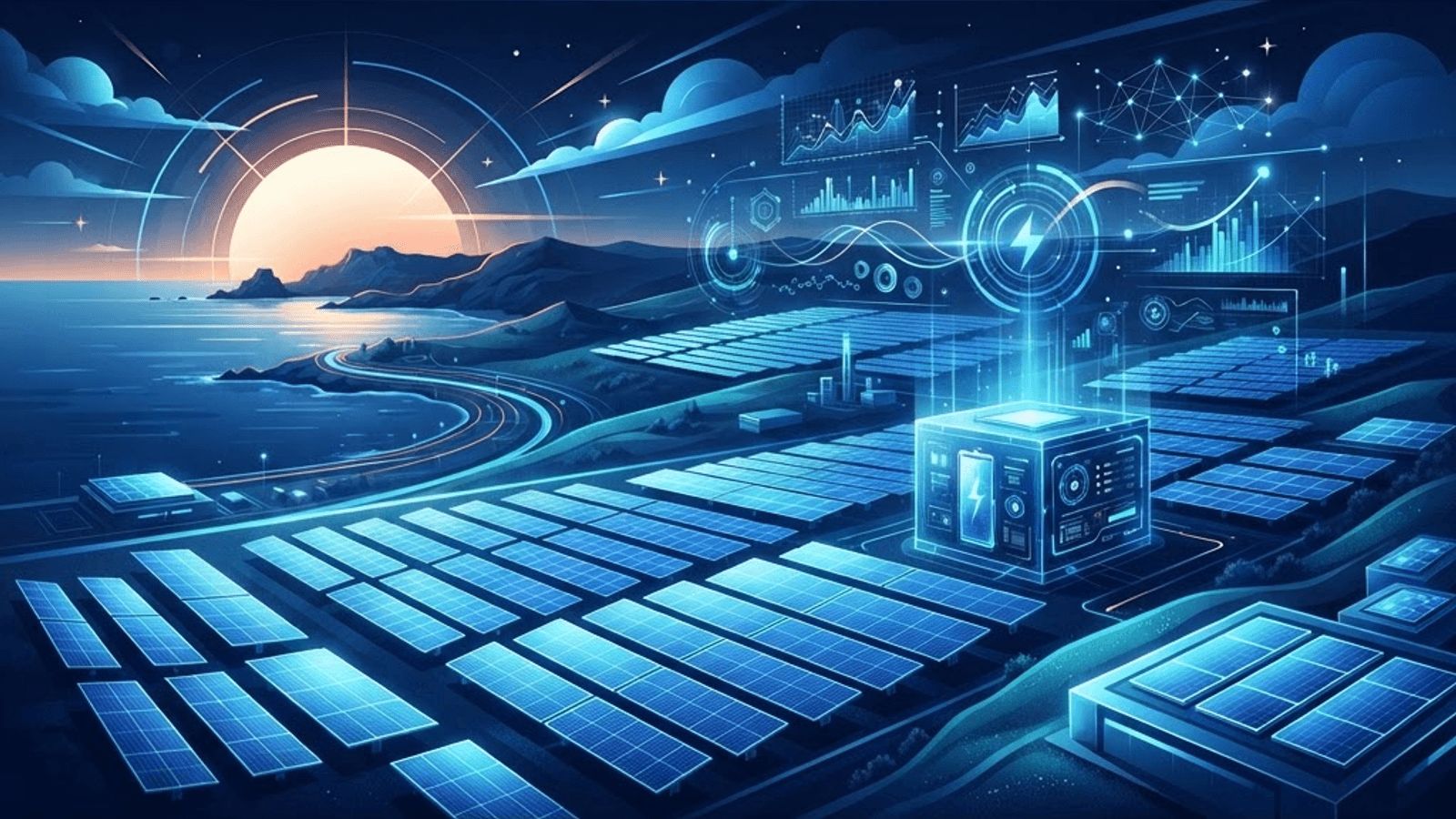
Why Solar Works Well on the Isle of Wight
The Isle of Wight benefits from among the highest levels of solar irradiance in the United Kingdom, comparable to the south coast generally and noticeably better than the national average. For solar photovoltaic systems, this translates directly into higher annual yield per installed kilowatt and consequently shorter payback periods than identical systems installed further north.
Several other factors reinforce the case locally. Many island properties are detached or semi-detached with unobstructed roof space. A significant proportion sit off the mains gas network and rely on expensive oil or direct electric heating, making self-generated electricity particularly valuable. Agricultural and industrial buildings offer large south-facing roof areas well suited to commercial arrays. And island electricity costs, influenced by network charges, give solar a strong relative economic case.
How Solar Photovoltaic Systems Work
Photovoltaic panels convert sunlight into direct current electricity. An inverter converts this into alternating current usable in the property. Electricity generated is consumed on site first, with any surplus exported to the grid. When generation is insufficient, the property draws from the grid as normal.
System output is measured in kilowatts peak, describing capacity under standard test conditions. A typical domestic installation on the island might range from three to six kilowatts peak, generating somewhere in the region of nine hundred to one thousand kilowatt hours annually per kilowatt installed, depending on orientation, pitch and shading.
Orientation matters considerably. South-facing roofs at a pitch around thirty to forty degrees produce the highest annual yield. East and west-facing arrays generate less overall but spread output across morning and evening, which can actually improve self-consumption for households occupying the property at those times.
Ten Solar Companies Serving the Island
1. Wight Solar Solutions — A dedicated solar installer covering residential and commercial projects with in-house survey, design, installation and maintenance. Its local track record and understanding of coastal mounting requirements make it a frequent first choice.
2. Island Renewables — Offering solar alongside battery storage and heat pumps, this company designs integrated systems where generation, storage and heating work together rather than as separate installations.
3. Coastal Photovoltaic Services — Focused on domestic rooftop installations with attention to aesthetics, including in-roof mounting systems that sit flush with tiles. This matters in conservation areas and for listed properties where visual impact is a planning consideration.
4. Newport Commercial Solar — Specialising in larger arrays on industrial units, warehouses and retail premises. Commercial projects involve different considerations including three-phase supply, grid connection applications and structural assessment of roof loading.
5. Vectis Agricultural Solar — Installing on farm buildings and delivering ground-mounted arrays for landowners. Agricultural clients often have substantial roof area and high daytime electricity demand from refrigeration, irrigation and processing, making self-consumption rates excellent.
6. Solent Solar and Storage — Concentrating on solar paired with battery systems and smart energy management, enabling households to store daytime generation for evening use and take advantage of time-of-use electricity tariffs.
7. Ryde Energy Systems — Providing solar installation alongside electric vehicle charging integration, allowing vehicles to charge from surplus generation rather than importing from the grid.
8. Southern Solar Maintenance — Focused on servicing, inspection, panel cleaning, inverter replacement and performance troubleshooting for existing installations. As the island's installed base ages, maintenance expertise is increasingly valuable.
9. Island Community Solar — Developing shared solar projects on community buildings and schools, funded through local investment with benefits returned to the community.
10. Shanklin Solar Installers — Serving the island's south-east with domestic installations, known for clear quotations, realistic yield projections and straightforward aftercare.
Batteries and Self-Consumption
The economics of solar now hinge substantially on self-consumption. Electricity used on site displaces imported electricity at full retail price, whereas exported electricity earns a considerably lower rate under the Smart Export Guarantee. Maximising the proportion consumed directly therefore improves returns significantly.
Battery storage shifts surplus daytime generation into evening use, typically raising self-consumption from around thirty or forty percent to seventy percent or higher. Batteries also enable arbitrage on time-of-use tariffs, charging cheaply overnight and discharging during expensive peak periods, which can deliver value even in winter when solar output is low.
Battery sizing should reflect household consumption patterns rather than simply matching array size. Oversized batteries that rarely cycle fully extend payback unnecessarily.
Costs, Returns and Realistic Expectations
Installation costs vary with system size, roof complexity, scaffolding requirements and component quality. Larger systems cost more in total but less per kilowatt installed. Adding battery storage roughly increases total project cost substantially, though prices have fallen considerably.
Payback periods for well-designed island installations commonly fall within a range that compares favourably to other domestic investments, helped by high local irradiance and electricity prices. Panels typically carry performance warranties of twenty-five years or more, and inverters generally require replacement once during system life, which should be factored into lifetime calculations.
Beware of quotations projecting unrealistic yields or assuming unrealistically high self-consumption. Reputable installers provide calculations based on recognised methodology with stated assumptions.
Planning and Building Considerations
Most domestic rooftop solar falls under permitted development, but exceptions apply to listed buildings, properties in conservation areas and installations on principal elevations facing highways. Parts of the island fall within designated landscape areas where additional sensitivity applies. Ground-mounted arrays above modest sizes usually require planning permission.
Structural adequacy of the roof must be confirmed, particularly on older properties and agricultural buildings. Coastal wind loading is a genuine engineering consideration on exposed island sites, and mounting systems must be specified accordingly.
Choosing an Installer
Microgeneration Certification Scheme accreditation is essential for accessing export payments and provides assurance of installation standards. Ask for recent local references and, ideally, actual generation data from comparable installations.
Insist on a detailed written quotation specifying panel and inverter manufacturers and models, expected annual generation with the calculation basis stated, scaffolding and electrical work inclusion, warranty terms for both products and workmanship, and the process for handling faults. Salt-laden coastal air accelerates corrosion of poor-quality mounting hardware, so specification quality genuinely matters on the island.
Finally, prefer installers with an established local presence. A warranty is only as reliable as the company standing behind it, and a business embedded in the island community has strong incentives to honour it.
Want your brand featured in front of decision-makers? Publish a guest post or get a link insertion in our guides through AAMAX's guest post and link insertion service.
Helpful Links
 SponsoredAAMAX — Full-Service Digital Agency
Write for Us
Share your expertise with our readers. We welcome guest contributions from industry specialists.
Pitch your idea