

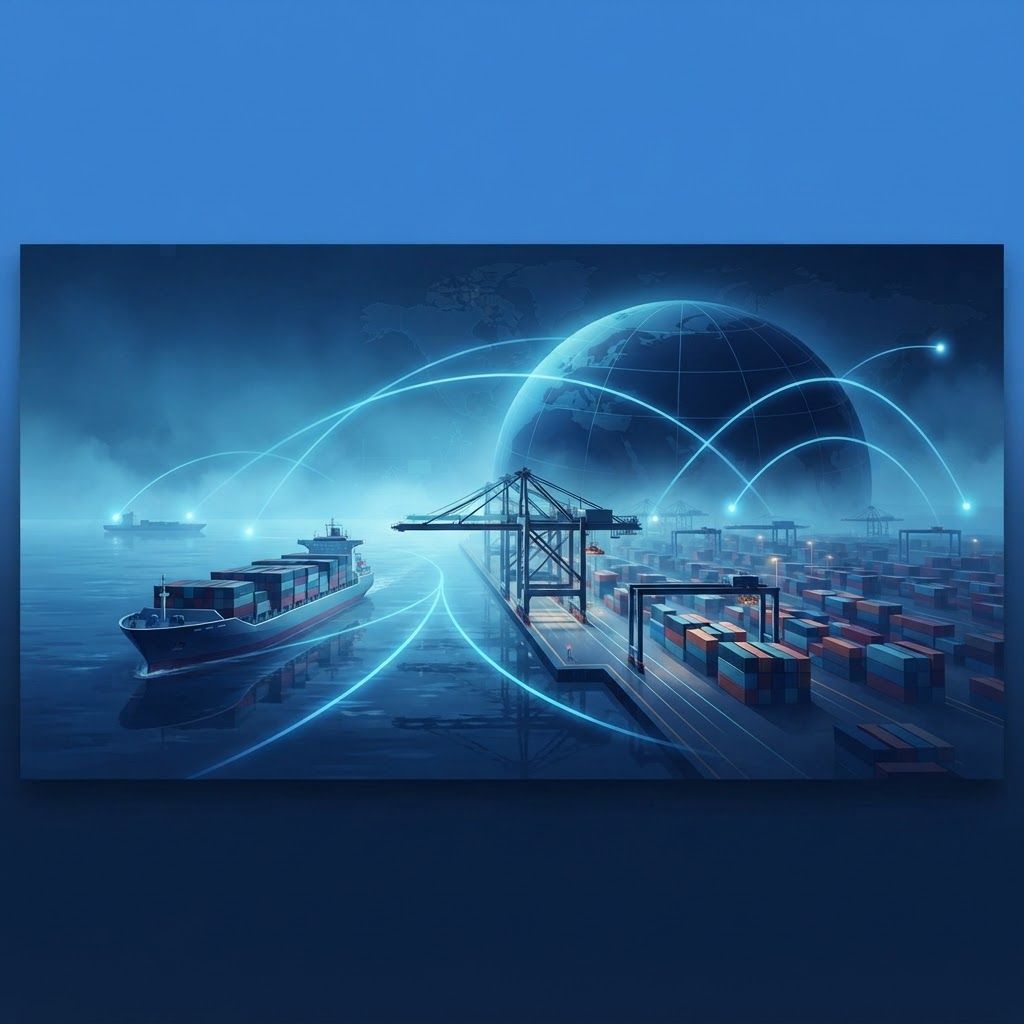
Warrington's Maritime Connection
Warrington is not a coastal town, yet it has a more direct relationship with shipping than most inland locations in Britain. The Manchester Ship Canal cuts through the borough, and for over a century has allowed seagoing vessels to reach terminals well inland. Warrington's own wharves and the nearby terminals along the canal continue to handle bulk and project cargo, while the Port of Liverpool sits a short drive west and Manchester's inland terminals lie east.
For importers and exporters based in the town, this proximity translates into shorter drayage distances, lower haulage costs and faster container turnaround than businesses further inland can achieve. It also means Warrington supports a healthy population of freight forwarders, NVOCCs, customs brokers and shipping agents who understand the specific rhythms of North West port operations.
Understanding the Shipping Options
Sea freight breaks down into a few distinct products, and choosing correctly has a bigger impact on cost than negotiating rates. Full container load, or FCL, suits volumes that fill or nearly fill a twenty or forty-foot box, and offers the lowest cost per unit alongside minimal handling. Less than container load, or LCL, consolidates multiple shippers' goods into one container, which suits smaller volumes but introduces additional handling and a slightly longer transit.
Beyond containers there is break bulk and project cargo for oversized items that cannot be containerised, roll-on roll-off for vehicles and wheeled plant, and specialist services for tank containers, reefers and hazardous goods. Short sea shipping across the Irish Sea and to near-European ports is a distinct market again, often faster and more flexible than deep sea for regional trade. A good Warrington-based provider will advise honestly on which mode fits rather than defaulting to whatever they sell most of.
The Top 10 Shipping Companies Serving Warrington
1. Maersk — The world's most recognisable container line has evolved into a full integrated logistics provider, offering ocean freight, inland haulage, customs clearance and warehousing under one contract. For Warrington importers, Maersk's strength is schedule reliability into Liverpool and the ability to take responsibility for the entire door-to-door movement, which removes the coordination burden from lean internal teams.
2. MSC — Mediterranean Shipping Company operates one of the largest container fleets in the world and calls at Liverpool as part of its transatlantic and feeder networks. MSC is often competitive on rates and offers particularly strong coverage of Mediterranean, African and South American trades, which can be harder to serve well from the North West than mainstream Asian routes.
3. CMA CGM — The French group brings extensive global coverage with notable strength on Asia-Europe and transatlantic lanes, along with specialist handling for reefer and out-of-gauge cargo. Its digital booking platforms have matured considerably, making it easier for small and mid-sized Warrington shippers to obtain rates and manage documentation without a dedicated shipping department.
4. Hapag-Lloyd — Hapag-Lloyd has a reputation for operational discipline and documentation accuracy, which matters enormously for shippers dealing with letters of credit or strict customs regimes. The line is a strong choice for higher-value cargo where a delayed or incorrect bill of lading creates real financial exposure.
5. Peel Ports Group — As operator of the Port of Liverpool and the Manchester Ship Canal, Peel Ports is arguably the single most influential shipping-related organisation for Warrington businesses. Its investment in the deepwater container terminal has brought larger vessels directly into the North West, reducing reliance on southern ports and cutting hundreds of road miles from typical import journeys.
6. Yusen Logistics — Combining ocean and air freight forwarding with customs brokerage and UK warehousing, Yusen is well suited to businesses that want a single accountable partner across international and domestic legs. Its North West presence means local account contact rather than remote handling from a distant office.
7. Kuehne + Nagel — One of the largest freight forwarders globally, Kuehne + Nagel offers sea freight consolidation services, project cargo engineering and strong visibility platforms. Its LCL consolidation network is particularly valuable for Warrington SMEs importing modest volumes regularly, giving them access to competitive rates and predictable weekly sailings.
8. DSV — DSV has grown rapidly through acquisition into a genuine global forwarder with a substantial UK footprint. The business is known for straightforward commercial dealing and effective handling of multimodal movements combining sea, road and rail — relevant in Warrington, where rail-connected terminals are within easy reach.
9. Seatruck Ferries and Irish Sea Operators — For trade with Ireland, short sea operators serving Liverpool and Heysham provide fast, frequent roll-on roll-off capacity for trailers and unaccompanied units. Warrington's motorway access makes it an efficient staging point for Irish Sea traffic, and these services often beat container shipping on both transit time and total cost for the route.
10. Independent Warrington Freight Forwarders and Customs Brokers — The town supports a number of smaller, independent forwarding houses and customs specialists. Their value proposition is responsiveness and genuine advisory depth: a named individual who answers the phone, knows your commodity codes and will flag a problem before it becomes a demurrage charge. For complex or low-volume shipping, this often outperforms a global provider's call centre.
Trends Affecting Sea Freight from the North West
Several forces are reshaping the market. Vessel sizes have grown, concentrating calls at deepwater terminals and making Liverpool's expanded capacity strategically important for the region. Environmental regulation is tightening, with low-sulphur fuel requirements, emissions trading and alternative fuel trials all feeding into freight rates and surcharge structures. Shippers should expect environmental surcharges to become a permanent line item rather than a temporary adjustment.
Digitalisation has also accelerated. Electronic bills of lading, automated customs declarations and API-driven track and trace have reduced administrative friction significantly. At the same time, rate volatility has become the norm rather than the exception, which has increased interest in index-linked contracts and mixed strategies that blend contract and spot capacity.
Getting the Best from a Shipping Partner
Be precise about your cargo. Accurate weights, dimensions, commodity codes and packing details prevent the vast majority of disputes and surcharges. Understand your Incoterms properly, because the difference between FOB and CIF determines who controls the routing, who carries the risk and where costs land. Many first-time importers discover too late that agreeing to a supplier-arranged shipment removed all their control over destination charges.
Build in realistic buffers. Port congestion, customs inspections and weather delays are ordinary features of sea freight, not exceptions, and planning to arrive exactly on the day of need invites problems. Finally, review your arrangements annually. Warrington's access to multiple ports, forwarders and lines means genuine competitive tension exists, and shippers who test the market periodically consistently secure better terms than those who renew by default.
Want your brand featured in front of decision-makers? Publish a guest post or get a link insertion in our guides through AAMAX's guest post and link insertion service.
Helpful Links
 SponsoredAAMAX — Full-Service Digital Agency
Write for Us
Share your expertise with our readers. We welcome guest contributions from industry specialists.
Pitch your idea

