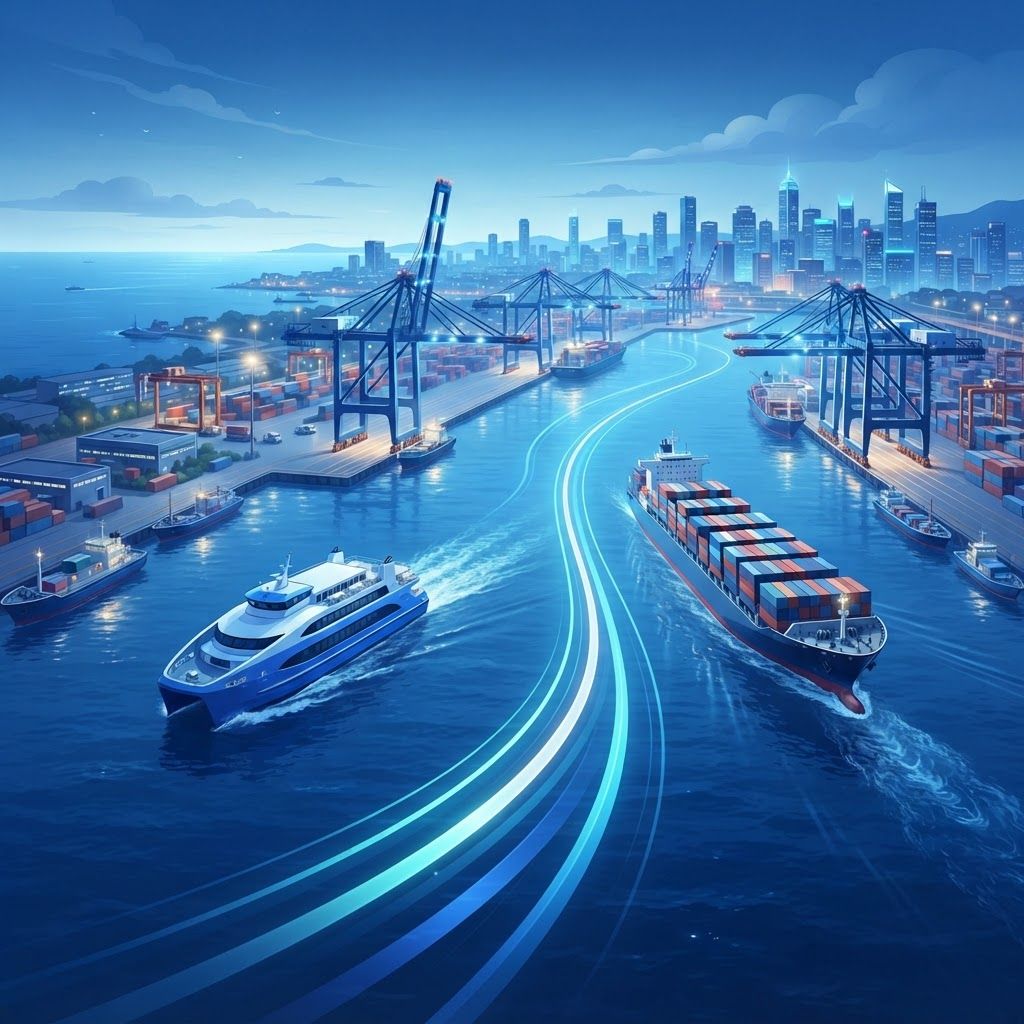
A County Defined by the Sea
Few places in the United Kingdom are as thoroughly shaped by shipping as Pembrokeshire. The Milford Haven Waterway is a ria, a drowned river valley, and its natural depth allows it to accommodate some of the largest vessels afloat, including very large liquefied natural gas carriers. Combined with ferry ports at Pembroke Dock and Fishguard, a working fishing fleet, and a growing marine leisure and renewables sector, this gives the county a maritime economy of genuine national significance.
Shipping activity here divides into several distinct trades: energy imports and product movements through the waterway terminals, roll-on roll-off ferry traffic to Ireland, fishing and shellfish landings, passenger and wildlife boat operations to the offshore islands, and marine services including towage, pilotage and vessel support.
Ten Shipping and Marine Operators
Port of Milford Haven. As the statutory harbour authority and trust port for the waterway, the Port of Milford Haven oversees marine safety, pilotage and navigation across one of the busiest energy ports in the country, while also operating commercial facilities and marina assets.
Stena Line. Operating the Fishguard to Rosslare route, Stena Line is one of the principal Irish Sea ferry companies, carrying passengers, cars and freight on a corridor that has connected Wales and Ireland for well over a century.
Irish Ferries. Running services from Pembroke Dock to Rosslare, Irish Ferries provides the southern Pembrokeshire crossing, serving both tourist traffic and a substantial volume of commercial vehicles.
South Hook LNG terminal operations. The South Hook facility on the waterway is among the largest liquefied natural gas import terminals in Europe, receiving specialised LNG carriers and playing a significant role in United Kingdom gas supply.
Dragon LNG. The second liquefied natural gas terminal on the waterway, Dragon LNG handles import, storage and regasification, contributing further to the county's status as a national energy gateway.
Valero Pembroke Refinery marine operations. The refinery's marine terminal handles crude and product movements by tanker, making it one of the most significant individual generators of shipping traffic in the waterway.
Towage and marine services providers. Tug operators supporting berthing and unberthing of large tankers and gas carriers perform safety-critical work in the waterway, operating powerful vessels under the direction of harbour pilots.
Milford Haven fishing fleet and shellfish operators. Commercial fishing remains active in the county, with landings of crab, lobster, whelk, scallops and finfish supporting local processing and export, particularly to continental European markets.
Island passenger boat operators. Licensed boat operators run passenger services to Skomer, Skokholm, Ramsey and Caldey Islands. These vessels carry very large numbers of wildlife visitors during the seabird season and operate under strict passenger safety certification.
Marina and yacht services businesses. Marinas at Milford Haven and Neyland, along with boatyards and chandleries across the waterway, support a substantial leisure marine sector including yacht moorings, repairs, lifting and winter storage.
The Milford Haven Waterway in Context
The waterway's importance rests on a simple physical advantage: depth. It can handle vessels that most British ports cannot, and it does so in a sheltered natural harbour with a relatively short approach. This has made it the location of choice for energy infrastructure over more than half a century, first for oil refining and later for liquefied natural gas.
Operating such traffic safely requires sophisticated marine management. Pilotage is compulsory for large vessels, vessel traffic services monitor movements continuously, and emergency response arrangements are maintained for pollution and incident scenarios. The waterway also sits within a landscape of high conservation value, which creates a permanent requirement to balance industrial activity with environmental protection.
Irish Sea Ferry Trade
The Wales to Ireland ferry routes carry tourists, freight and everyday travellers, and they are economically important to both sides of the crossing. Pembrokeshire's two routes to Rosslare provide the shortest sailings from south west Wales. Traffic patterns have been influenced in recent years by customs arrangements, by the growth of direct sailings between Ireland and continental Europe, and by fluctuations in tourism demand.
For travellers, these routes offer a straightforward way to combine a Welsh coastal holiday with a visit to south east Ireland, and both ports have rail connections that support foot passenger travel.
Fishing, Shellfish and Coastal Trades
Pembrokeshire's inshore fleet is composed largely of small vessels working pots and nets close to shore. Shellfish dominate by value, and much of the catch is exported. The sector faces the challenges common across the UK fishing industry, including quota management, export certification requirements, crew recruitment and the rising cost of fuel and gear, but it retains cultural and economic importance in harbour communities.
Offshore Renewables and the Future
The most significant development on the horizon is floating offshore wind in the Celtic Sea. Ports with deep water and adjacent land, such as those on the Milford Haven Waterway, are strong candidates for turbine assembly, marshalling and operations-and-maintenance bases. If this materialises at scale, it would generate substantial new shipping activity, including crew transfer vessels, service operation vessels and heavy lift movements, and would represent the biggest change to the county's maritime economy since the arrival of liquefied natural gas.
Practical Notes for Shippers and Travellers
Commercial shippers should engage early with the harbour authority regarding berth availability, pilotage requirements and any hazardous cargo notifications. Exporters of seafood need to account for export health certification and the timing of catch landings against sailing schedules. Ferry travellers should book ahead in summer, allow ample check-in time for vehicle sailings, and note that crossings can be affected by weather in the Irish Sea, particularly in winter.
Final Thoughts
Shipping in Pembrokeshire ranges from vast gas carriers entering one of the world's finest natural harbours to small boats carrying birdwatchers to Skomer. The county's ports, ferry operators, energy terminals, marine service providers and fishing fleet form an interconnected maritime economy with deep historical roots and a genuinely interesting future in offshore renewables. For anyone doing business at sea in west Wales, it is a region with infrastructure and expertise that punches well above its size.
Want your brand featured in front of decision-makers? Publish a guest post or get a link insertion in our guides through AAMAX's guest post and link insertion service.
Helpful Links
 SponsoredAAMAX — Full-Service Digital Agency
Write for Us
Share your expertise with our readers. We welcome guest contributions from industry specialists.
Pitch your idea