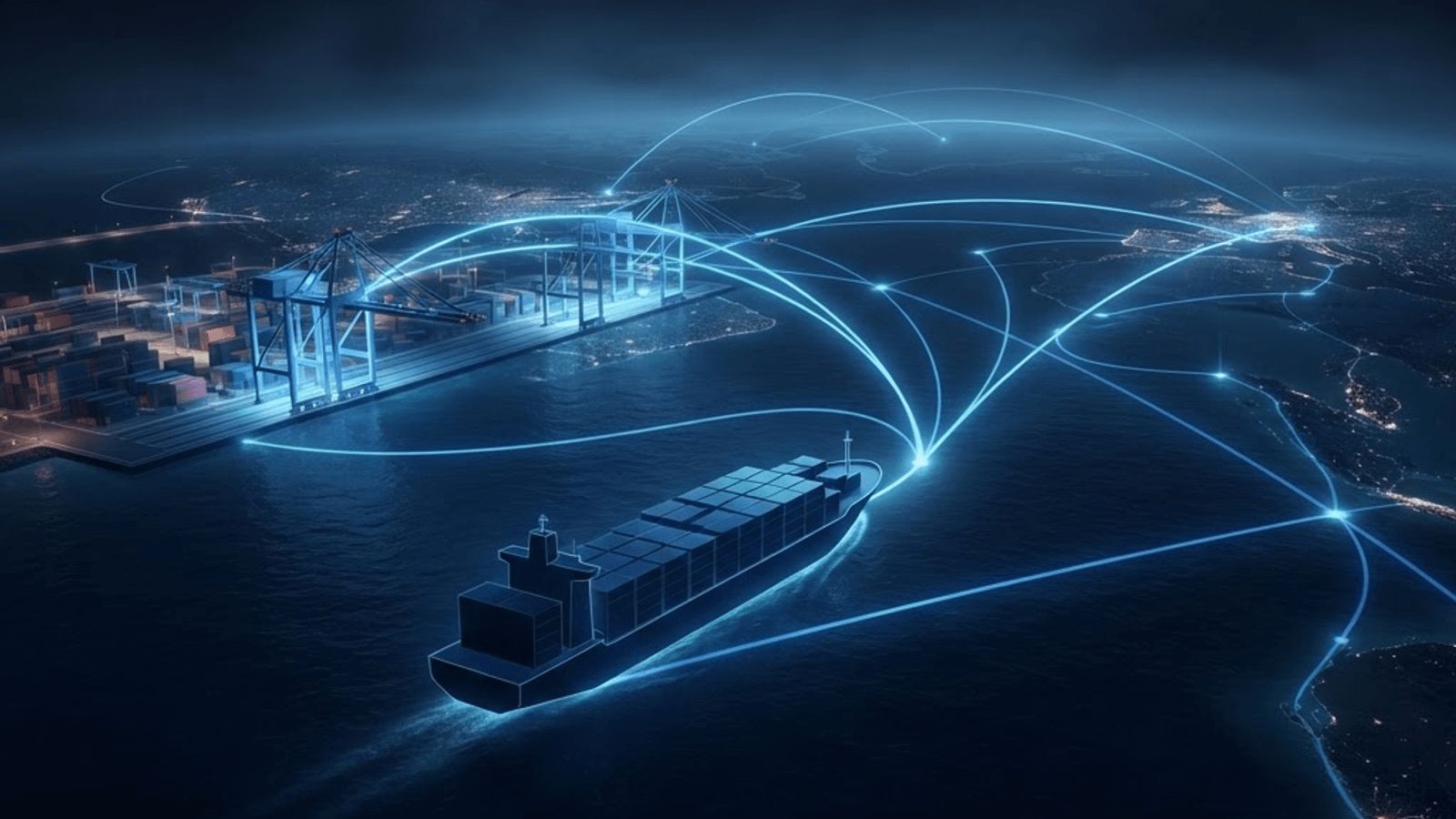
North Kesteven's Connection to Global Trade
North Kesteven is an inland district, but its businesses are firmly connected to international shipping. Lincolnshire's food producers export substantial volumes, its engineering and machinery businesses serve overseas customers, and manufacturers across the district import components and raw materials from across the world.
The Humber ports, including Immingham, Grimsby and Hull, provide the district's most natural gateway, handling container, roll-on roll-off and bulk traffic with strong connections to northern European markets. Felixstowe, Southampton and London Gateway serve deep-sea container routes to Asia and North America. Boston and Sutton Bridge handle smaller-scale coastal and short-sea traffic closer to home.
The companies serving North Kesteven exporters therefore include freight forwarders, customs brokers, container consolidators and shipping line agents, each performing a distinct function in moving goods overseas.
Understanding the Service Types
Full container load shipping dedicates an entire container to a single consignment. It suits larger volumes, reduces handling and generally offers the lowest cost per unit for substantial shipments.
Less than container load consolidates goods from multiple shippers into a shared container. It allows smaller exporters to access sea freight economically, though transit times are longer because of consolidation and deconsolidation at each end.
Roll-on roll-off services carry trailers and vehicles directly onto ferries, offering fast, frequent connections to continental Europe. For time-sensitive food exports from Lincolnshire this mode is often preferred over containerised shipping.
Bulk shipping handles commodities such as grain, fertiliser and aggregates in vessel holds rather than containers. Given the county's agricultural output, this traffic is significant regionally.
Specialist services cover temperature-controlled containers for perishable goods, out-of-gauge cargo for oversized machinery and project cargo requiring bespoke handling arrangements.
The Role of the Freight Forwarder
Most businesses do not deal directly with shipping lines. A freight forwarder acts as the organising intermediary, booking space, arranging inland transport to and from the port, preparing documentation, managing customs procedures and coordinating delivery at destination.
A capable forwarder adds value well beyond booking. They advise on Incoterms, which determine where responsibility and cost transfer between buyer and seller and which are a frequent source of costly misunderstanding. They advise on packaging standards suitable for sea transit, on cargo insurance, and on route options balancing cost against transit time.
They also manage exceptions. Vessel delays, port congestion, customs queries and documentation errors all occur regularly in international shipping, and the quality of a forwarder is most visible in how quickly these are resolved.
Customs and Documentation
Customs compliance has become considerably more demanding for United Kingdom exporters and importers. Accurate commodity classification determines duty rates and licensing requirements, and errors can result in delays, penalties and retrospective duty claims.
Core documentation typically includes a commercial invoice, packing list, bill of lading or sea waybill, certificates of origin where preferential tariffs apply, and any product-specific certification. Food exports frequently require health certificates and phytosanitary documentation, which must be obtained within specific timeframes before departure.
Customs brokers specialise in this work, submitting declarations, managing duty deferment arrangements and advising on procedures such as inward and outward processing relief that can reduce duty liability substantially.
Businesses should ensure their chosen partner holds appropriate authorisations and maintains the record-keeping standards that customs authorities expect during audit.
Managing Shipping Costs
Sea freight pricing is volatile, influenced by vessel capacity, fuel costs, port congestion and seasonal demand. Businesses can manage this exposure in several ways.
Booking in advance and, where volumes justify it, agreeing contract rates for a defined period provides stability. Consolidating shipments to achieve full container loads reduces unit cost. Optimising packaging to maximise container utilisation delivers immediate savings, since shipping charges relate to volume as well as weight.
Total landed cost should be the measure, not ocean freight alone. Inland haulage, port charges, customs clearance fees, demurrage and detention charges, duty and destination delivery all contribute, and a cheap ocean rate can be offset entirely by expensive ancillary charges.
Demurrage and detention deserve particular attention. These charges accrue when containers remain at the port or in the customer's possession beyond free time allowances, and they escalate quickly. Good forwarders alert customers proactively before charges begin.
Selecting a Shipping Partner
Businesses should assess trade lane expertise first. A forwarder strong on European roll-on roll-off traffic may have limited experience of deep-sea Asian routes. Match the provider's strengths to your actual markets.
Verify credentials, including trade association membership, customs authorisations and appropriate liability cover. Confirm what insurance applies to cargo and whether separate marine cargo insurance is advisable, since standard forwarder liability is limited.
Assess communication and visibility. Providers offering shipment tracking, proactive status updates and named account contacts reduce the administrative burden on the customer considerably.
Ask how the provider handles problems. Request a specific example of a disrupted shipment and how it was resolved.
Looking Ahead
International shipping continues to evolve, with environmental regulation driving cleaner fuels and more efficient vessels, digitalisation replacing paper documentation, and supply chain resilience receiving greater attention after recent global disruptions.
For businesses across North Kesteven, the practical conclusion is that shipping expertise is a competitive asset. Exporters who work with knowledgeable partners, understand their documentation obligations and manage total landed cost carefully are consistently better placed to compete in international markets.
Want your brand featured in front of decision-makers? Publish a guest post or get a link insertion in our guides through AAMAX's guest post and link insertion service.
Helpful Links
 SponsoredAAMAX — Full-Service Digital Agency
Write for Us
Share your expertise with our readers. We welcome guest contributions from industry specialists.
Pitch your idea