

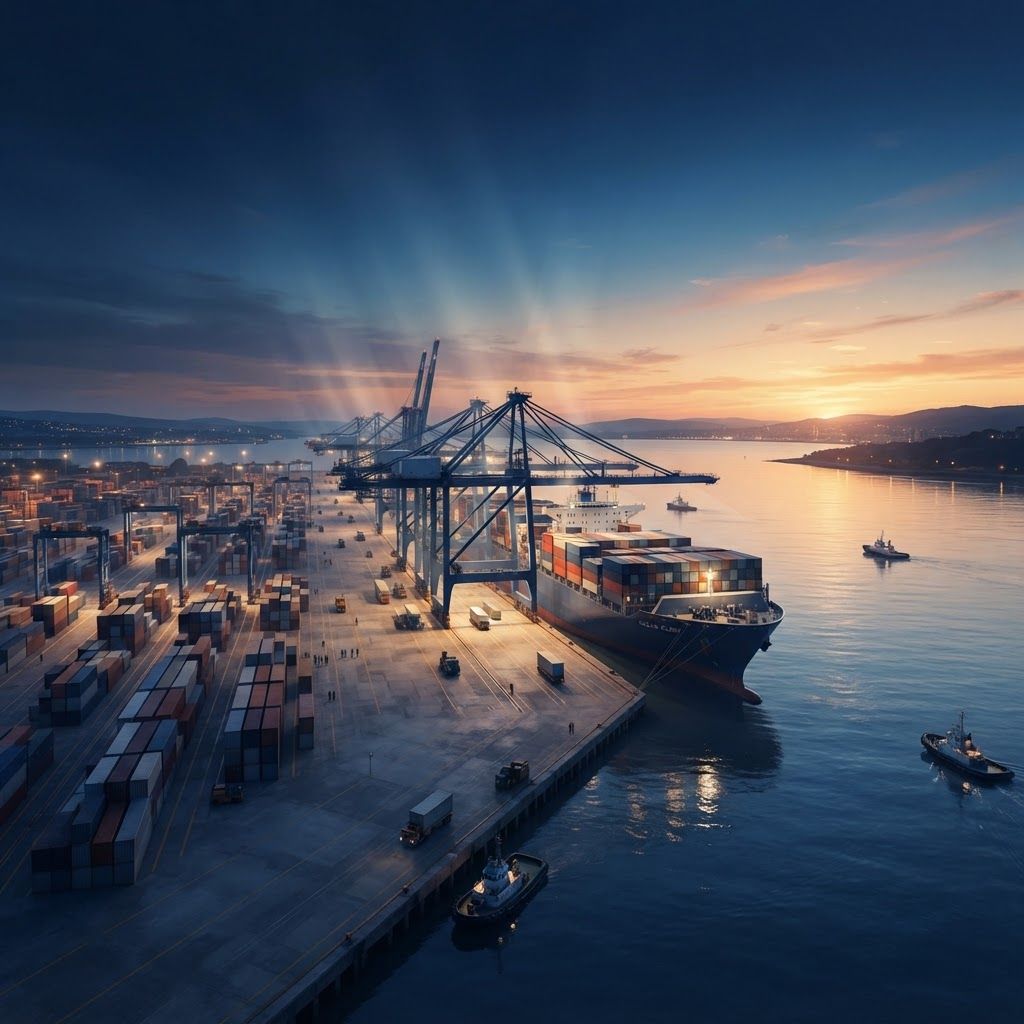
A Maritime Borough
North East Lincolnshire's identity has been shaped by the sea for centuries. Grimsby was once the largest fishing port in the world, its docks crowded with trawlers working the North Atlantic. That industry has diminished dramatically, but the maritime economy has not disappeared. It has transformed, and today the borough sits at the centre of one of Europe's most significant estuarine trading systems.
The Humber handles an extraordinary volume of British trade. Immingham in particular consistently ranks as the United Kingdom's largest port by tonnage, driven by bulk energy commodities, agricultural products, vehicles and containerised cargo. Grimsby's docks handle vehicle imports, offshore wind operations and continuing fish landings and processing.
This concentration has produced a dense cluster of shipping companies, agents, brokers, surveyors and marine service providers whose combined expertise represents a genuine national asset.
Understanding Shipping Services
The shipping sector encompasses several distinct roles that are easily confused. Shipping lines own or charter vessels and operate scheduled or tramp services. Shipping agents represent vessel owners locally, handling port formalities, crew matters, supplies and cargo documentation. Freight forwarders arrange transport on behalf of cargo owners, often across multiple modes and carriers.
Ship brokers negotiate charters and vessel sales, connecting cargo owners with available tonnage. Marine surveyors inspect vessels and cargoes on behalf of owners, insurers and buyers. Stevedoring companies handle the physical loading and discharge of cargo.
For businesses moving goods, understanding which service you actually need prevents wasted time approaching the wrong providers.
Leading Shipping and Maritime Providers
Associated British Ports operates Immingham and Grimsby, providing the terminals, berths, cranes and land that make everything else possible. Deep water capability at Immingham allows it to handle very large bulk carriers, a capability shared by relatively few British ports and central to the Humber's strategic importance.
DFDS maintains substantial roll on roll off and container operations through Immingham, with regular sailings connecting the Humber to Scandinavia, the Baltic and continental Europe. Its combination of shipping, terminal operations and inland logistics offers customers an integrated service across northern Europe.
Stena Line operates freight shipping services from the Humber, focusing on unaccompanied trailer traffic. This model allows hauliers to move loads across the North Sea without committing drivers to sea crossings, improving vehicle and driver utilisation considerably.
CLdN provides short sea shipping services linking the Humber to continental ports, adding capacity and route options for freight moving between Britain and Europe.
Grimsby and Immingham Shipping Agents represent a substantial community of firms handling vessel calls, customs formalities, crew changes, bunkering arrangements and cargo documentation. Their knowledge of local port procedures and regulatory requirements is essential to keeping vessels moving on schedule.
Humber Marine Services and Towage Providers supply the tugs, pilotage support and mooring services that allow large vessels to navigate and berth safely in a tidal estuary with challenging conditions. This work is highly skilled and absolutely critical to port safety.
Offshore Wind Vessel Operators based at Grimsby run crew transfer vessels and service operation vessels supporting North Sea wind farms. This fleet has grown substantially as offshore wind capacity has expanded, creating a genuinely new maritime industry in the port.
Ship Brokers and Chartering Specialists operating in the region connect cargo owners with vessel capacity for bulk and project shipments. Their market knowledge and relationships determine whether cargo moves efficiently or sits waiting.
Marine Surveyors and Cargo Inspectors provide independent verification of cargo condition, quantity and quality. In bulk commodity trading, where disputes over cargo can involve significant sums, this independent assessment is fundamental to commercial confidence.
Grimsby Fish Market Operators and Seafood Importers continue the town's founding trade, though now largely handling imported fish rather than local landings. Grimsby remains one of Europe's most important seafood processing centres, and the associated shipping and cold chain logistics remain substantial.
Cargo Types Through the Humber
Dry bulk dominates by tonnage. Coal historically, now increasingly biomass, alongside aggregates, grain, animal feed and fertiliser move in enormous quantities through dedicated bulk terminals with conveyor and rail connections.
Liquid bulk including petroleum products and chemicals moves through specialised terminals with pipeline connections to nearby refining and processing facilities.
Vehicle handling represents a specialist strength, with large compounds for imported and exported cars and commercial vehicles.
Roll on roll off freight carries trailers and containers on regular scheduled services to continental ports, serving manufacturers and retailers who require predictable transit times.
Project cargo, particularly offshore wind components, requires heavy lift capability and extensive quayside storage. Turbine blades, nacelles and foundation structures are among the largest items routinely handled.
Regulation and Compliance
Maritime shipping operates within a dense regulatory framework covering safety, security, environmental protection and customs. Vessels must comply with international conventions on safety of life at sea, pollution prevention and crew welfare.
Port state control inspections verify compliance, and vessels found deficient can be detained. Reputable operators maintain standards well above minimum requirements because detention is enormously expensive.
Environmental regulation has tightened considerably, with restrictions on sulphur content in marine fuels, ballast water management requirements and increasing attention to greenhouse gas emissions from shipping.
Customs and border requirements for cargo have become more demanding, making experienced agency and forwarding support more valuable than it was previously.
The Offshore Wind Transformation
Grimsby's emergence as a major offshore wind operations base represents one of the most significant economic developments in the borough for decades. The port hosts operations and maintenance facilities for several major North Sea wind farms, supporting a fleet of specialist vessels and hundreds of skilled technical jobs.
This has created genuinely new maritime activity: crew transfer vessels making daily runs to turbine arrays, service operation vessels accommodating technicians offshore for extended periods, and cable laying and installation vessels supporting construction of new capacity.
The skills involved draw partly on the region's maritime tradition while requiring substantial new technical training. Local colleges and training providers have developed programmes specifically serving this demand.
Choosing Maritime Service Providers
Verify credentials and membership of recognised industry bodies. Reputable agents, brokers and surveyors typically hold relevant professional accreditation.
Assess local knowledge specifically. Port procedures, tidal windows, berth availability and regulatory contacts vary between locations, and providers with deep Humber experience navigate these efficiently.
Confirm insurance and liability arrangements. Cargo values in shipping can be very substantial, and understanding where liability sits is essential.
Consider communication and responsiveness. Shipping operates continuously across time zones, and providers who respond promptly outside conventional hours prevent small problems becoming expensive delays.
The Future of Humber Shipping
The sector faces significant transition as energy markets change. Declining coal imports are being replaced by biomass, renewable energy supply chains and potentially hydrogen and carbon capture related traffic as regional decarbonisation projects develop.
Investment in port infrastructure continues, with attention to deeper berths, improved handling equipment and enhanced rail connections. The Humber's designation as a focus for industrial decarbonisation suggests continued strategic importance.
Shipping decarbonisation through alternative fuels, shore power and operational efficiency is progressing, driven by international regulation and customer requirements. Ports investing in this infrastructure will hold competitive advantage.
For North East Lincolnshire, the sea remains central to its economy, just as it has been for centuries. The cargo has changed, but the maritime expertise endures.
Want your brand featured in front of decision-makers? Publish a guest post or get a link insertion in our guides through AAMAX's guest post and link insertion service.
Helpful Links
 SponsoredAAMAX — Full-Service Digital Agency
Write for Us
Share your expertise with our readers. We welcome guest contributions from industry specialists.
Pitch your idea

