

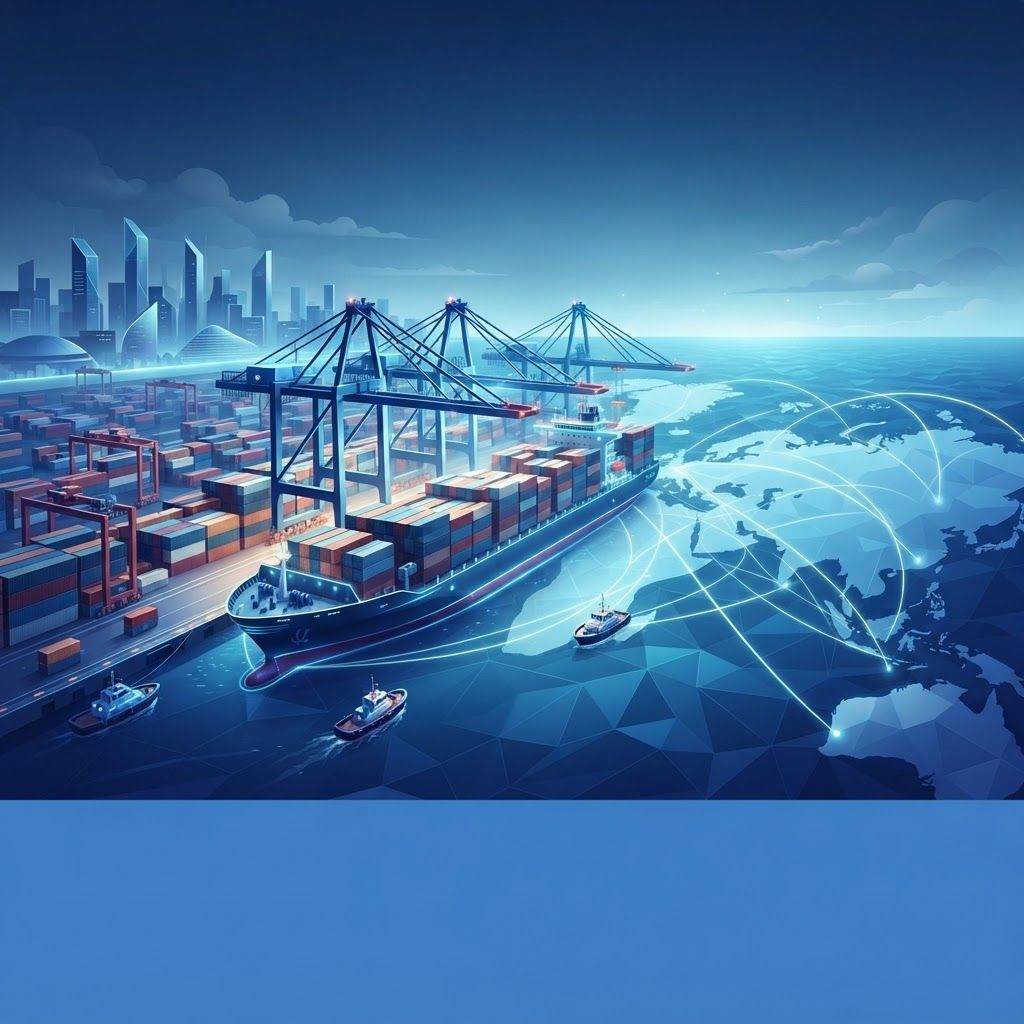
Shipping From the South West
Exeter is not a deep-water port city, but it has a long maritime history and remains closely connected to shipping. The Exeter Ship Canal, one of the oldest artificial waterways in England, was built to bypass obstructions on the Exe and bring vessels to the city Quay. Today the commercial function has moved downstream and along the coast, with Exmouth, Teignmouth and Plymouth handling vessel traffic and the container ports of Southampton, Felixstowe and London Gateway serving most of the region's deep-sea trade.
For Exeter businesses, this means shipping is usually arranged through forwarders and carriers who handle the inland leg to a port, the sea or air movement, and the customs formalities at both ends. Devon's exporters, spanning food and drink, marine equipment, engineering, crafts and consumer goods, rely on this infrastructure to reach international markets.
Modes and When to Use Them
Sea freight is the cheapest option per unit for large volumes and the standard choice for anything heavy, bulky or non-urgent. Full container load gives a dedicated container, while less than container load consolidates multiple shippers' goods, reducing cost but adding handling and time.
Air freight costs considerably more but compresses transit from weeks to days, making it appropriate for urgent, perishable or high-value goods where the carrying cost of inventory in transit outweighs the freight premium. Road freight dominates European movements, offering door-to-door service without transhipment. Rail freight plays a growing role on certain long-haul international corridors.
Express parcel services occupy a separate category, handling documents and small consignments with integrated customs clearance and door-to-door tracking. For many small exporters shipping samples or e-commerce orders, this is the practical option.
The Top 10 Shipping Companies Serving Exeter
1. DHL Global Forwarding. Offers sea, air and road freight with strong customs brokerage and a global network. Well suited to businesses needing a single provider for complex international movements with reliable documentation support.
2. Kuehne and Nagel. One of the world's largest freight forwarders, with extensive sea freight capability, established carrier relationships and sophisticated visibility platforms. A strong choice for regular container shippers.
3. DB Schenker. Provides land, air and ocean freight with particular strength in European road networks and integrated logistics services, useful for businesses trading heavily with continental markets.
4. Maersk. The global container shipping line increasingly offers integrated logistics beyond port-to-port, including inland transport and customs, giving shippers end-to-end accountability on a single contract.
5. FedEx and TNT. Express international carriers with comprehensive coverage, time-definite delivery options and integrated customs clearance. The default for urgent international parcels and documents.
6. UPS. Combines express parcel services with air and ocean freight forwarding, offering strong tracking technology and a broad range of service levels from same-day to economy.
7. Royal Mail and Parcelforce Worldwide. Cost-effective for smaller international parcels, with wide postal network reach that can access destinations commercial carriers price prohibitively. Widely used by South West craft and e-commerce businesses.
8. Exeter Freight Forwarding Specialists. Independent local forwarders who arrange bookings with carriers, prepare export documentation, handle customs declarations and advise on incoterms. Their value lies in personal service and local knowledge of regional exporters' needs.
9. Marine and Port Services South West. Agents and operators serving Exmouth, Teignmouth and Plymouth, handling coastal shipping, marine logistics and specialist vessel requirements including boat and yacht transport, a notable niche given the region's marine industry.
10. Removals and International Shipping Companies. Operators specialising in household goods and personal effects shipping, serving Devon residents relocating internationally with packing, container loading, customs documentation and destination delivery.
Documentation and Customs
International shipping is as much a documentation exercise as a transport one. A commercial invoice and packing list are required for virtually every shipment. Bills of lading for sea freight and air waybills for air freight serve as contracts of carriage and, in some forms, documents of title. Certificates of origin may be needed to claim preferential duty rates under trade agreements.
Commodity classification matters enormously. Each product requires a correct tariff code, which determines duty rates, licensing requirements and any restrictions. Misclassification causes delays and can result in penalties. Experienced forwarders will help, but responsibility ultimately sits with the exporter.
Incoterms define where responsibility and risk transfer between buyer and seller. Choosing between arrangements such as ex works, free on board and delivered duty paid changes who pays for what and who bears the risk at each stage. Agreeing incoterms clearly in the sales contract prevents most disputes.
Managing Cost and Risk
Freight rates fluctuate with fuel prices, vessel capacity and seasonal demand, and container rates in particular can move dramatically. For regular shippers, contracted rates provide predictability; for occasional shippers, comparing several forwarder quotes for each shipment is worthwhile.
Marine cargo insurance is strongly recommended. Carrier liability is limited by international conventions and is usually far below the value of the goods. A separate cargo policy covering the full journey door to door costs relatively little against the exposure.
Packaging deserves attention too. Goods must withstand handling, stacking, vibration and humidity over long transits. Proper palletisation, moisture protection and clear labelling reduce damage claims substantially, and correctly declared dimensions and weights prevent reweigh charges.
Trends Affecting South West Exporters
Customs complexity has increased the value of professional forwarding support, particularly for smaller businesses filing declarations for the first time. Environmental regulation in shipping is driving fuel changes and surcharges. Digital platforms now allow instant quoting and booking for many routes, which suits smaller shippers. And nearshoring trends have increased European road freight relative to long-haul ocean movements for some sectors.
Final Thoughts
Shipping from Exeter works well when the mode matches the cargo and the paperwork is right. Decide first between sea, air, road and express based on urgency and value, appoint a forwarder whose experience covers your destination and commodity, insure the goods properly, and agree incoterms explicitly with your customer. Those steps prevent the great majority of shipping problems.
Want your brand featured in front of decision-makers? Publish a guest post or get a link insertion in our guides through AAMAX's guest post and link insertion service.
Helpful Links
 SponsoredAAMAX — Full-Service Digital Agency
Write for Us
Share your expertise with our readers. We welcome guest contributions from industry specialists.
Pitch your idea

