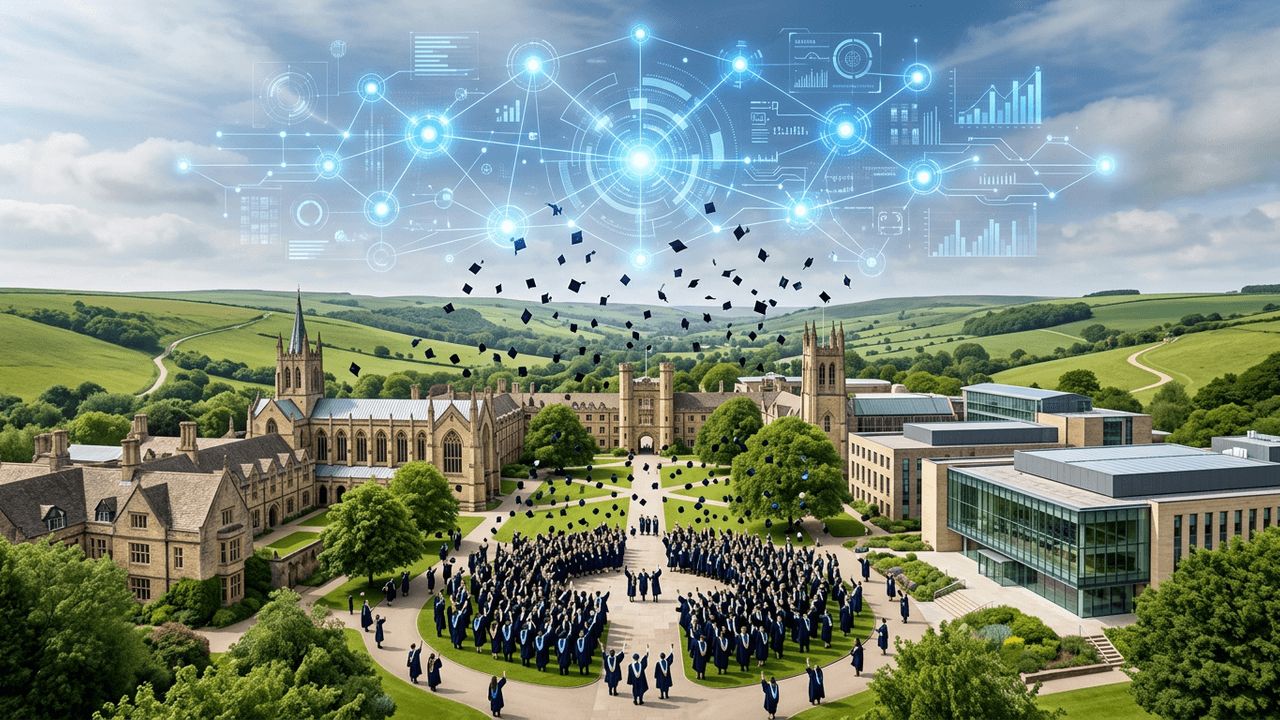
Understanding the Education Landscape in South Norfolk
South Norfolk is one of Chesapeake's oldest and most distinctive boroughs, a historic community with tree-lined streets, century-old homes and a strong sense of neighborhood identity. Families here are served primarily by Chesapeake Public Schools, one of the larger and more consistently well-regarded divisions in Virginia, while also sitting close enough to Norfolk and Portsmouth to consider regional specialty programs and independent schools.
That proximity creates genuine choice. Within a modest drive, families can access traditional neighborhood schools, STEM and arts magnet programs, career and technical academies, faith-based private schools, Montessori and other alternative pedagogies, and public charter or governor's school style advanced programs. The challenge is not availability but fit.
What Defines a Strong School
Test scores alone are a weak proxy for quality. The schools that produce the best outcomes tend to share deeper characteristics: experienced teachers with low turnover, a coherent curriculum that builds year over year, small class sizes in the early grades where literacy is established, robust intervention systems that catch struggling students early, meaningful enrichment beyond core academics, and a school culture where students feel known.
Parents should also weigh practical realities: transportation, before- and after-school care, communication quality, special education services, English language support, and how the school handles behavior and attendance. A school that performs well on paper but cannot support your child's specific needs is not the right school.
1. Chesapeake Public Schools Neighborhood Elementary Schools
The foundation of education in South Norfolk is the division's network of neighborhood elementary schools. Chesapeake Public Schools has invested heavily in early literacy instruction, small-group reading intervention and consistent division-wide curriculum mapping. Neighborhood elementaries offer short commutes, strong parent-teacher association involvement and close community ties, which matters enormously in a borough where many families have lived for generations. Full-time reading specialists, gifted resource teachers and school counselors are standard.
2. Chesapeake Public Middle Schools
Middle school is where academic trajectories diverge, and the division structures these years around subject-level differentiation. Students can access advanced mathematics sequences that lead to high school credit, honors English and science courses, world language instruction and a wide slate of electives spanning band, orchestra, technology and visual arts. Advisory programs and dedicated transition support help students adjust from the self-contained elementary model to a rotating schedule.
3. Chesapeake Public High Schools
Comprehensive high schools serving South Norfolk families combine broad course catalogs with strong extracurricular and athletic programs. Advanced Placement offerings typically span more than a dozen subjects, and dual enrollment agreements with local community colleges allow students to accumulate transferable college credit before graduation. Career and technical pathways in health sciences, engineering, information technology, culinary arts and skilled trades give students industry-recognized credentials alongside a diploma.
4. Governor's School and Advanced Academic Programs
Virginia's Governor's School model provides intensive, application-based programs for academically advanced students. Regional programs accessible from Hampton Roads focus on science, technology, engineering and mathematics as well as the arts. Students typically attend a portion of the day at a specialized center while remaining enrolled at their home high school. The academic rigor is significant, with research projects, laboratory work and mentorship from practicing professionals. For highly motivated students, these programs are among the strongest options in the state.
5. STEM and Technology Academies
Given Hampton Roads' concentration of shipbuilding, defense, maritime logistics and healthcare employment, STEM-focused academies have particular relevance. These programs organize learning around engineering design cycles, coding, robotics competitions, cybersecurity and applied mathematics. Partnerships with regional employers and universities provide internships, mentors and equipment access that individual schools could not fund alone. Graduates frequently enter engineering and computing degree programs with substantial practical experience.
6. Arts and Humanities Magnet Programs
For students whose talents run toward performance, visual art, creative writing or media production, arts magnet programs offer conservatory-style training within a public school framework. Auditions or portfolio reviews govern admission. Programs typically include studio blocks, faculty who are working artists, juried exhibitions and public performances. The discipline these programs instill, including rehearsal commitment and critique culture, transfers usefully to any future field.
7. Faith-Based Private Schools
Hampton Roads has a long tradition of parochial and independent Christian schools, and several serve South Norfolk families. Their appeal centers on small class sizes, values-integrated curriculum, uniform policies and tight-knit communities where families know one another across grade levels. Many offer strong college placement records, competitive athletics and extensive service-learning requirements. Tuition assistance and multi-child discounts are commonly available.
8. Montessori and Alternative Pedagogy Schools
Montessori, Reggio-inspired and other child-centered programs take a different approach to early and middle childhood education, emphasizing self-directed work cycles, mixed-age classrooms, concrete learning materials and intrinsic motivation over grades. Families drawn to these schools typically value independence, hands-on learning and a calmer classroom environment. Accreditation and teacher credentialing vary considerably in this space, so verifying training lineage matters.
9. Charter and Public Academy Options
Virginia's charter landscape is smaller than in many states, but public academies and division-operated schools of choice provide focused alternatives. These programs often center on a theme such as international studies, health sciences or leadership, and admission may involve a lottery or application. Because they operate within the public system, there is no tuition, making them an attractive middle ground for families seeking specialization without private cost.
10. Homeschool Cooperatives and Hybrid Academies
Home education has grown substantially, and organized cooperatives now provide much of the structure families once lacked. Hybrid academies combine two or three days of in-person instruction with home-based work, giving students access to laboratory science, group discussion and team sports while retaining schedule flexibility. Hampton Roads supports several established co-ops with subject specialists, standardized testing coordination and transcript services for college applications.
Questions to Ask During a School Visit
Visit during instructional hours rather than an open house whenever possible. Ask what percentage of teachers have been at the school more than three years. Ask how the school identifies a student falling behind in reading or mathematics and what happens in the first two weeks after identification. Ask about average class size in the specific grade your child will enter, not the school-wide average. Ask how special education and gifted services are delivered, whether by pull-out, inclusion or a hybrid model. Ask how discipline is handled and how often out-of-school suspension is used.
Observe the hallways and classrooms. Are students engaged in work or waiting? Do adults greet children by name? Is student work displayed and is it recent? These signals often reveal more than any published metric.
Trends Shaping Local Education
Several developments are influencing schools across Chesapeake and Hampton Roads. The science of reading movement has reshaped early literacy instruction toward explicit phonics and structured curriculum. Career and technical education has gained prestige as industry credentials deliver clear employment value in a region rich with maritime, defense and healthcare jobs. Mental health support has expanded, with more counselors, social workers and social-emotional learning programming. Dual enrollment continues to grow, allowing students to graduate with a meaningful block of college credit at minimal cost.
Practical Considerations for South Norfolk Families
Attendance zones matter, so verify boundaries before committing to a home purchase or lease, and confirm them directly with the division rather than relying on listing sites. Consider commute realities: bridge and tunnel congestion can turn a five-mile trip into a long one during peak hours. If both parents work, evaluate before- and after-school care availability at the specific school rather than assuming division-wide coverage. Finally, look at continuity, since the feeder pattern from elementary to middle to high school shapes friendships and academic pathways for years.
Final Thoughts
South Norfolk families have access to a genuinely broad set of educational options, from well-resourced neighborhood public schools and advanced Governor's School programs to specialty academies, private institutions and flexible hybrid models. The best school is the one whose academic approach, support systems and culture align with your child's temperament and your family's logistics. Visit several, ask specific questions, and trust what you observe in the classrooms.
Want your brand featured in front of decision-makers? Publish a guest post or get a link insertion in our guides through AAMAX's guest post and link insertion service.
Helpful Links
 SponsoredAAMAX — Full-Service Digital Agency
Write for Us
Share your expertise with our readers. We welcome guest contributions from industry specialists.
Pitch your idea