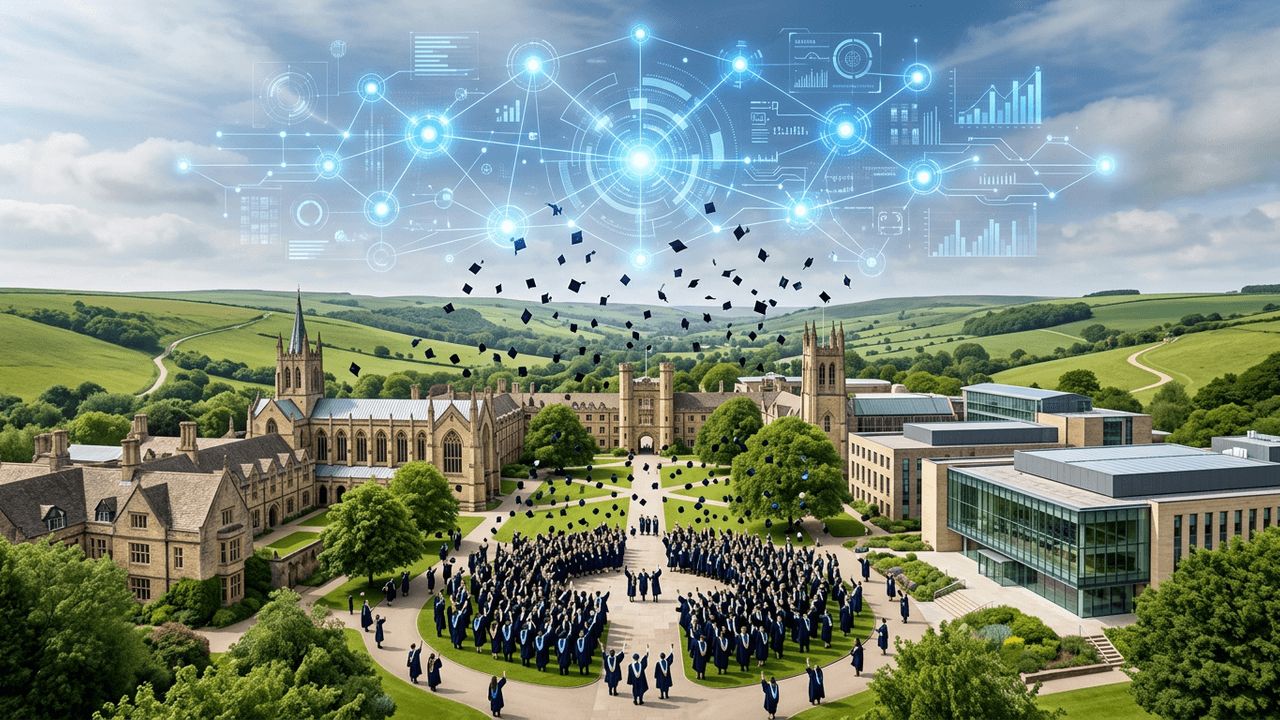
Education in Herefordshire: The Wider Picture
Herefordshire's school landscape reflects its rural character. The county has a relatively small number of large secondary schools concentrated in Hereford, Leominster, Ross-on-Wye and Ledbury, supported by a wide network of village primaries — many of them small, church-linked and deeply embedded in their communities. Alongside the state sector sits one of the most historically significant independent schools in the West Midlands.
For families relocating to the county, the practical considerations are distinctive. Catchment areas are geographically large, school transport is a genuine factor in daily life, and the choice between a small village primary with fewer than a hundred pupils and a larger town school is a real decision with real trade-offs. Understanding those dynamics matters as much as reading inspection reports.
What Makes a School Strong in a Rural Setting
Academic outcomes matter, but they tell only part of the story. In Herefordshire, the schools that families rate most highly tend to combine solid attainment with several other qualities: pastoral care that knows every child individually, strong transition arrangements between small primaries and much larger secondaries, meaningful enrichment despite limited local infrastructure, and genuine engagement with the surrounding rural economy through agriculture, land management and food production links.
Small schools bring intimacy and individual attention but face challenges in subject breadth and specialist facilities. Larger schools offer wider curricula and better sports and arts provision but require more deliberate pastoral structures. The best institutions in the county are those that recognise their own model's weakness and actively design around it.
The Ten Leading Schools
1. Hereford Cathedral School
One of the oldest schools in England, with origins traceable to the medieval cathedral, Hereford Cathedral School is the county's flagship independent institution. It offers education from junior years through to sixth form, with consistently strong academic results, an outstanding music tradition tied to the cathedral and the Three Choirs Festival, and excellent facilities. Its combination of historic setting and modern academic rigour makes it the benchmark independent option in the county.
2. Hereford Sixth Form College
Widely recognised as one of the highest-performing sixth form colleges in the country, this Hereford institution attracts students from across Herefordshire and neighbouring counties. Its breadth of A-level provision, university progression record including strong Oxbridge and medical school outcomes, and specialist teaching make it the standout post-16 destination in the region.
3. Whitecross Hereford
A well-regarded Hereford secondary school with a reputation for inclusive practice and steady academic improvement. It serves a diverse city catchment and is valued for its pastoral systems, vocational pathways alongside academic routes, and strong relationships with local employers.
4. Bishop of Hereford's Bluecoat School
A large Church of England secondary academy in Hereford, offering education through to sixth form. Its scale allows a broad curriculum, extensive extracurricular provision and well-developed sports and performing arts programmes, while its faith foundation underpins a clear values framework that many families specifically seek.
5. Aylestone School
Serving Hereford, Aylestone School has built a reputation for personalised support and a nurturing environment. It is often chosen by families who want a secondary setting where individual pupils are closely known, and it has invested in behaviour, attendance and curriculum development in recent years.
6. Earl Mortimer College, Leominster
The principal secondary provision for Leominster and north Herefordshire, Earl Mortimer College serves a broad rural catchment. Its strengths lie in community connection, vocational and technical pathways relevant to the local agricultural and engineering economy, and support for pupils travelling considerable distances each day.
7. John Kyrle High School, Ross-on-Wye
A high-performing secondary school with a sixth form, John Kyrle serves the south of the county and is consistently one of the most popular choices among families in the Ross-on-Wye area. It is known for strong academic outcomes, a wide A-level offer, and a well-established programme of enrichment, sport and creative arts.
8. John Masefield High School, Ledbury
Serving east Herefordshire, John Masefield High School combines academic ambition with a strong performing arts and music tradition, fitting for a school named after the poet laureate born in the town. Its sixth form provision keeps students within the local area rather than requiring long commutes.
9. Lady Hawkins' School, Kington
A small secondary school serving the far west of the county near the Welsh border, Lady Hawkins' offers something increasingly rare: a genuinely small secondary environment where pupils are individually known. For families in an isolated part of Herefordshire, it provides essential local access to secondary education with a strong community ethos.
10. Herefordshire's Village Primary Schools
The county's network of rural primaries — including schools in Weobley, Pembridge, Kingsland, Fownhope, Colwall and dozens of other villages — collectively represents one of Herefordshire's genuine educational strengths. Many are Church of England foundations with small class sizes, mixed-age teaching, extensive outdoor learning and exceptional parental involvement. Families consistently rate their community feel and individual attention very highly.
Trends in Herefordshire Education
Several developments are shaping the county's schools. Multi-academy trusts have consolidated governance and enabled resource sharing between small rural schools that would otherwise struggle in isolation, particularly for specialist subject teaching and curriculum development.
Digital learning has improved substantially, driven partly by rural broadband upgrades. Remote specialist teaching now allows small schools to offer subjects they could not staff independently. Meanwhile, outdoor and environmental education has become a genuine Herefordshire specialism, with forest school approaches, farm links and countryside stewardship woven into curricula in ways that urban schools cannot easily replicate.
Mental health and wellbeing provision has also expanded, recognising that rural isolation creates specific pressures for teenagers with limited transport and social opportunities.
Practical Advice for Families
Visit schools during a normal working day rather than only on open evenings — the atmosphere in corridors between lessons tells you a great deal. Check transport arrangements carefully, as journey times in Herefordshire can be substantial and eligibility rules for free transport depend on distance and designated catchment.
Look closely at transition support if your child is moving from a village primary of fifty pupils to a secondary of a thousand. Ask about subject breadth at GCSE and A-level, and about how the school supports pupils with special educational needs, since specialist services can be more thinly spread in rural counties.
Final Thoughts
Herefordshire punches above its weight educationally. Hereford Sixth Form College is nationally significant, Hereford Cathedral School carries centuries of tradition, and the county's secondary and primary schools offer a genuine range of scale and character. The right choice depends less on league tables than on matching your child's temperament to the environment — and in Herefordshire, that range of environments is unusually wide.
Want your brand featured in front of decision-makers? Publish a guest post or get a link insertion in our guides through AAMAX's guest post and link insertion service.
Helpful Links
 SponsoredAAMAX — Full-Service Digital Agency
Write for Us
Share your expertise with our readers. We welcome guest contributions from industry specialists.
Pitch your idea