Why Roofing Demands Local Knowledge
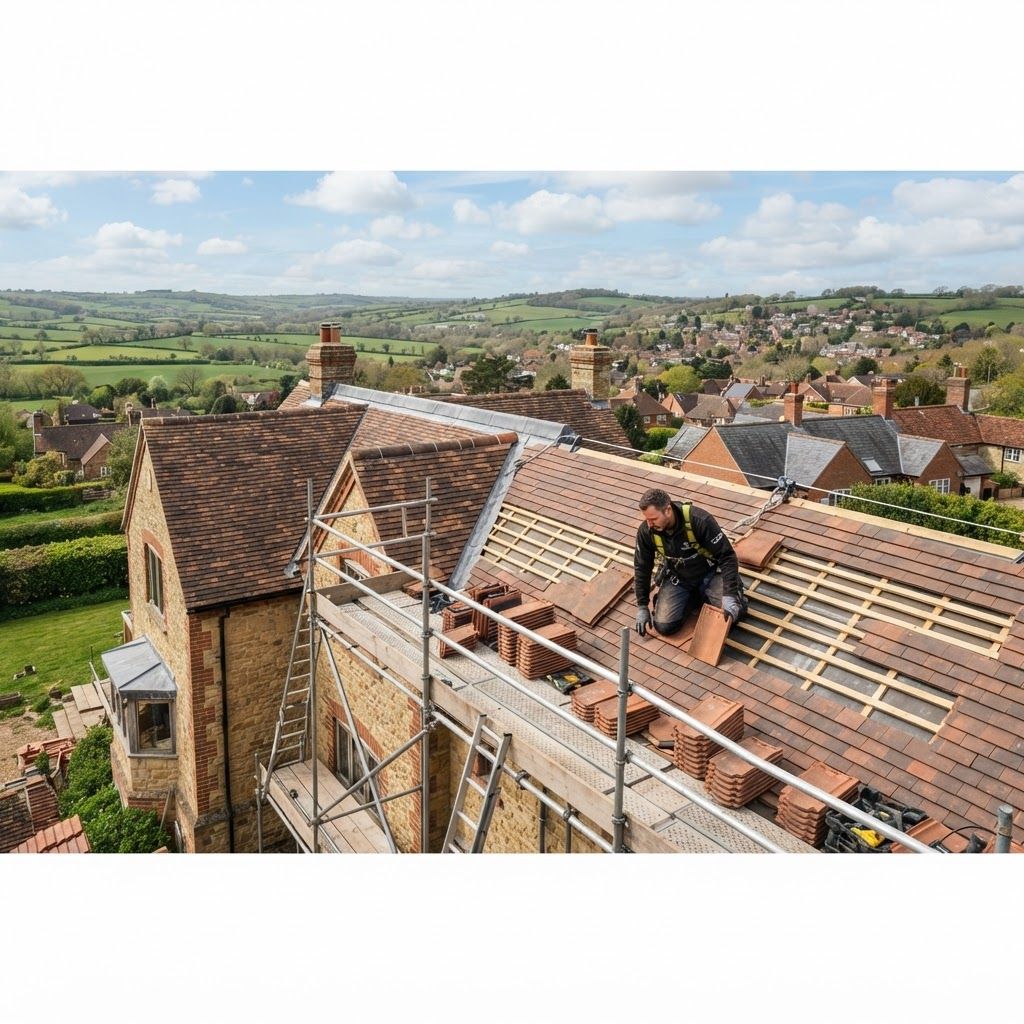
The roof is the single most important protective element of any building, and in North Hertfordshire the range of roof types is unusually wide. Historic properties in Hitchin, Baldock and the surrounding villages carry handmade clay peg tiles and, in some cases, thatch. Letchworth Garden City features distinctive tiled and slated roofs designed as part of a coherent architectural vision. Post-war housing across the district uses concrete interlocking tiles, and contemporary developments and extensions increasingly incorporate flat roof systems and rooflights.
Each of these requires different skills, materials and repair techniques. A contractor who works predominantly on modern concrete tiled roofs is not automatically the right choice for a peg-tiled listed cottage, where the tiles are irregular, the battens are often original and the roof structure may have moved considerably over centuries.
Recognising Roof Problems Early
Most roof failures give warning before they become expensive. Internal signs include damp patches on upper-floor ceilings, water staining around chimney breasts, daylight visible through the roof covering when in the loft, damp or crumbling mortar at the chimney, and sagging in the roof line visible from outside.
External indicators include slipped, cracked or missing tiles and slates, moss accumulation holding moisture against the covering, deteriorated mortar at ridges and hips, damaged flashings around chimneys and abutments, blocked or sagging gutters, and rotting fascia and soffit boards.
Timely repair is dramatically cheaper than delayed repair. A handful of slipped tiles costs relatively little to reset; the same problem left for two winters can saturate insulation, rot rafters and damage ceilings and decoration below.
Pitched Roof Materials and Repair
Clay peg tiles remain the traditional covering across much of the district. They are laid in large numbers with modest overlaps and are hung on oak pegs or nibs. Repair requires matching tiles, and reclaimed stock is often the only sympathetic option on listed buildings. Contractors experienced in this work maintain relationships with reclamation yards and will carefully salvage and reuse sound tiles during a strip and re-lay.
Natural slate, common on Victorian and garden city properties, is exceptionally durable, with roof coverings frequently outlasting the nails that hold them. Nail sickness, where the fixings corrode while the slate remains sound, is a common reason for re-roofing, and salvaged slates can often be relaid on new battens and breathable membrane.
Concrete interlocking tiles dominate post-war housing. They are robust but heavy, and surface erosion over several decades reduces their weather resistance. Re-roofing in these properties often includes upgrading insulation and ventilation at the same time.
Flat Roofing Systems
Flat roofs have a poor reputation earned largely by failed mineral felt installations from decades past. Modern systems are far superior. Ethylene propylene diene monomer rubber membranes are installed in single sheets with no seams on most domestic roofs and carry long service lives. Glass reinforced plastic provides a seamless, durable finish well suited to complex shapes. High performance built-up felt systems with torch-applied layers remain widely used and perform well when correctly detailed.
Whatever the membrane, performance depends on the deck beneath, adequate falls to drainage points, insulation placed correctly to avoid interstitial condensation, and well-formed detailing at upstands, outlets and abutments. Most flat roof failures originate at details rather than in the open field of the membrane.
Regulation, Consent and Insulation
Replacing more than half of a roof covering is generally notifiable under the Building Regulations and triggers a requirement to improve insulation to current standards where reasonably practicable. This is an opportunity rather than a burden, since loft or rafter-level insulation installed during re-roofing is far cheaper than retrofitting later.
Listed building consent is required for roof work affecting the character of a listed property, and conservation area rules may restrict material changes. Contractors familiar with the district's planning context will advise on this and can liaise with conservation officers.
Ventilation must also be addressed. Modern breathable membranes and correctly positioned eaves and ridge ventilation prevent condensation in the roof space, a widespread problem in properties where insulation was upgraded without ventilation being reconsidered.
Safety and Access
Roofing is among the most hazardous construction activities, and falls from height remain a leading cause of serious injury. Professional contractors use properly erected scaffolding with edge protection for anything beyond a very minor repair, hold current working at height training, and carry out risk assessments.
Contractors offering to complete substantial work from a ladder are cutting corners that endanger both themselves and, through poor workmanship, the building. Scaffold cost is a legitimate and necessary part of a roofing quotation.
Choosing a Roofing Contractor
Look for membership of the National Federation of Roofing Contractors or the Confederation of Roofing Contractors, and for manufacturer approvals on specific systems, which often unlock extended product warranties. Verify public liability insurance and ask about workmanship guarantees, typically ten to twenty years on full re-roofs and shorter on repairs.
Insist on a written specification covering the materials by name, the underlay and battens, the treatment of flashings and leadwork, insulation and ventilation provision, scaffold and waste disposal. Roofing quotes vary widely, and the variation almost always reflects specification differences.
Be cautious of unsolicited door-to-door approaches claiming to have spotted a problem from the road. This is a persistent pattern across the district, and reputable local contractors do not operate this way. Always obtain independent inspection before agreeing to work.
Maintenance Extends Roof Life
Annual gutter clearing, moss removal where it accumulates heavily, checking flashings after storms and inspecting the loft during heavy rain all extend roof life considerably. Many contractors offer periodic inspection services that identify minor issues before they become significant.
Final Thoughts
The best roofing services in North Hertfordshire combine trade accreditation and rigorous safety practice with genuine understanding of the district's varied roof types, from handmade clay peg tiles on listed cottages to contemporary flat roof systems. A detailed written specification and proper scaffolding are the clearest signals of a contractor worth engaging.
Want your brand featured in front of decision-makers? Publish a guest post or get a link insertion in our guides through AAMAX's guest post and link insertion service.
Helpful Links
 SponsoredAAMAX — Full-Service Digital Agency
Write for Us
Share your expertise with our readers. We welcome guest contributions from industry specialists.
Pitch your idea