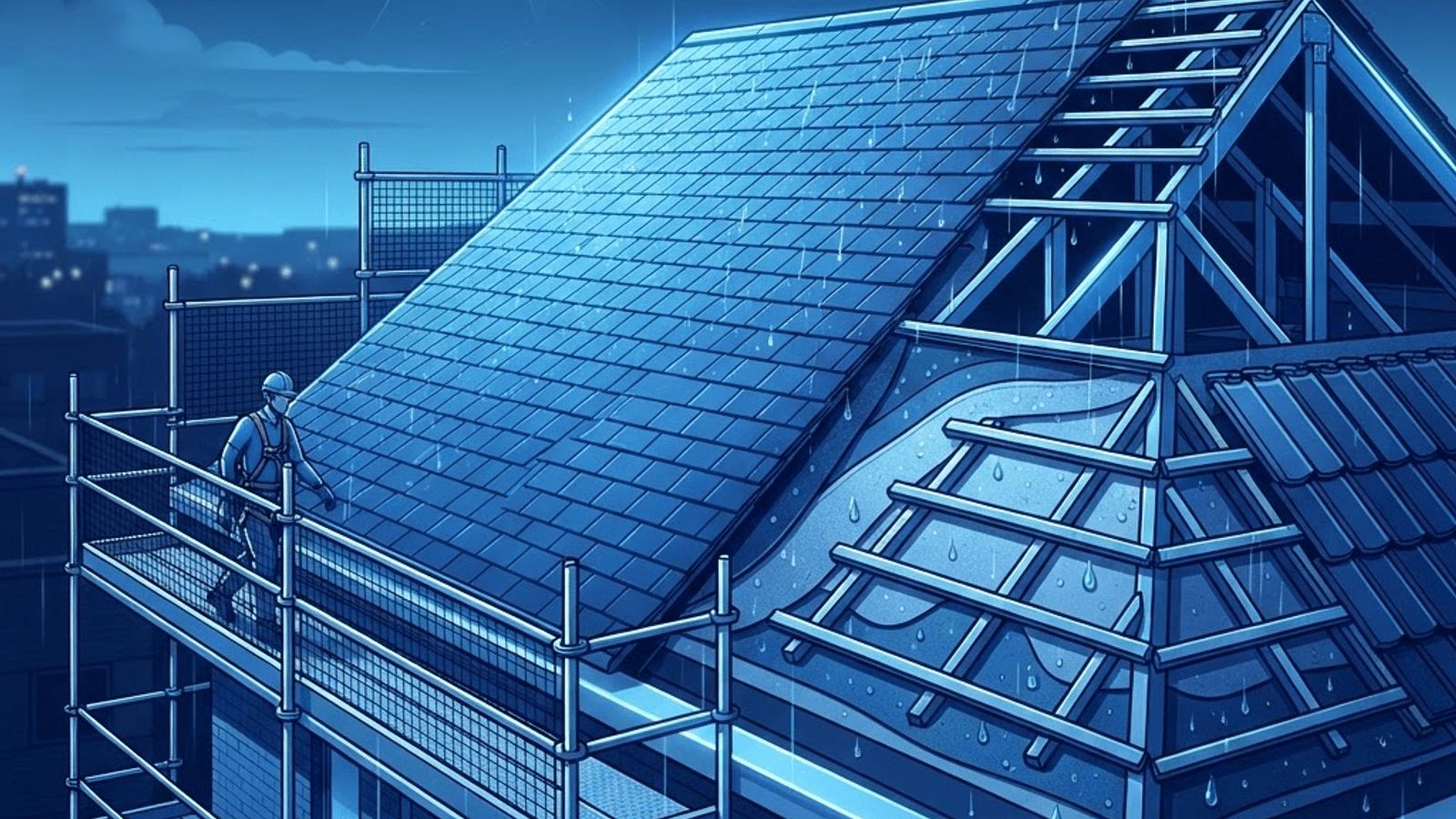
Why Roofing Deserves Serious Attention
Of all building elements, the roof has the least tolerance for poor workmanship. A defect in a wall may cause a cosmetic problem over years; a defect in a roof causes water ingress within weeks, and water damages insulation, timber, plaster, electrics and contents in quick succession. In South Derbyshire, where prevailing westerly weather brings driving rain and where exposed rural properties face wind loading that sheltered urban housing does not, roofing performance matters enormously.
The district's building stock demands a range of roofing expertise. Victorian and Edwardian properties typically carry natural slate or clay tile on traditional cut timber roofs. Post-war housing generally uses concrete interlocking tiles. Agricultural and industrial buildings use profiled metal sheeting, sometimes with historic asbestos cement requiring specialist removal. Modern extensions frequently use flat roofing systems, and conservation area and listed properties may require traditional materials and detailing.
Roofing Systems and Their Characteristics
Pitched tile and slate roofing remains the dominant domestic system. Natural slate is durable and attractive but expensive; concrete tiles are economical and long-lasting but heavy, which matters when re-roofing an older structure designed for lighter slate. Clay tiles offer character and longevity and are common on period properties.
Flat roofing has improved dramatically. Modern single-ply membranes, liquid applied systems and high-performance felt substantially outperform the bitumen felt roofs of previous decades, with realistic lifespans of twenty to thirty years rather than ten. Green roofs and warm roof constructions, where insulation sits above the deck, are increasingly specified for both performance and compliance.
Metal roofing, including standing seam zinc and profiled sheeting, suits contemporary domestic designs and agricultural buildings. Lead and other traditional metalwork remain essential for flashings, valleys and detailing, and poor flashing work is one of the most frequent causes of leaks in otherwise sound roofs.
The Top 10 Roofing Contractors in South Derbyshire
1. Trent Valley Roofing handles full re-roofing, repairs and maintenance across pitched and flat systems. Its work is characterised by proper preparation, including replacing defective battens and timbers rather than tiling over them, and it provides comprehensive guarantees on completed roofs.
2. Swadlincote Roofing Services serves the domestic market with repairs, re-roofing, guttering and fascia work. It is valued for honest assessment: where a repair will serve for several more years it says so, rather than recommending full replacement on every survey.
3. Melbourne Heritage Roofing specialises in traditional and listed buildings, working with natural slate, clay peg tiles, lead work and traditional detailing. Conservation work requires materials and methods that satisfy consent conditions, and its craftsmanship is recognised by conservation officers across the area.
4. National Forest Flat Roofing concentrates on flat roof systems including single-ply membrane, liquid applied coatings and warm roof construction. Its emphasis on correct falls, adequate drainage outlets and insulation detailing addresses the causes of flat roof failure rather than treating symptoms.
5. Derbyshire Industrial Roofing works on commercial and agricultural buildings, covering profiled metal sheeting, roof lights, gutter lining and cladding. It also handles asbestos cement roof replacement under controlled conditions, which is regulated work requiring appropriate licensing.
6. Hilton Leadwork and Specialist Metals focuses on lead, copper and zinc work including flashings, valleys, dormer cheeks and bay roofs. Leadwork is a skilled craft and correct lead sizing, jointing and expansion allowance determine whether it lasts decades or fails within a few winters.
7. Willington Guttering and Rainwater Systems addresses an area often neglected until it causes damage. Blocked or failed guttering saturates walls, causing damp misdiagnosed as rising damp. Its services cover cleaning, repair, replacement and upgrading to higher capacity systems for exposed properties.
8. Repton Roof Survey and Inspection provides condition surveys, drone inspection and thermal imaging without undertaking the repair work itself, which removes any conflict of interest. Independent assessment is valuable when comparing contractor recommendations or during property purchase.
9. Etwall Solar Roofing Integration combines roofing with solar photovoltaic installation, including in-roof integrated systems. Coordinating roofing and solar work together avoids the common problem of a new solar array being installed on a roof due for replacement within a few years.
10. Burton and South Derbyshire Emergency Roof Repairs completes the list with rapid response to storm damage, including temporary weatherproofing, insurance documentation and permanent repair. Storm damage response speed directly limits the extent of internal water damage.
Trends in Roofing
Insulation upgrading during re-roofing has become standard practice, since replacing a roof presents the ideal opportunity to improve thermal performance at marginal additional cost. Warm roof construction is increasingly specified over traditional cold roof design to reduce condensation risk.
Solar integration has grown considerably, with in-roof systems preferred aesthetically over surface-mounted panels on new roofs. Drone surveying has changed inspection practice, allowing detailed assessment without scaffolding and producing photographic evidence that clients can examine themselves. Breathable membranes have largely replaced traditional bitumen felt underlay, improving moisture management within the roof space.
Choosing a Roofer and Protecting Your Investment
Verify insurance and relevant trade accreditation, and confirm that scaffolding will be used where required rather than ladders, which is both a safety and a workmanship indicator. Obtain detailed written quotations specifying materials, the extent of battening and timber replacement, underlay type, and what happens if additional defects are discovered.
Be cautious of unsolicited approaches offering roof work, a persistent problem in rural districts. Reputable contractors do not need to knock on doors. Ask for local references and, where possible, view completed work from the ground.
Maintain the roof once completed. Clear gutters at least twice a year, particularly in autumn, inspect after significant storms, and address slipped tiles promptly. A well-installed roof in South Derbyshire should give fifty years or more of service, and the maintenance required to achieve that is modest compared with the cost of premature replacement.
Want your brand featured in front of decision-makers? Publish a guest post or get a link insertion in our guides through AAMAX's guest post and link insertion service.
Helpful Links
 SponsoredAAMAX — Full-Service Digital Agency
Write for Us
Share your expertise with our readers. We welcome guest contributions from industry specialists.
Pitch your idea