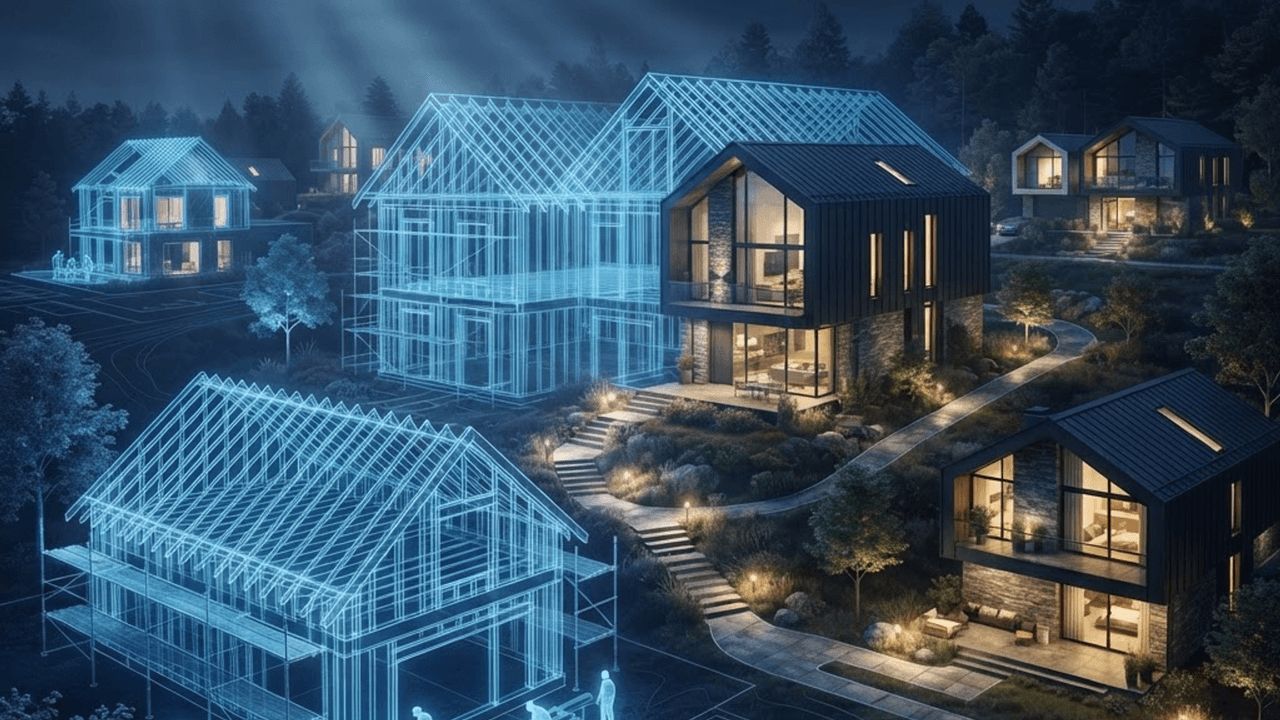
Westminster's Residential Construction Market
Residential construction in Westminster reflects sustained population growth and a housing market where new construction competes directly with an aging existing inventory. That dynamic has produced a diverse builder landscape spanning large production operations delivering hundreds of homes annually to boutique custom builders completing a handful of high-specification projects.
For buyers and property owners, understanding which builder category matches their situation is the foundational decision. A production builder offers predictable pricing and timelines with limited customization. A custom builder delivers exactly what you specify at substantially higher cost and longer duration. Most disappointment in residential construction stems from mismatched expectations rather than poor workmanship.
Understanding Local Building Conditions
Residential construction here must address specific regional factors. Expansive soils are common and require engineered foundation systems, proper drainage, and careful moisture management around foundations. Ignoring soil conditions produces foundation movement that manifests as cracked drywall, sticking doors, and eventually structural concern.
Climate factors include significant temperature swings, intense ultraviolet exposure at elevation, hail risk affecting roofing and siding selection, and heating demand that makes envelope performance economically important. Builders experienced locally specify accordingly, choosing impact-resistant roofing, appropriate exterior finishes, and insulation levels that reduce long-term operating costs.
1. Production Home Builders
Production builders construct homes from a defined set of floor plans within planned communities, achieving efficiency through repetition and volume purchasing. Buyers select from available plans and choose finishes from curated option packages rather than specifying freely.
The advantages are genuine. Pricing is predictable and generally the lowest available per square foot for new construction. Timelines are reliable because processes are systematized. Warranty programs are typically structured and well documented. For buyers who find a plan that suits them, production building offers strong value. The limitation is customization, since structural changes are usually unavailable or expensive.
2. Semi-Custom Home Builders
Semi-custom builders occupy the middle ground, offering base plans that can be meaningfully modified. Buyers might relocate walls, expand rooms, change roof lines, or substantially upgrade finishes while still benefiting from the efficiency of proven plans.
This category suits buyers who want personalization without full custom cost and timeline. The builder has already engineered and permitted variations of the base plan, which reduces design cost and risk. Evaluate semi-custom builders on how much flexibility they genuinely offer and how transparently they price modifications, since some advertise flexibility but price changes prohibitively.
3. Fully Custom Home Builders
Custom builders construct unique homes designed specifically for a client and site. The process begins with architectural design, proceeds through detailed specification, and involves the client in hundreds of decisions. Results reflect individual preference precisely.
Custom building demands more from clients in time, decision-making, and budget. Timelines commonly extend well beyond a year. In exchange, clients get exactly what they want, including site-specific design that responds to views, solar orientation, and topography. The best custom builders provide structured processes with selection deadlines and clear allowance accounting to keep projects on track.
4. Luxury and High-End Residential Builders
Luxury builders serve the top of the market with homes featuring architectural millwork, natural stone, specialty finishes, integrated automation, and sophisticated mechanical systems. Their competency lies in coordinating high-skill specialty trades and maintaining exacting finish tolerances.
These builders typically maintain long relationships with craftspeople capable of work that volume builders cannot source. They also manage the complexity of systems integration including whole-home automation, advanced climate zoning, and specialized lighting design. Client references and completed project tours are essential evaluation tools at this level, since photographs cannot convey finish quality.
5. Infill and Urban Lot Builders
Infill builders construct homes on individual lots within established neighborhoods, often replacing older structures or developing remaining vacant parcels. This work involves distinct challenges including tight site access, neighbor relations, utility connections to existing infrastructure, and often restrictive setback and height requirements.
Skilled infill builders navigate the entitlement process efficiently and design homes that fit neighborhood context while maximizing allowable square footage. They also manage construction logistics on constrained sites where staging space is minimal. Given Westminster's established neighborhoods and land constraints, infill construction has become increasingly significant.
6. Modular and Prefabricated Home Builders
Modular builders construct home sections in controlled factory environments then assemble them on prepared foundations. Factory production offers advantages including weather-independent construction, consistent quality control, reduced material waste, and compressed on-site timelines.
Modern modular construction produces homes indistinguishable from site-built once complete and meeting the same building codes. The primary constraints are design flexibility within module dimensions and transportation logistics. For buyers prioritizing speed and cost predictability, modular deserves serious consideration, and the technology has advanced considerably beyond earlier perceptions.
7. Accessory Dwelling Unit Specialists
Accessory dwelling unit builders construct secondary residences on existing properties, including detached cottages, garage conversions, and basement apartments. Interest in these units has grown substantially as homeowners seek rental income, multigenerational living arrangements, or flexible space.
These specialists understand the specific zoning, setback, utility, and parking requirements that govern accessory units, which differ meaningfully from primary residence rules. They also excel at efficient small-space design, where every square foot must serve multiple purposes. The regulatory navigation alone justifies using a specialist rather than a general residential builder.
8. Green and High-Performance Home Builders
High-performance builders construct homes exceeding code minimums in energy efficiency, air quality, and durability. Techniques include continuous exterior insulation, meticulous air sealing verified by blower door testing, heat recovery ventilation, high-performance windows, and often solar generation.
The economic case is strong given regional heating and cooling demand. Homes built to high-performance standards commonly reduce energy consumption dramatically compared to code-minimum construction, and the comfort improvement from eliminated drafts and consistent temperatures is immediately noticeable. These builders typically pursue third-party certification, which provides verification rather than mere claims.
9. Home Addition and Second Story Specialists
Addition specialists expand existing homes through room additions, second story construction, and garage conversions. This work requires structural expertise, since existing foundations and framing must be evaluated and often reinforced to carry new loads.
Second story additions are particularly demanding, involving temporary weather protection while the roof is removed, structural upgrades to existing walls and foundations, and integration of mechanical and electrical systems. Skilled addition builders also match existing architecture so the result reads as original rather than obviously appended. For families needing space but committed to their location, additions often beat relocating.
10. Restoration and Historic Home Builders
Restoration builders work on older homes, preserving character while upgrading systems and structure. Work includes foundation stabilization, structural repair, window restoration or period-appropriate replacement, plaster repair, and careful integration of modern mechanical, electrical, and plumbing systems.
This category requires knowledge of historic construction methods and materials that differ substantially from contemporary practice. Balloon framing, plaster and lath, knob and tube wiring, and cast iron plumbing all require specific expertise. Quality restoration builders also understand which upgrades are worth making and which original elements deserve preservation.
Budgeting Realistically
Residential construction budgets should include more than construction cost. Land, site work, utility connections, permits and impact fees, design and engineering, landscaping, window coverings, and appliances all add substantially. Many first-time builders underestimate total project cost by focusing only on the builder's construction figure.
Include a contingency of at least ten percent for custom and renovation work, more for projects involving existing structures. Understand how allowances work, since builders include estimated amounts for items you have not yet selected, and exceeding allowances is the most common source of budget overrun. Ask for allowance amounts explicitly and evaluate whether they reflect the quality level you actually want.
Selecting Your Builder
Verify licensing, insurance, and warranty terms before anything else. Then evaluate completed work in person, ideally homes finished several years ago where you can assess how construction has held up. Speak with past clients about communication quality, schedule adherence, and how the builder handled problems, since every project encounters some.
Review the contract carefully, confirming a detailed scope and specifications, defined payment schedule tied to progress, written change order procedures, clear warranty terms, and realistic completion dates. Understand what warranty coverage includes and for how long, since structural, systems, and finish items typically carry different periods. A builder who communicates clearly during selection almost always communicates well during construction, and that predicts satisfaction more reliably than price.
Want your brand featured in front of decision-makers? Publish a guest post or get a link insertion in our guides through AAMAX's guest post and link insertion service.
Helpful Links
 SponsoredAAMAX — Full-Service Digital Agency
Write for Us
Share your expertise with our readers. We welcome guest contributions from industry specialists.
Pitch your idea