The Renewable Energy Opportunity in Windsor and Maidenhead
Renewable energy has shifted decisively from an environmental gesture to a financial calculation. Energy price volatility over recent years has shortened payback periods for generation and storage substantially, while equipment costs have continued to fall. At the same time, corporate procurement requirements have begun cascading environmental expectations down supply chains, so that even small suppliers to large Thames Valley employers now face questions about their energy sourcing and carbon reporting.
The Royal Borough presents both opportunity and constraint. Its housing stock is varied, ranging from modern estates well suited to standard installations through to Victorian terraces and listed period properties in Windsor and Eton where planning constraints materially affect what is permissible. Solar irradiance in the south east of England is among the highest in the country, making photovoltaic installation economically viable across the borough. Commercial properties in Maidenhead's business parks offer substantial unshaded roof areas ideal for larger arrays. Meanwhile the borough's conservation areas require careful design and sometimes consent for visible installations.
Understanding the Main Technologies
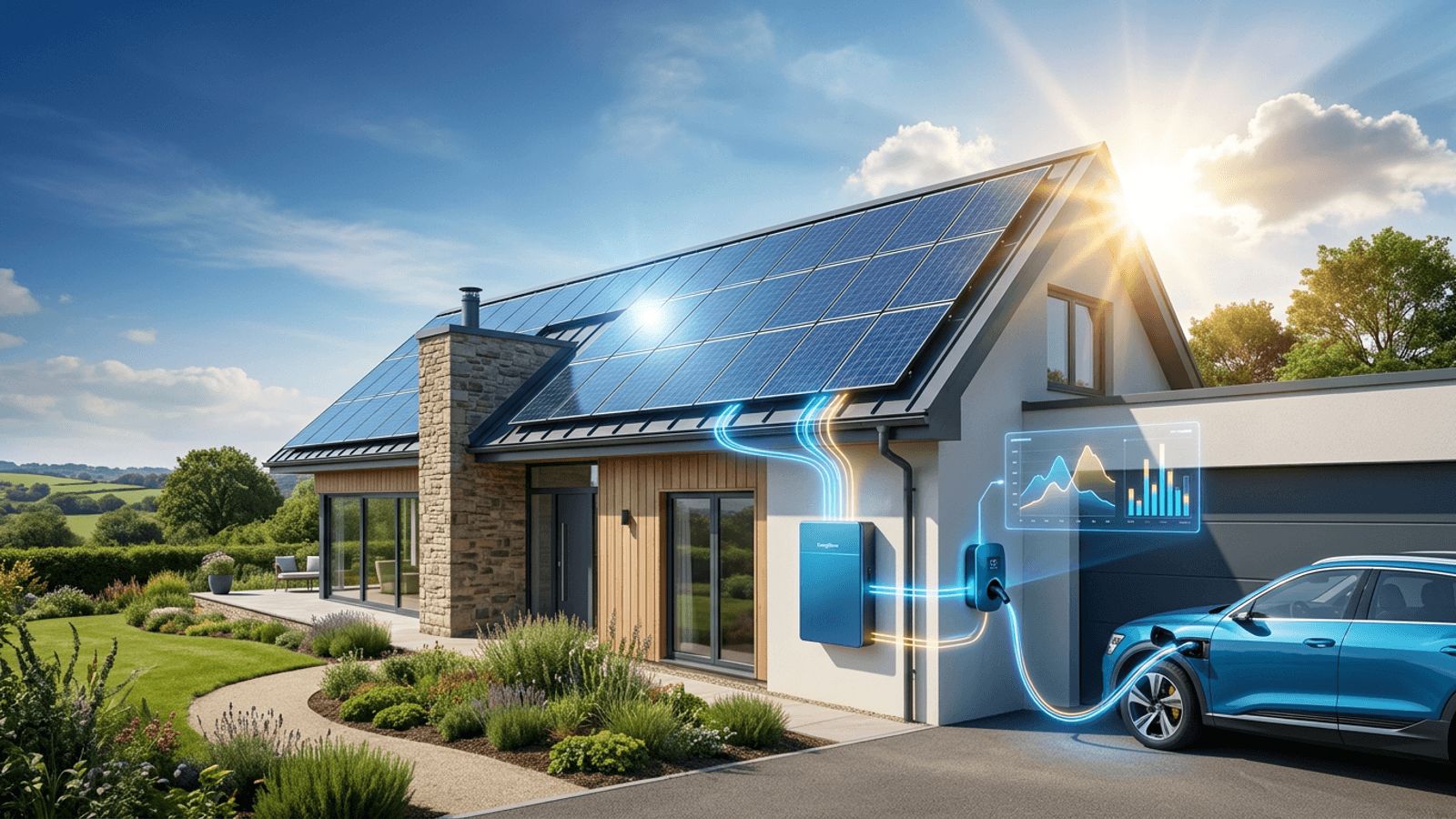
Solar photovoltaic panels convert daylight to electricity and represent the most widely deployed renewable technology for buildings. Output depends on orientation, pitch, shading and array size, with south facing installations performing best though east and west configurations spread generation across the day usefully.
Battery storage captures generation for later use, substantially increasing the proportion of self generated electricity consumed on site rather than exported at low value. Batteries also enable tariff arbitrage, charging from the grid during cheap overnight periods and discharging at peak times, which can improve returns independently of solar generation.
Air source heat pumps extract heat from outside air and deliver it at useful temperatures for space heating and hot water, achieving efficiencies well above direct electric heating. Ground source systems perform better still but require substantial groundworks. Heat pump performance depends heavily on building fabric and emitter sizing, which is why installation quality determines outcomes more than equipment brand.
Solar thermal panels heat water directly and suit properties with high hot water demand. Voltage optimisation, LED conversion, building management systems and insulation improvements deliver demand reduction that frequently outperforms generation investment per pound spent. Electric vehicle charging infrastructure increasingly integrates with solar and storage to charge from self generated power.
Ten Leading Renewable Energy Providers and Categories
Certified domestic solar installation companies serving the borough operating under the Microgeneration Certification Scheme handle survey, design, structural assessment, installation, inverter commissioning and grid notification. Certification matters practically, as it is a condition of most incentive schemes and provides recourse through a consumer code if problems arise.
Commercial solar developers active in the Thames Valley design and install larger rooftop and ground mounted arrays for warehouses, offices, retail parks and industrial premises. Projects often include power purchase agreement structures where the developer funds and owns the installation while the occupier buys electricity below grid rates, removing capital expenditure as a barrier.
Accredited heat pump installers undertake heat loss calculation, emitter sizing, system design and commissioning to recognised standards. Competent installers conduct a full room by room heat loss assessment rather than sizing from floor area, and advise honestly where fabric improvement is a prerequisite for satisfactory performance.
Battery storage and energy management specialists size storage to actual consumption profiles rather than generic assumptions, integrate systems with solar inverters and smart tariffs, and configure control logic to optimise financial return. As time of use tariffs proliferate, this optimisation has become a significant part of overall benefit.
Octopus Energy and comparable renewable focused energy suppliers provide green tariffs, export payment arrangements and increasingly integrated hardware offerings. Their smart tariffs, which vary pricing by half hour and reward flexible consumption, make storage and controllable loads considerably more valuable and have reshaped the economics of domestic energy management.
Energy consultancies and carbon reporting advisers serve the borough's businesses with audits, carbon footprint measurement, net zero pathway development and reporting aligned to recognised frameworks. This work has become necessary as larger customers request supplier emissions data and as reporting obligations extend to smaller organisations through supply chain pressure.
Community energy organisations in Berkshire and the Thames Valley develop locally owned generation, typically solar on schools, community buildings and commercial roofs, funded through community share offers. These schemes allow residents without suitable roofs to participate in local renewable generation and retain financial returns within the area.
Retrofit and fabric improvement contractors deliver insulation, draught proofing, glazing upgrades and ventilation improvement. Their work is unglamorous but foundational, since heating a poorly insulated building efficiently is still wasteful and heat pumps in particular perform disappointingly in unimproved fabric.
Electric vehicle charging infrastructure providers install domestic chargers and commercial charging facilities including workplace and destination charging. Windsor's visitor economy has driven demand for destination charging at hotels, attractions and car parks, where charging provision has become a customer expectation.
Renewable energy consultancies and independent advisers provide unbiased technology assessment and procurement support without selling equipment. For substantial commercial investments, independent advice on technology selection, contractor tendering and contract terms typically saves more than it costs.
Financial Considerations and Incentives
Domestic solar economics rest on avoided electricity purchase plus export payment. Self consumed generation is worth the full retail rate saved, while exported units earn considerably less, which is why maximising self consumption through storage, timed appliance use and vehicle charging materially improves returns. Value added tax relief on qualifying domestic energy saving materials reduces installation cost.
Heat pump installation attracts grant support through the boiler upgrade scheme, which provides substantial contributions toward air and ground source systems in eligible properties. Running cost comparison against gas depends on the efficiency achieved and the electricity tariff, making system design and tariff selection jointly decisive.
Commercial installations benefit from capital allowances, with plant and machinery treatment allowing accelerated relief, and full expensing available for qualifying expenditure. Power purchase agreements avoid capital outlay entirely, trading some long term benefit for immediate cash flow improvement.
Planning and Property Considerations
Most domestic solar installations fall within permitted development, subject to limits on projection and positioning, but permitted development rights are restricted in conservation areas and removed for listed buildings, where consent is required and front facing installations are frequently refused. Given the extent of conservation designation in Windsor and Eton, early planning enquiry is prudent.
Heat pumps require consideration of noise and siting, with permitted development conditions covering unit position relative to boundaries. Structural assessment is necessary for roof mounted arrays, particularly on older properties, and grid connection capacity can constrain larger installations, requiring application to the network operator.
Choosing an Installer
Verify certification and consumer code membership, and confirm the certification covers the specific technology being installed. Obtain at least three quotations with comparable specifications, ensuring each states panel and inverter models, array size, expected annual generation, and any assumptions about self consumption.
Treat generation estimates sceptically, as optimistic modelling is a persistent problem. Estimates should derive from recognised methodology accounting for actual orientation, pitch and shading rather than generic figures. Establish warranty terms separately for equipment, inverter and workmanship, and confirm what happens if the installer ceases trading, since insurance backed guarantees provide protection that a company warranty does not.
Conclusion
Windsor and Maidenhead offers favourable conditions for renewable energy investment, with strong solar resource, substantial commercial roof space and an increasingly capable local supply chain. The installations that deliver best returns are those preceded by demand reduction, designed around actual consumption patterns, and executed by certified installers whose generation estimates rest on genuine site assessment rather than favourable assumptions.
Want your brand featured in front of decision-makers? Publish a guest post or get a link insertion in our guides through AAMAX's guest post and link insertion service.
Helpful Links
 SponsoredAAMAX — Full-Service Digital Agency
Write for Us
Share your expertise with our readers. We welcome guest contributions from industry specialists.
Pitch your idea