

A District Well Suited to Renewables
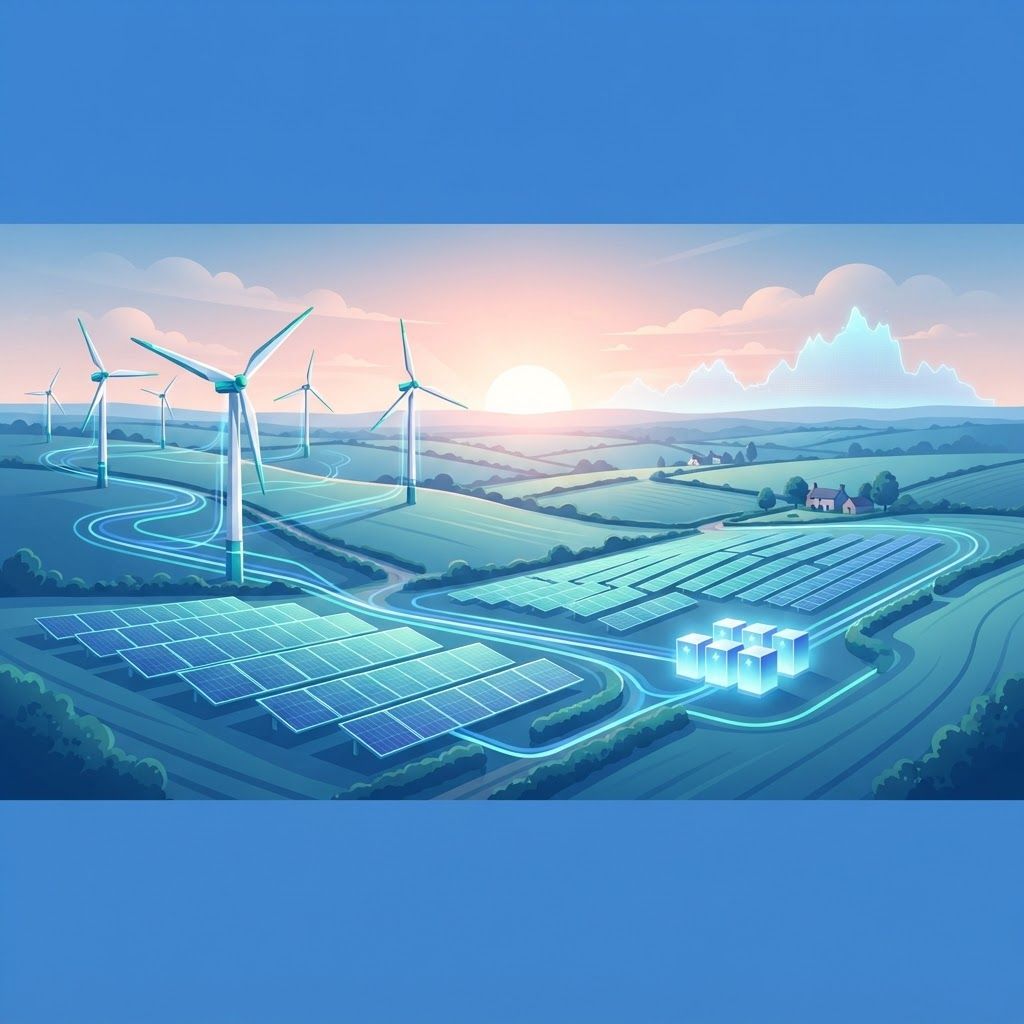
South Kesteven has several natural advantages for renewable energy. Its landscape is predominantly open arable land with relatively few topographic constraints, which suits both ground-mounted solar and larger wind projects. The district sits close to significant transmission infrastructure serving the wider Lincolnshire and East Midlands network, improving grid connection prospects compared with more congested regions. Its towns contain substantial industrial and warehouse roof space, much of it south-facing and structurally suitable for photovoltaic arrays. And the farming community, long accustomed to diversification, has been quick to see energy as a complementary income stream rather than a competing land use.
Rising and volatile energy costs have accelerated adoption further. For an engineering firm running machining centres or a food processor operating chilled storage, electricity is a top-three cost line. Generating a meaningful share of it on site changes the economics of the entire operation.
The Technologies in Play
Solar photovoltaic remains the default for most commercial and domestic installations because it is predictable, low maintenance and rapidly deployable. Onshore wind is viable at scale on suitable open sites, offering higher winter generation that complements solar's summer peak. Battery energy storage has become increasingly important, allowing generation to be shifted to periods of high demand or price. Heat pumps, both air and ground source, address heating rather than electricity, and are particularly relevant in a district with many off-gas-grid rural properties. Anaerobic digestion converts agricultural residues and food waste into biogas, and several farm-scale plants operate in the wider Lincolnshire area. Finally, energy efficiency measures, though less visible, often deliver the best return of all.
1. Kesteven Renewables Group
The largest multi-technology developer serving the district, Kesteven Renewables Group handles ground-mounted solar, battery storage and hybrid sites from feasibility through to operation. It manages grid applications, planning submissions, landowner agreements and construction, and retains long-term operations and maintenance responsibility. Landowners value its transparency on lease terms and decommissioning obligations.
2. Stamford Energy Solutions
Focused on commercial and industrial clients, Stamford Energy Solutions designs rooftop solar and storage systems for factories, warehouses and retail premises. Its proposals are built around consumption profiles rather than roof capacity, which typically produces better financial outcomes by maximising self-consumption. It also offers funded models where the client pays for energy rather than equipment.
3. Fenland Agri Energy
Specialising in farm-based renewable projects, Fenland Agri Energy develops anaerobic digestion plants, biomass heating, agrivoltaic arrangements combining grazing or cropping with solar, and on-farm storage. It is well versed in the interaction between energy income and agricultural tax reliefs, and works alongside land agents and rural accountants.
4. Grantham Solar and Storage
This installer serves domestic and small commercial customers across Grantham and surrounding villages, covering rooftop solar, home batteries, electric vehicle charging and smart tariff optimisation. It is known for realistic generation estimates based on shading surveys rather than optimistic generic figures, and for clear explanations of payback assumptions.
5. Welland Wind Developments
Welland Wind Developments focuses on onshore wind, from single farm-scale turbines to multi-turbine schemes. Its work includes wind resource assessment, environmental and ornithological surveys, noise modelling, community consultation and planning strategy. It has developed a reputation for early, genuine engagement with parish councils rather than treating consultation as a formality.
6. Bourne Heat Pump Specialists
With many properties in the district off the gas network, heat pumps offer a significant opportunity. Bourne Heat Pump Specialists designs and installs air and ground source systems, with an emphasis on doing the heat loss calculations properly and upgrading emitters where needed. It also handles fabric improvements, recognising that a heat pump in a poorly insulated building disappoints everyone.
7. A1 Grid and Connections Consultancy
Grid capacity is the single biggest constraint on renewable deployment. This consultancy advises developers and large energy users on connection applications, curtailment risk, flexible connection agreements, private wire arrangements and behind-the-meter configurations. Its involvement early in a project frequently determines whether the scheme is viable at all.
8. Deepings Community Energy
Structured as a community benefit society, Deepings Community Energy develops locally owned generation with returns and benefit funds directed to residents. Projects have included rooftop arrays on community buildings and small ground-mounted schemes. Its model appeals to parishes that want the benefits of renewables retained locally rather than exported to distant investors.
9. Stonebridge Energy Storage
Batteries are becoming the backbone of a flexible grid. Stonebridge Energy Storage develops and operates grid-scale battery sites and designs behind-the-meter storage for industrial users seeking to reduce peak demand charges. It also provides optimisation services, trading stored energy across markets to improve returns.
10. Belvoir Sustainability Consultants
Before generating energy, most organisations should reduce what they use. Belvoir Sustainability Consultants conducts energy audits, carbon footprint assessments, compliance reporting and net zero roadmapping for businesses and public bodies. It then specifies renewable measures in the correct sequence, an approach that consistently improves overall return on investment.
Funding and Commercial Models
Outright purchase gives the best long-term return but requires capital. Asset finance and leasing spread cost over the life of the equipment and often produce positive cash flow from year one. Power purchase agreements involve a third party funding and owning the system while the host buys the electricity at an agreed rate, removing capital cost entirely but capturing part of the benefit. Land lease arrangements suit farmers hosting developer-owned schemes, providing index-linked income over long terms. Grant support varies over time and should be checked at the point of decision rather than assumed.
Planning and Land Considerations
Larger schemes require planning permission, with agricultural land classification, landscape and visual impact, heritage setting, ecology and highway access forming the main issues. Biodiversity net gain requirements now apply to most developments, which can be satisfied through habitat creation within solar sites, an approach that often improves both ecology and community acceptance. Decommissioning and land restoration obligations should be defined clearly in any lease, alongside restrictions on assignment and provisions for lease extension if the technology is repowered.
How to Choose a Credible Partner
Ask for reference sites of comparable scale that have been operating for at least two years, and ask about actual against predicted output. Check relevant accreditations and insurance, and confirm who carries responsibility if generation underperforms. Scrutinise maintenance terms, response times and inverter warranty periods. For land deals, always take independent legal and agricultural advice before signing an exclusivity or option agreement, because the terms agreed at that early stage govern decades of land use.
Want your brand featured in front of decision-makers? Publish a guest post or get a link insertion in our guides through AAMAX's guest post and link insertion service.
Helpful Links
 SponsoredAAMAX — Full-Service Digital Agency
Write for Us
Share your expertise with our readers. We welcome guest contributions from industry specialists.
Pitch your idea

