

Powys at the Heart of Welsh Renewable Energy
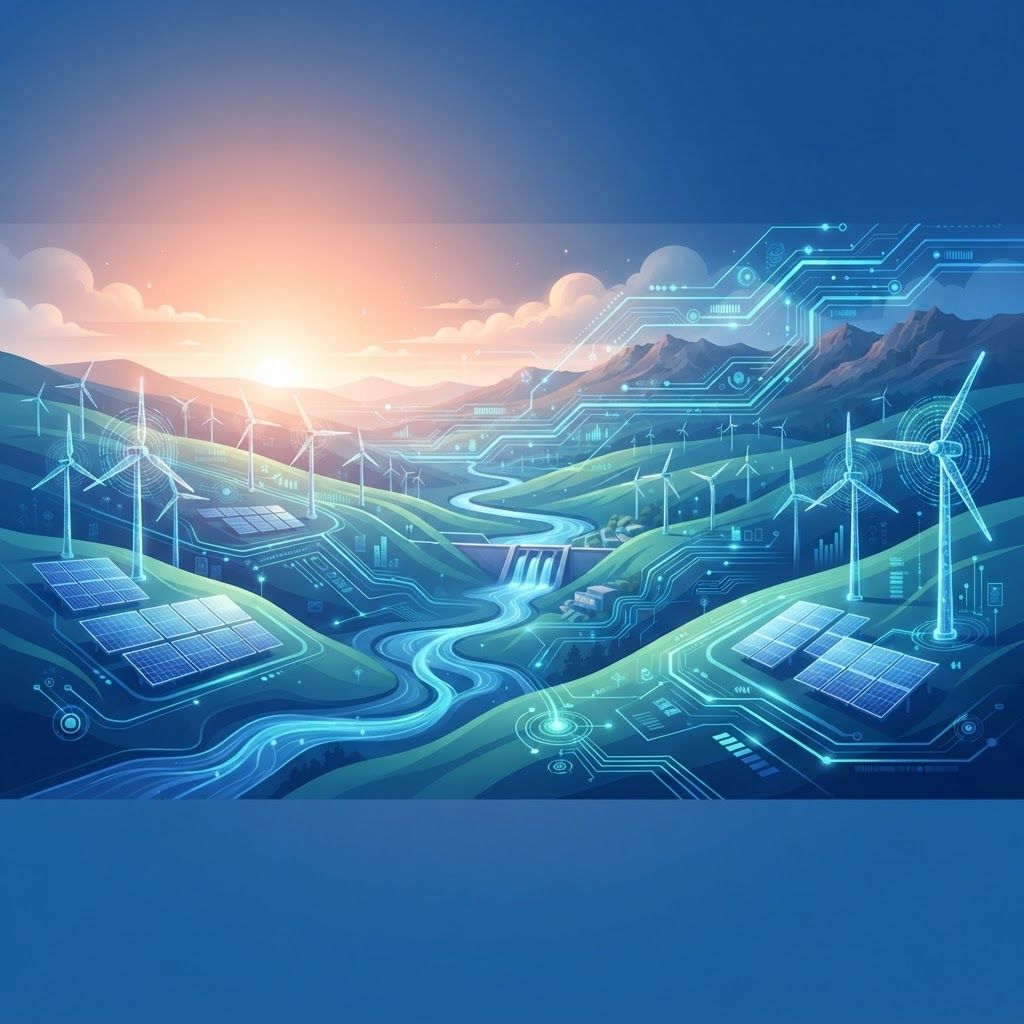
Few places in the United Kingdom are as closely associated with renewable energy as Powys. The county's upland geography, consistent wind resource, fast-flowing rivers and abundant land have made it central to Welsh decarbonisation for decades. Wind farms across the Cambrian Mountains, hydro schemes on mountain streams, solar arrays on farmland, biomass boilers heating rural properties and a growing number of battery storage projects together make renewables one of the county's most significant industries.
The story is not only about large developers. Powys has a strong tradition of community and small-scale energy, exemplified by the pioneering work carried out at the Centre for Alternative Technology near Machynlleth, which has influenced sustainable building and energy practice across the UK for half a century. Farm-scale wind turbines, rooftop solar on agricultural buildings, micro hydro on private watercourses and community-owned schemes are woven into the fabric of the local economy.
The Renewable Technologies in Use
Onshore wind remains the dominant utility-scale technology, with the upland plateau offering some of the best wind speeds in Wales. Solar photovoltaic has grown rapidly, both as ground-mounted farms on lower-grade agricultural land and as rooftop installations on barns, factories and homes. Hydropower has a long heritage in mid-Wales, with run-of-river and small storage schemes operating across the county. Biomass and wood fuel supply chains benefit from extensive local forestry. Heat pumps, both air and ground source, are increasingly specified for off-gas-grid rural properties. Battery storage is the fastest-growing category, providing grid balancing services and enabling higher renewable penetration.
The Top 10 Renewable Energy Companies in Powys
1. Centre for Alternative Technology. Based near Machynlleth, CAT is an internationally recognised education and research organisation that has shaped renewable energy practice in Wales and beyond. Its work on zero carbon scenarios, sustainable building and practical training makes it a foundational institution for the sector in Powys.
2. Dulas. A long-established Machynlleth-based renewable energy company, Dulas has decades of experience in solar, wind and hydro, including specialist solar refrigeration systems used in vaccine distribution worldwide. It is one of the most significant renewable engineering employers in mid-Wales.
3. Bute Energy. A major Welsh developer of onshore wind and associated grid infrastructure, Bute Energy has advanced a substantial pipeline of energy park projects across mid-Wales, with an emphasis on Welsh ownership and community benefit funds.
4. Vattenfall. Operating significant wind generation in Wales, Vattenfall brings large-scale international expertise to Welsh onshore wind, along with substantial community benefit and local supply chain commitments.
5. RWE. With extensive onshore wind operations in Wales, RWE is one of the largest renewable generators in the country and a major player in the mid-Wales energy landscape, operating and maintaining wind assets over the long term.
6. Renewable Energy Systems. A developer and operator with a long track record in UK onshore wind and solar, RES has been involved in mid-Wales projects and brings strong capability in development, construction and asset management.
7. Egni Co-op and Welsh community energy organisations. Community-owned solar and renewable cooperatives install panels on schools, community buildings and business rooftops across Wales, returning benefits locally rather than to distant shareholders. This model resonates strongly in Powys.
8. Sharenergy. Supporting community energy groups across Wales and the borders with share offers, project development and technical support, Sharenergy has helped establish numerous community hydro and solar schemes in mid-Wales.
9. Local solar and heat pump installers across Powys. A network of accredited installers based in Newtown, Brecon, Welshpool and Llandrindod Wells delivers domestic and commercial solar, battery and heat pump installations. Their local presence matters for maintenance and aftercare in a dispersed county.
10. Hydro developers and micro hydro specialists. Mid-Wales supports a cluster of engineers specialising in small-scale hydro, from feasibility and abstraction licensing through to turbine installation and long-term operation, making use of the county's abundant watercourses.
Key Trends in Powys Renewables
Grid capacity is the defining constraint. Mid-Wales has historically been limited by transmission infrastructure, and major grid reinforcement proposals have generated significant public debate about pylons, undergrounding and landscape impact. How this is resolved will determine how much additional generation the county can host.
Community benefit has moved from optional to expected. Welsh policy encourages local ownership stakes and substantial community funds, and developers who engage genuinely with Powys communities achieve smoother consenting than those who do not.
Farm diversification into energy continues to grow. Solar on barn roofs, small wind, anaerobic digestion and land leased for larger projects provide income diversification that is increasingly valuable as agricultural support changes. Careful legal and tax advice is essential, as long-term agreements can affect agricultural reliefs.
Battery storage and flexibility services represent the newest wave, with projects colocated alongside generation or connected independently to provide grid balancing. Finally, retrofit and energy efficiency work, including heat pumps and insulation for the county's older housing stock, is generating steady employment for local installers.
Choosing a Renewable Energy Provider
For domestic and small commercial installations, check accreditation under recognised certification schemes, which is also a condition of most incentive payments. Ask for references from installations of comparable scale in similar rural settings. Understand the warranty position on both equipment and workmanship. For landowners approached by developers, take independent legal and agricultural advice before signing an option or lease, as these agreements run for decades and materially affect the land.
Final Thoughts
Powys has contributed more to Welsh renewable generation than almost any other county, and the sector is now a genuine pillar of the local economy providing engineering jobs, landowner income and community funding. The companies listed here span global operators, Welsh developers, community cooperatives and local installers, reflecting a sector that is both industrial in scale and deeply rooted in mid-Wales communities.
Want your brand featured in front of decision-makers? Publish a guest post or get a link insertion in our guides through AAMAX's guest post and link insertion service.
Helpful Links
 SponsoredAAMAX — Full-Service Digital Agency
Write for Us
Share your expertise with our readers. We welcome guest contributions from industry specialists.
Pitch your idea

