

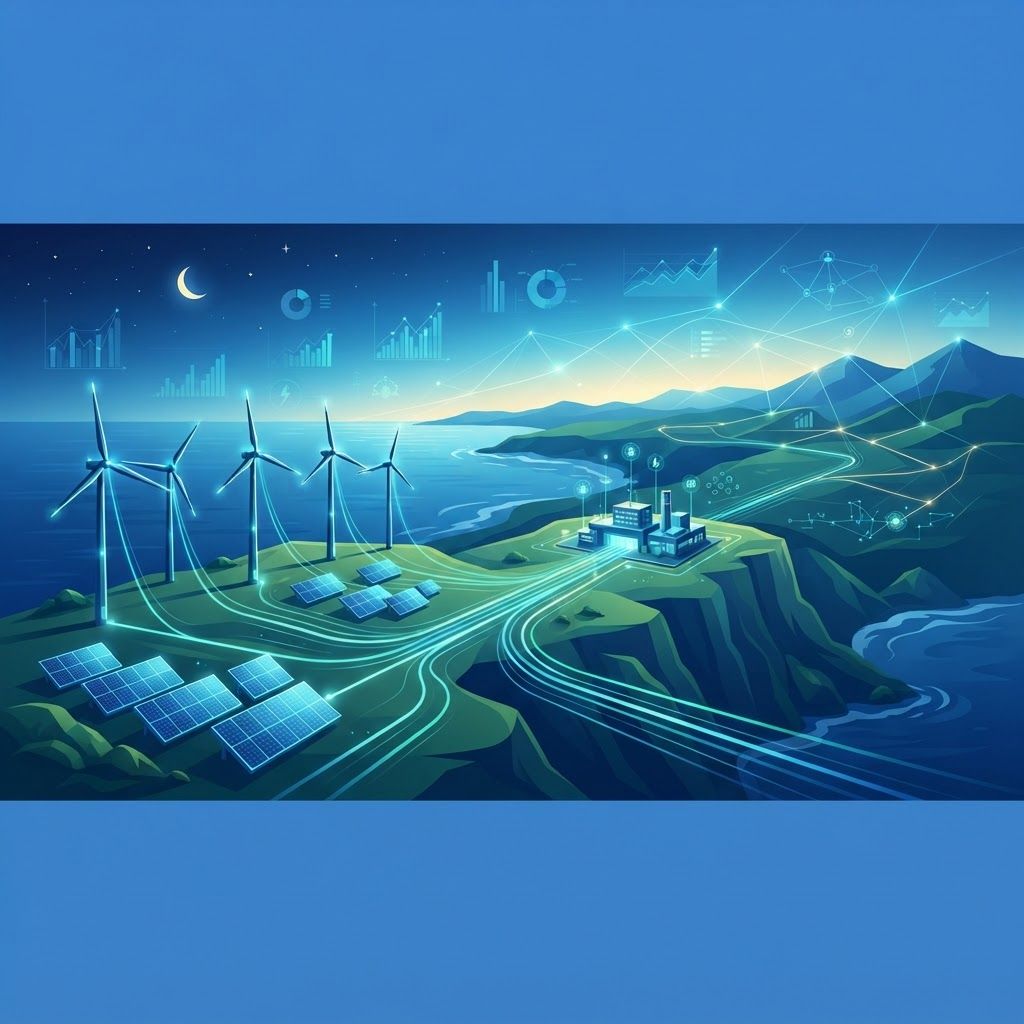
A Borough Built for Renewable Energy
Mid and East Antrim enjoys a combination of assets that few areas can match. The Antrim plateau and coastal margins deliver some of the strongest and most consistent wind resources in Europe. The Larne area hosts salt caverns with significant potential for large-scale energy storage. Grid infrastructure along the east coast connects to interconnection with Scotland. And critically, the borough retains a deep manufacturing and engineering workforce capable of building and maintaining the physical infrastructure the transition requires.
Northern Ireland has set ambitious targets for renewable electricity consumption, and meeting them depends heavily on onshore wind, solar deployment, grid reinforcement and flexible storage. Mid and East Antrim features prominently in every one of those categories.
Technologies Active in the Borough
Onshore wind remains the dominant renewable generation technology, with both utility-scale farms on upland sites and single or paired turbines serving farms and industrial premises. Solar photovoltaic deployment has accelerated sharply as costs have fallen, appearing on factory roofs, agricultural buildings, schools and increasingly on domestic properties.
Battery energy storage has become essential infrastructure, smoothing the variability of wind and solar output and providing grid services. Anaerobic digestion converts agricultural and food processing waste into biogas, an attractive fit given the borough's farming and food production base.
Heat pumps are steadily replacing oil-fired heating, which historically dominated Northern Ireland's domestic market. Hydrogen production and storage represents the most forward-looking strand, with the Larne salt caverns attracting serious attention as a potential large-scale storage resource.
Ten Companies Leading the Transition
1. B9 Energy has a long track record in wind farm operations and maintenance across Northern Ireland, providing the technical services that keep installed capacity performing reliably over decades.
2. RES Group develops, builds and operates renewable projects internationally and has been active in Northern Ireland wind development, bringing substantial project finance and engineering capability.
3. SSE Renewables operates significant generation assets across the island of Ireland and continues to invest in onshore wind and grid-connected infrastructure relevant to the region.
4. Energia Group combines renewable generation with supply activities, investing in wind, solar and bioenergy while serving business and domestic customers across the island.
5. Gaelectric pioneered work on compressed air energy storage using the Larne salt caverns, establishing the borough's credentials as a location for large-scale storage innovation.
6. Simple Power focused on single-turbine deployment for farms and rural businesses, a model well suited to the borough's agricultural landscape and one that kept generation revenue within local communities.
7. Kingspan manufactures insulation and building envelope products alongside renewable technologies, contributing to the demand-reduction side of the energy transition that often delivers better returns than generation.
8. Wrightbus deserves inclusion for its hydrogen fuel cell bus manufacturing in Ballymena, which has positioned the borough at the centre of hydrogen mobility and stimulated a wider local hydrogen supply chain.
9. Solmatix Renewables designs and installs commercial solar photovoltaic and battery systems, helping borough manufacturers reduce electricity costs and carbon footprint simultaneously.
10. Local renewable installers and engineering contractors across Ballymena, Larne and Carrickfergus deliver domestic and small commercial solar, heat pump and battery installations. These businesses provide the accessible entry point through which most households engage with the transition.
Policy and Market Drivers
Energy price volatility has transformed the business case for on-site generation. Manufacturers who once viewed rooftop solar as a corporate responsibility gesture now evaluate it as a straightforward hedge against electricity costs, frequently with payback periods well under a decade.
Corporate power purchase agreements have grown rapidly, allowing large energy users to contract directly with generators for long-term renewable supply at predictable prices. This structure benefits both parties and bypasses some of the challenges of subsidy-dependent development.
Grid capacity has become the principal constraint on deployment. Connection queues and reinforcement requirements now determine project timelines more than planning or finance in many cases, driving interest in storage and flexible demand as ways to make better use of existing infrastructure.
Planning policy continues to balance renewable deployment against landscape, ecological and community considerations, particularly significant in a borough containing designated landscapes and a major tourism route.
Considerations for Businesses and Households
Begin with energy efficiency. Reducing consumption through insulation, lighting upgrades, controls and process improvements almost always costs less per unit saved than generating replacement energy. Commission a proper energy audit before specifying generation capacity.
For solar installations, roof orientation, structural capacity, shading and consumption profile all affect viability substantially. A business operating during daylight hours achieves far better returns than one drawing most power overnight, unless storage is included.
Choose installers with relevant accreditation and verifiable local references. Ask about warranty terms, performance guarantees, ongoing maintenance and what happens if the installer ceases trading. For larger projects, seek independent technical advice before committing capital.
Final Thoughts
Mid and East Antrim combines exceptional natural resources, strategic infrastructure and genuine engineering depth, making it one of Northern Ireland's most significant renewable energy locations. For local businesses, the transition represents both a cost management opportunity and, for those in the supply chain, a substantial growth market likely to expand for decades.
Want your brand featured in front of decision-makers? Publish a guest post or get a link insertion in our guides through AAMAX's guest post and link insertion service.
Helpful Links
 SponsoredAAMAX — Full-Service Digital Agency
Write for Us
Share your expertise with our readers. We welcome guest contributions from industry specialists.
Pitch your idea

