

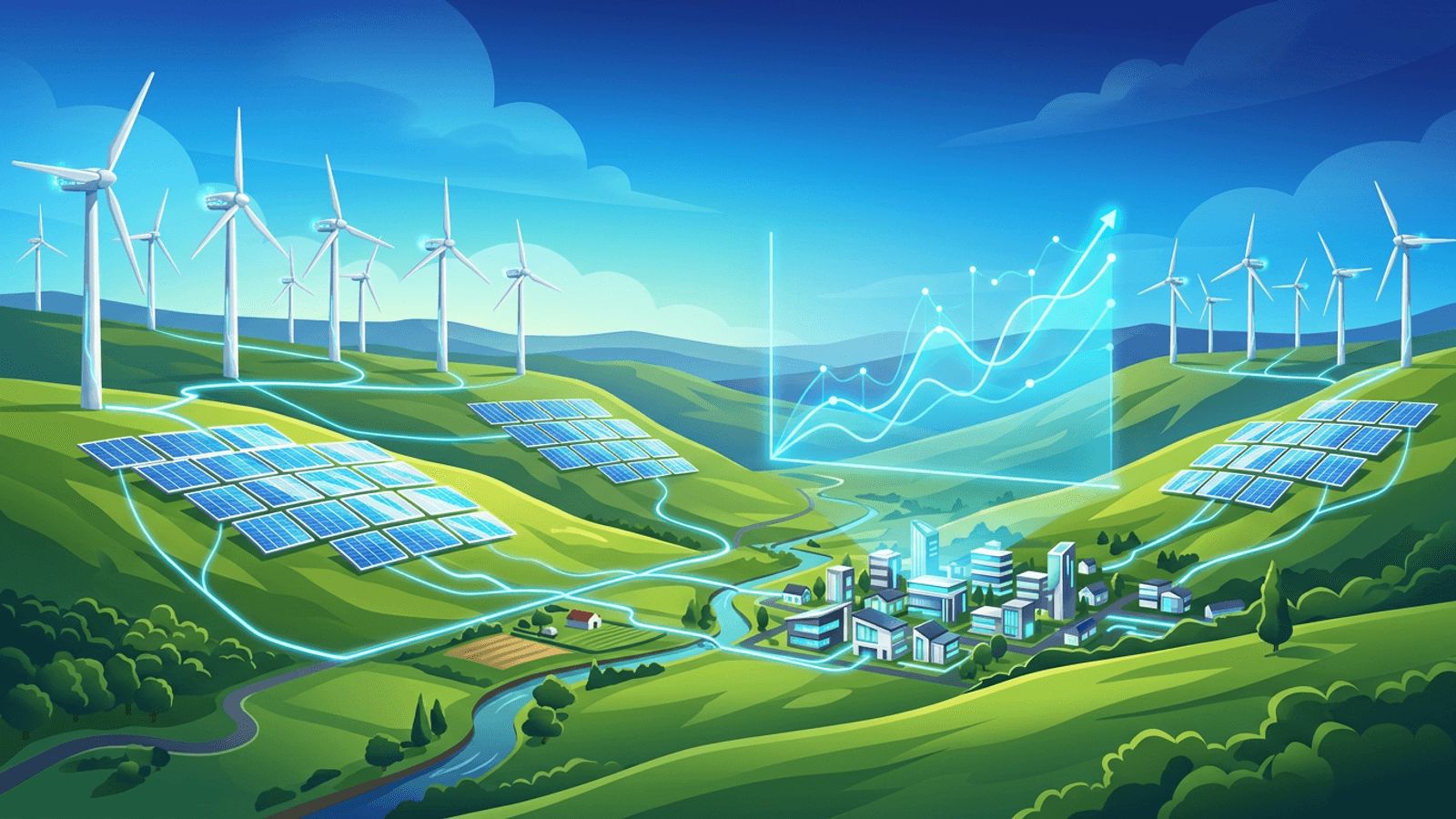
From Coal and Iron to Clean Energy
Few places embody the story of energy in Britain as powerfully as Merthyr Tydfil. Its ironworks and coal mines fuelled the Industrial Revolution, and its landscape still bears the marks of that heritage. Today, the hills surrounding the town are playing a new role, hosting wind turbines, solar arrays and community energy projects that help Wales move towards a low-carbon future.
The Welsh Government has set an ambitious goal of meeting the equivalent of all of Wales's annual electricity needs from renewable sources by 2035, with a strong emphasis on local and community ownership. The uplands around Merthyr Tydfil, with their exposure to strong winds and proximity to grid infrastructure, are well placed to contribute.
Why Renewable Energy Matters Locally
Renewable energy brings multiple benefits to communities like Merthyr Tydfil. It creates jobs in construction, operation and maintenance, provides community benefit funds that support local projects, reduces exposure to volatile fossil fuel prices and helps tackle climate change. Former industrial and mining land can also be repurposed for clean energy, giving it a productive future.
How We Chose These Companies
We considered each company's activity in South Wales, track record, community engagement, range of technologies and contribution to Welsh renewable energy targets. The list includes major developers, Welsh-based companies and community-owned organisations.
The Top 10 Renewable Energy Companies for Merthyr Tydfil
1. Vattenfall
Vattenfall operates the Pen y Cymoedd wind farm, one of the largest onshore wind farms in England and Wales, located in the uplands between the Neath and Rhondda valleys, not far from Merthyr Tydfil. Its community fund has supported numerous local projects, making it a significant contributor to the region.
2. Pennant Walters
Pennant Walters is a Welsh company with roots in the valleys that has developed and operates onshore wind farms in South Wales. Its local ownership and understanding of valleys communities set it apart from larger international developers.
3. RWE
RWE is one of the largest energy generators in Wales, with a portfolio spanning onshore and offshore wind, hydro and gas. Its investment in Welsh renewables and grid-scale projects makes it a key player in the country's energy transition.
4. Bute Energy
Bute Energy is a Wales-focused renewable developer proposing a series of onshore wind and grid projects across the country. Its plans include community benefit funds and shared ownership opportunities aimed at keeping value in Welsh communities.
5. Trydan Gwyrdd Cymru
Trydan Gwyrdd Cymru is the Welsh Government's publicly owned renewable energy developer, created to develop onshore wind projects on the public forest estate. Profits are intended to be reinvested in Wales, making it an important new force in the sector.
6. Statkraft
Statkraft, Europe's largest generator of renewable energy, has a presence in Wales through wind, solar and grid stability projects. Its expertise in balancing renewable generation with grid needs is increasingly important as more clean power comes online.
7. Ripple Energy
Ripple Energy pioneered consumer ownership of wind farms, allowing households to buy shares in projects and receive savings on their electricity bills. Its Graig Fatha wind farm in the Rhondda Cynon Taf area, close to Merthyr Tydfil, was among the first of its kind.
8. Egni Co-op
Egni Co-op is a Welsh community energy co-operative that installs rooftop solar on schools, community buildings and businesses. Members invest in projects and surpluses support community initiatives, making it a model of locally owned clean energy.
9. Awel Co-op
Awel Co-op is a community-owned wind farm co-operative in South Wales. It returns profits to local communities and has demonstrated how residents can directly benefit from renewable energy on their doorstep.
10. Cenin Renewables
Cenin Renewables is a South Wales company involved in solar, wind and sustainable building projects. Its innovative work on low-carbon materials and renewable installations reflects the region's growing green economy.
Renewable Energy Trends in South Wales
Grid capacity is one of the biggest challenges facing renewable growth in Wales, and new grid infrastructure is being planned to connect more projects. Battery storage is expanding rapidly, helping to balance supply and demand. Community and local ownership is also a strong theme, with the Welsh Government encouraging shared ownership in new developments.
Green hydrogen, heat networks and the repurposing of former industrial land are emerging opportunities. For Merthyr Tydfil, the transition offers a chance to build new skills and supply chains, with colleges and training providers developing courses in renewable installation and maintenance.
How Businesses and Residents Can Get Involved
Residents can invest in community energy co-operatives, install rooftop solar or heat pumps, and engage with consultation on new projects. Businesses can sign power purchase agreements, install on-site generation or partner with community energy groups. Local organisations can apply to community benefit funds connected to nearby wind farms.
Conclusion
Merthyr Tydfil's energy story is entering a new chapter. The same landscape that powered the world's first industrial age is now helping to generate clean electricity for the future. The companies in this guide, from global generators to Welsh co-operatives, are leading that transformation and creating opportunities for jobs, investment and community benefit across the valleys.
Want your brand featured in front of decision-makers? Publish a guest post or get a link insertion in our guides through AAMAX's guest post and link insertion service.
Helpful Links
 SponsoredAAMAX — Full-Service Digital Agency
Write for Us
Share your expertise with our readers. We welcome guest contributions from industry specialists.
Pitch your idea

