

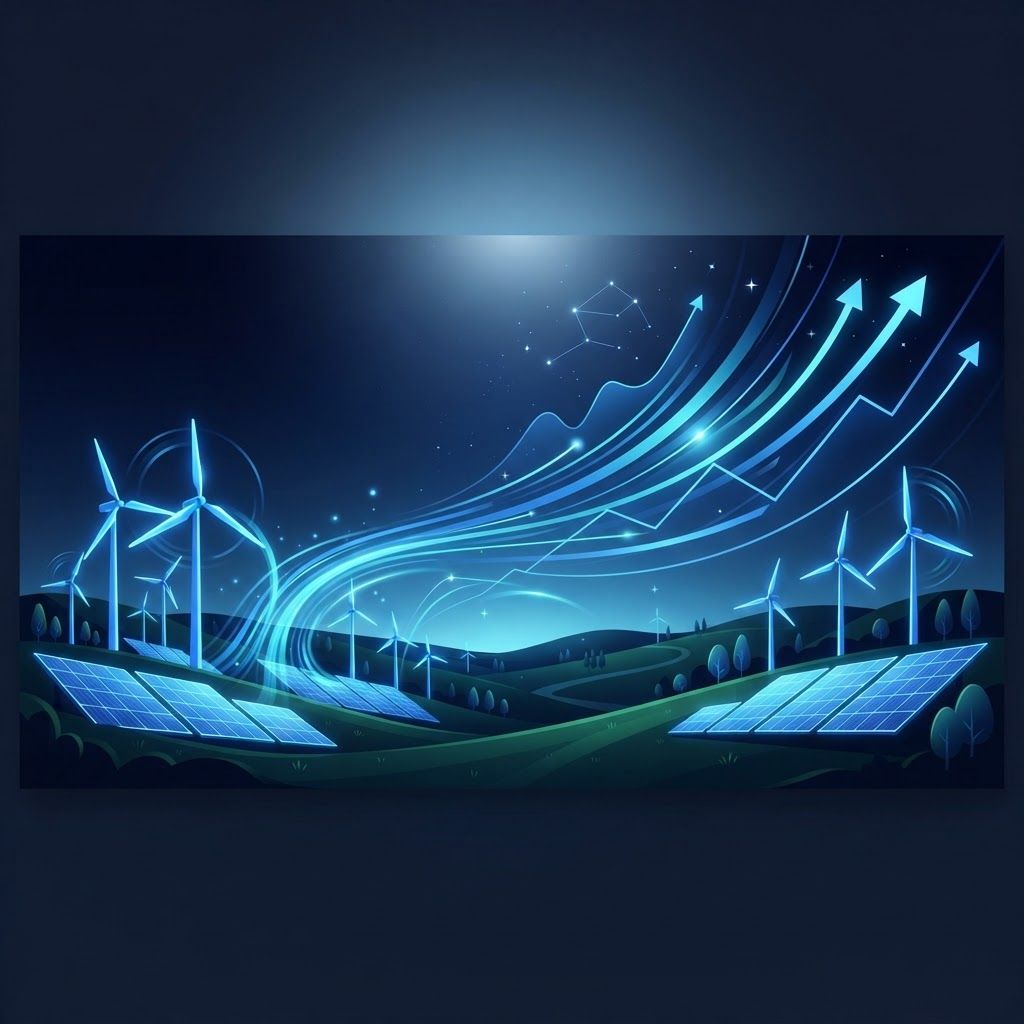
Gloucestershire's Renewable Energy Momentum
Gloucester occupies a strategically interesting position in the United Kingdom's energy transition. The Severn estuary to the south west represents one of the largest tidal ranges in the world, the surrounding countryside offers substantial solar and wind resource, and the county's engineering heritage provides a skilled workforce capable of manufacturing and maintaining renewable infrastructure.
Local authorities across Gloucestershire have adopted ambitious carbon reduction targets, and the county has developed a genuine cluster of renewable energy expertise spanning developers, installers, consultants, and community energy groups. For businesses and households in the city, the practical result is a competitive market with a wide range of options.
Solar Photovoltaic Deployment
Solar remains the most accessible renewable technology for Gloucester properties. Costs have fallen dramatically over the past decade while panel efficiency has improved, making rooftop installations financially attractive even without subsidy. Commercial rooftops on the city's extensive industrial and distribution estates are particularly well suited, offering large uninterrupted areas and daytime demand profiles that match generation.
Ground-mounted solar farms have also been developed across the Severn Vale, typically on lower grade agricultural land, often combined with sheep grazing and biodiversity planting. Planning considerations around landscape impact, particularly near the Cotswolds National Landscape, shape where these schemes can proceed.
Wind, Hydro, and Emerging Technologies
Onshore wind in Gloucestershire is more constrained than solar due to landscape designations and planning history, though smaller turbines serving individual farms and industrial sites have been installed successfully. Recent relaxation of planning policy for onshore wind in England has renewed interest in suitable sites.
Hydropower has a long history in the county, with the rivers of the Stroud valleys once powering the woollen mills. Small-scale hydro schemes, including Archimedes screw installations on weirs, continue to generate modest but reliable output. Proposals for tidal energy in the Severn estuary have been discussed for generations and remain periodically under review given the extraordinary resource available.
Battery energy storage has become one of the fastest growing segments. Grid-scale storage projects are being developed across the region to balance intermittent generation, while commercial and domestic batteries allow users to shift consumption and participate in flexibility markets. Heat pumps, both air source and ground source, represent the other major growth area as building heating decarbonises.
Leading Renewable Energy Companies Serving Gloucester
Ecotricity, founded in Stroud just outside Gloucester, is among the most recognisable names in British green energy. It pioneered the concept of a renewable electricity supplier and has developed wind and solar generation alongside green gas from grass projects.
Severn Wye Energy Agency is a Gloucestershire-based not-for-profit organisation providing energy advice, fuel poverty support, and project delivery across the region, with substantial expertise in retrofit and community energy.
Gloucestershire Energy Co-operative and Stroud Community Solar represent the community energy movement, enabling local people to invest in and benefit from renewable generation on schools, community buildings, and industrial roofs.
Joju Solar and Solarsense are established commercial installers operating across the South West, delivering large rooftop photovoltaic and storage systems for businesses and public sector organisations. Egni Renewables and Mypower similarly serve Gloucestershire commercial clients with turnkey solar and battery solutions.
Ground Source Renewables and Kensa bring heat pump expertise to the county, while Geothermal Engineering style specialists address deeper ground energy applications. Nexus Energy Solutions and Holywell Energy provide consultancy and project development services spanning feasibility, planning, grid connection, and commissioning.
Grid Connection and Infrastructure Constraints
One of the most significant practical barriers to renewable deployment in the region is grid capacity. Distribution networks in parts of Gloucestershire are constrained, and connection offers for larger projects can involve long timescales and substantial reinforcement costs. Developers now routinely assess grid availability at the earliest feasibility stage.
Flexible connection agreements, which allow generation to be curtailed at times of network stress in exchange for faster and cheaper connection, have become an important workaround. Co-locating storage with generation also improves the economics and network impact of new projects.
Commercial Drivers for Gloucester Businesses
For the city's manufacturers, logistics operators, and retailers, renewable investment is increasingly driven by commercial logic rather than environmental aspiration alone. Electricity price volatility has made on-site generation attractive as a hedge. Corporate reporting requirements and supply chain expectations from larger customers are pushing carbon reduction up the agenda.
Power purchase agreements allow organisations to secure renewable electricity at fixed long-term prices without capital outlay, and this model has grown considerably. Energy efficiency measures, often the cheapest carbon savings available, remain the sensible first step before generation investment.
Skills and Supply Chain
The transition depends on people. Gloucestershire College and local training providers have expanded provision in renewable technologies, heat pump installation, and electrical qualifications. The county's engineering base gives it a genuine advantage in manufacturing components and providing operations and maintenance services.
Practical Guidance for Adopters
Anyone considering renewable installation should obtain multiple quotations, verify certification under the Microgeneration Certification Scheme for domestic work, check membership of consumer protection schemes, and scrutinise performance estimates carefully. Realistic modelling of self-consumption is critical, since the value of generation depends heavily on how much is used on site rather than exported.
For commercial projects, structural surveys, grid studies, and independent technical review before commitment consistently prevent expensive surprises. Gloucester has the expertise available locally to support that diligence properly.
Want your brand featured in front of decision-makers? Publish a guest post or get a link insertion in our guides through AAMAX's guest post and link insertion service.
Helpful Links
 SponsoredAAMAX — Full-Service Digital Agency
Write for Us
Share your expertise with our readers. We welcome guest contributions from industry specialists.
Pitch your idea

