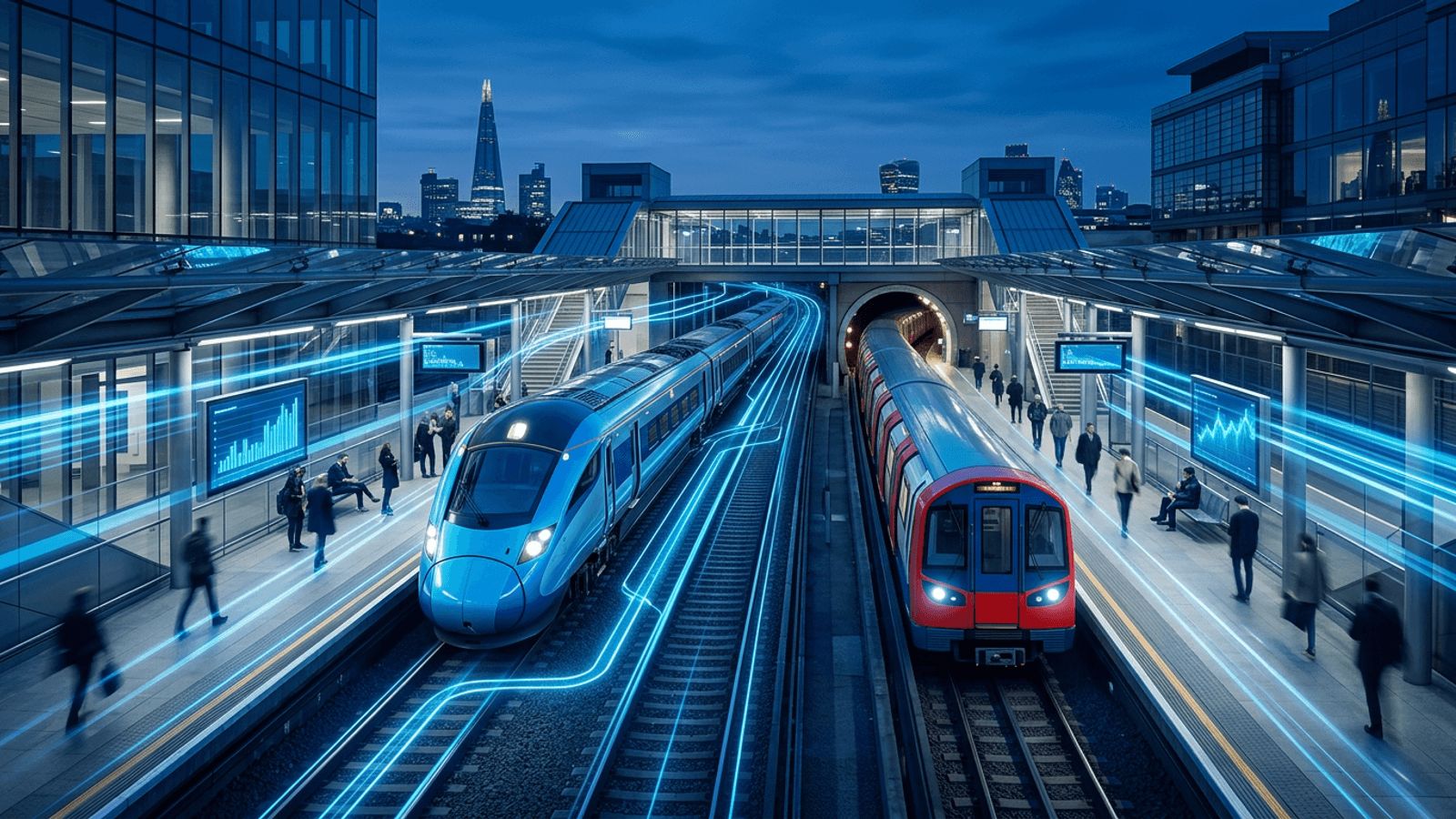
A County Built Around the Railway
West Lothian has an exceptionally rich railway heritage and an equally strong modern network. The Edinburgh to Glasgow via Falkirk High line runs through Linlithgow, the Shotts line serves West Calder, Addiewell, Breich and Fauldhouse, and the reopened Airdrie to Bathgate route transformed connectivity for Bathgate, Armadale, Blackridge and Livingston North. Uphall and Livingston South add further options, giving the county an unusually dense pattern of stations for a largely suburban and semi-rural area.
The practical effect is that a large share of West Lothian residents can reach Edinburgh Waverley or Glasgow Queen Street in around half an hour. That has reshaped local housing markets, made the county attractive to commuters and taken significant pressure off the M8. Rail freight also uses these corridors, moving containers, aggregates and fuel across the central belt.
The Ten Key Railway Operators and Bodies
1. ScotRail. The principal passenger operator in West Lothian and the company most residents interact with daily. ScotRail runs the Edinburgh to Glasgow services through Linlithgow, the Shotts line stopping services and the frequent Bathgate and Livingston North trains. Its electrified Class 385 units brought faster acceleration, more capacity and a noticeably quieter ride to the county's core routes. Strengths include high frequency on the main corridors, integrated smartcard and mobile ticketing, and a simple national fares structure.
2. London North Eastern Railway. LNER does not stop everywhere in the county but is central to long-distance travel for West Lothian residents, offering fast services from Edinburgh towards Newcastle, York, Leeds and London. Its Azuma fleet, at-seat catering and advance fare structure make it the usual choice for business travel to England.
3. Avanti West Coast. Operating the west coast route from Glasgow and Edinburgh towards Carlisle, Preston, Birmingham and London, Avanti is the alternative long-distance option. Passengers from the western side of the county often find it convenient via Glasgow, and its tilting Pendolino fleet remains one of the fastest ways south.
4. CrossCountry. CrossCountry provides through services from Scotland to the English Midlands, the south west and beyond without requiring a change in London. For travellers heading to Birmingham, Bristol, Reading or the south coast, it removes a significant amount of interchange hassle.
5. TransPennine Express. This operator links Scotland with the north of England, including Newcastle, York, Leeds and Manchester. It is a practical option for cross-border regional travel and adds useful extra capacity on the Anglo-Scottish corridor.
6. Caledonian Sleeper. The overnight service between Scotland and London occupies a unique niche, offering en-suite cabins, a club car and the ability to travel while asleep rather than losing a working day. For West Lothian business travellers and tourists it converts a long journey into productive time.
7. Network Rail. Not a train operator but arguably the most consequential organisation on the county's railway, Network Rail owns and maintains the track, signalling, bridges and stations infrastructure. Its electrification and route improvement programmes underpinned the performance gains on the Edinburgh to Glasgow and Bathgate corridors, and its engineering work determines how resilient services are during winter weather.
8. GB Railfreight. One of the most dynamic freight operators in the country, GB Railfreight moves intermodal containers, aggregates and infrastructure trains across central Scotland. Each freight service removes dozens of lorry movements from the M8, delivering both congestion and carbon benefits.
9. Freightliner. A major intermodal and bulk freight operator with strong Scottish flows, Freightliner is particularly important for container traffic between Scottish terminals and English ports. Its heavy haul division also supports quarrying and construction supply chains.
10. DB Cargo UK. Handling bulk, automotive, construction and industrial flows, DB Cargo UK is another key freight presence on the central belt network. Its ability to run long, heavy trains makes it well suited to steel, cement and fuel movements.
What Makes the Local Network Work
Electrification is the single biggest reason West Lothian rail travel improved over the past decade. Electric units accelerate faster between closely spaced stations, which is exactly the profile of the Bathgate and Livingston corridors, and they produce no roadside emissions. Longer platforms and lengthened trains have addressed some of the crowding that followed rapid patronage growth.
Station accessibility has also improved, with step-free access, better lighting, sheltered waiting areas and expanded car parking and cycle storage at key stations. Park and ride provision at Livingston North, Bathgate and Uphall in particular has extended each station's effective catchment well into surrounding villages.
Trends and Future Developments
Several themes will shape the next phase. Decarbonisation of the remaining diesel-worked routes is a stated Scottish ambition, with battery-electric and further electrification both under consideration for lines such as the Shotts route. Timetable recasting continues as operators balance fast intercity paths against local stopping services on shared tracks.
Integrated ticketing is another priority, making bus and rail combinations simpler for journeys that begin in villages without a station. On the freight side, terminal capacity and gauge clearance improvements are being pursued to allow more containers to travel by rail rather than road, a shift with substantial emissions benefits.
Practical Advice for Passengers
Book long-distance journeys in advance, since advance fares on LNER, Avanti West Coast and CrossCountry are dramatically cheaper than walk-up prices. For local travel, season tickets and flexible carnet-style products suit hybrid working patterns better than traditional annual passes. Always check engineering work before weekend travel, as the Edinburgh to Glasgow corridors see regular planned closures with rail replacement buses.
Cyclists should note that space on trains is limited and reservations are advisable on longer services. If you require assistance, booking passenger assist in advance ensures staff are ready at both origin and destination.
Final Thoughts
West Lothian enjoys railway connectivity that many larger areas would envy. ScotRail provides the frequent local backbone, LNER, Avanti West Coast, CrossCountry, TransPennine Express and Caledonian Sleeper open up long-distance travel, and Network Rail together with GB Railfreight, Freightliner and DB Cargo UK keeps the infrastructure and goods flowing. Continued electrification and better integration with local buses should make the county's railways even more central to daily life in the years ahead.
Want your brand featured in front of decision-makers? Publish a guest post or get a link insertion in our guides through AAMAX's guest post and link insertion service.
Helpful Links
 SponsoredAAMAX — Full-Service Digital Agency
Write for Us
Share your expertise with our readers. We welcome guest contributions from industry specialists.
Pitch your idea