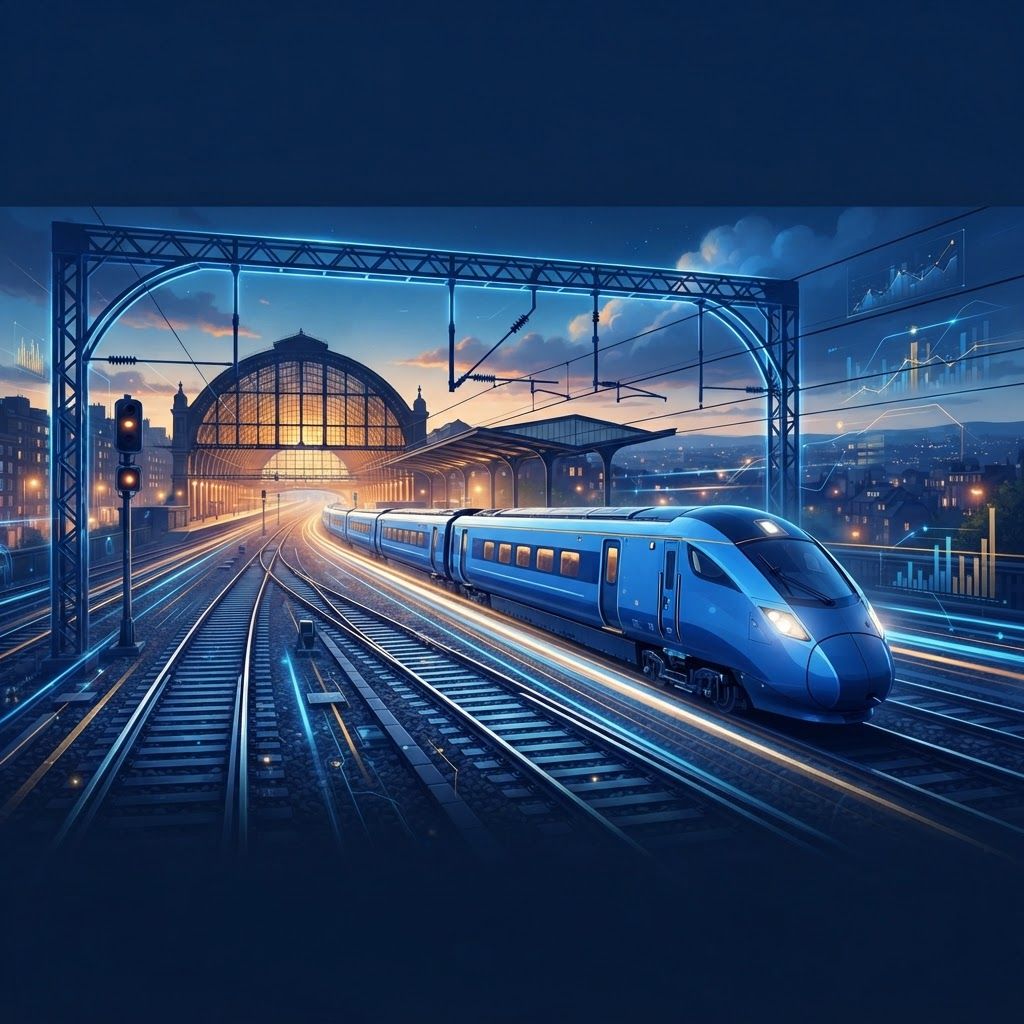
A Town Built by the Railway
Swindon is one of the few places in Britain where the railway did not simply arrive; it created the town. When the Great Western Railway chose the site for its locomotive works in the early Victorian period, a small Wiltshire market settlement was transformed into an industrial community with its own railway village, institute, hospital and workforce numbering in the thousands. That heritage remains visible in the terraces of the railway village and in the former works buildings now housing museums, offices and retail.
The practical legacy matters just as much. Swindon sits on the Great Western Main Line, one of the most important routes in the country, which means the town enjoys direct services in several directions and a level of connectivity many larger towns would envy. Understanding which services run and how they differ makes a substantial difference to cost, comfort and journey reliability.
The Long-Distance Backbone
The dominant presence at Swindon is the intercity operation on the Great Western Main Line, running east towards Reading and London Paddington and west towards Bristol, Bath, the West Country and South Wales. These are the fastest services from the town, using modern bi-mode intercity trains that operate under electric wires or on diesel power, which is what allows through running beyond the electrified sections.
For commuters and business travellers, this route is why many people choose to live in Swindon at all. Journey times to London are competitive with far closer locations, and frequency through the day means a missed train is an inconvenience rather than a crisis. Westbound services make Bristol an easy day trip and put Cardiff comfortably within reach.
Long-distance trains from Swindon typically offer reserved seating, a first class option, at-seat power and wireless internet, with catering on many services. Advance purchase tickets are where the largest savings appear, because cheaper allocations are released well before departure and withdrawn as trains fill.
Regional and Cross-Country Connections
Alongside the intercity flows, Swindon is served by regional operations connecting the town with the surrounding area, including services towards Gloucester and Cheltenham via the Golden Valley line, and links that make Chippenham, Bath, Didcot and Reading straightforward local journeys. These generally use shorter multiple-unit trains with a commuter-oriented interior, calling at more stations and offering a slower but often cheaper journey.
Cross-country services extend Swindon's reach considerably further. By changing at a major interchange such as Reading, Bristol or Birmingham, passengers can reach the north of England, Scotland and the south coast without returning to London, which usually saves both time and money compared with routing through the capital.
For travellers heading to Heathrow, the combination of a fast train to Reading and a dedicated airport connection is among the most efficient options available from the town, and it avoids the unpredictability of the M4 at peak times.
Freight on the Great Western Main Line
Not every train through Swindon carries passengers. The Great Western Main Line and connecting routes carry significant freight, including aggregates, intermodal container traffic moving between ports and inland terminals, automotive components and engineering materials. Rail freight plays a quiet but important role in the regional economy, taking heavy goods off the motorway network and moving them with substantially lower emissions per tonne kilometre than road haulage.
For businesses in the Swindon area with high-volume, non-time-critical flows, rail freight is worth investigating. It works best where volumes are consistent, the origin and destination are near rail-connected terminals, and transit time allows a scheduled rather than on-demand service.
Tickets, Fares and Getting Value
Rail pricing in Britain rewards planning. Advance tickets, released for specific trains, are usually cheapest and valid only on the booked service. Off-peak and super off-peak fares offer flexibility within time restrictions and suit leisure travel. Anytime tickets cost the most but allow travel on any service, which suits business travellers whose meetings overrun.
Several strategies genuinely reduce cost from Swindon. Railcards typically cut a third from most fares and pay for themselves quickly for regular travellers, with versions for younger passengers, older passengers, families, couples travelling together and disabled passengers. Split ticketing, where a journey is booked as two or more legs on the same train, can be cheaper than a through fare on certain routes. Group discounts apply for three or more adults travelling together off-peak. Season tickets and flexible carnet-style products suit commuters, particularly those working a hybrid week.
Digital ticketing has improved substantially. Most services from Swindon accept electronic tickets on a phone, and operator applications provide live departure information, platform numbers, seat reservations and delay compensation claims in one place.
Reliability, Disruption and Compensation
The Great Western Main Line is a busy mixed-traffic railway, and disruption does occur, whether from infrastructure faults, weather or knock-on effects from incidents elsewhere. Experienced Swindon travellers manage this by checking live information before leaving home, understanding that ticket acceptance is usually relaxed across operators during major disruption, and knowing the alternative routes eastbound and westbound.
Delay compensation is a right rather than a favour. Most operators serving Swindon offer compensation from fifteen or thirty minutes of delay, calculated as a proportion of the fare and claimable through an online form with the ticket details. Claiming takes a few minutes and is worth doing consistently.
Swindon Station and Accessibility
Swindon station is straightforward to use, with step-free access to platforms, assistance available when booked in advance, cycle parking, car parking and taxi ranks. Passenger assistance can be arranged through the operator, and staffed help is generally available during service hours. For travellers with reduced mobility, booking assistance ahead of travel remains the most reliable approach, particularly for journeys involving a change of train.
The Future of Rail from Swindon
Several developments are shaping how rail from Swindon will feel over the coming years. Continued electrification and bi-mode fleet deployment are improving journey times and reducing emissions. Investment in station facilities and passenger information systems is gradually modernising the travel experience. Meanwhile, wider industry reform aimed at simplifying fares and unifying the passenger interface promises to make ticket buying less confusing, long the most common complaint about British rail travel.
Conclusion
Swindon's railway connections are among the town's greatest practical assets, offering fast intercity links towards London, Bristol and South Wales, useful regional services into Gloucestershire and Wiltshire, and onward reach across the national network. Choosing the right service and ticket type for each journey, booking in advance where possible, and knowing your rights when things go wrong turns a good rail location into a genuinely excellent one.
Want your brand featured in front of decision-makers? Publish a guest post or get a link insertion in our guides through AAMAX's guest post and link insertion service.
Helpful Links
 SponsoredAAMAX — Full-Service Digital Agency
Write for Us
Share your expertise with our readers. We welcome guest contributions from industry specialists.
Pitch your idea