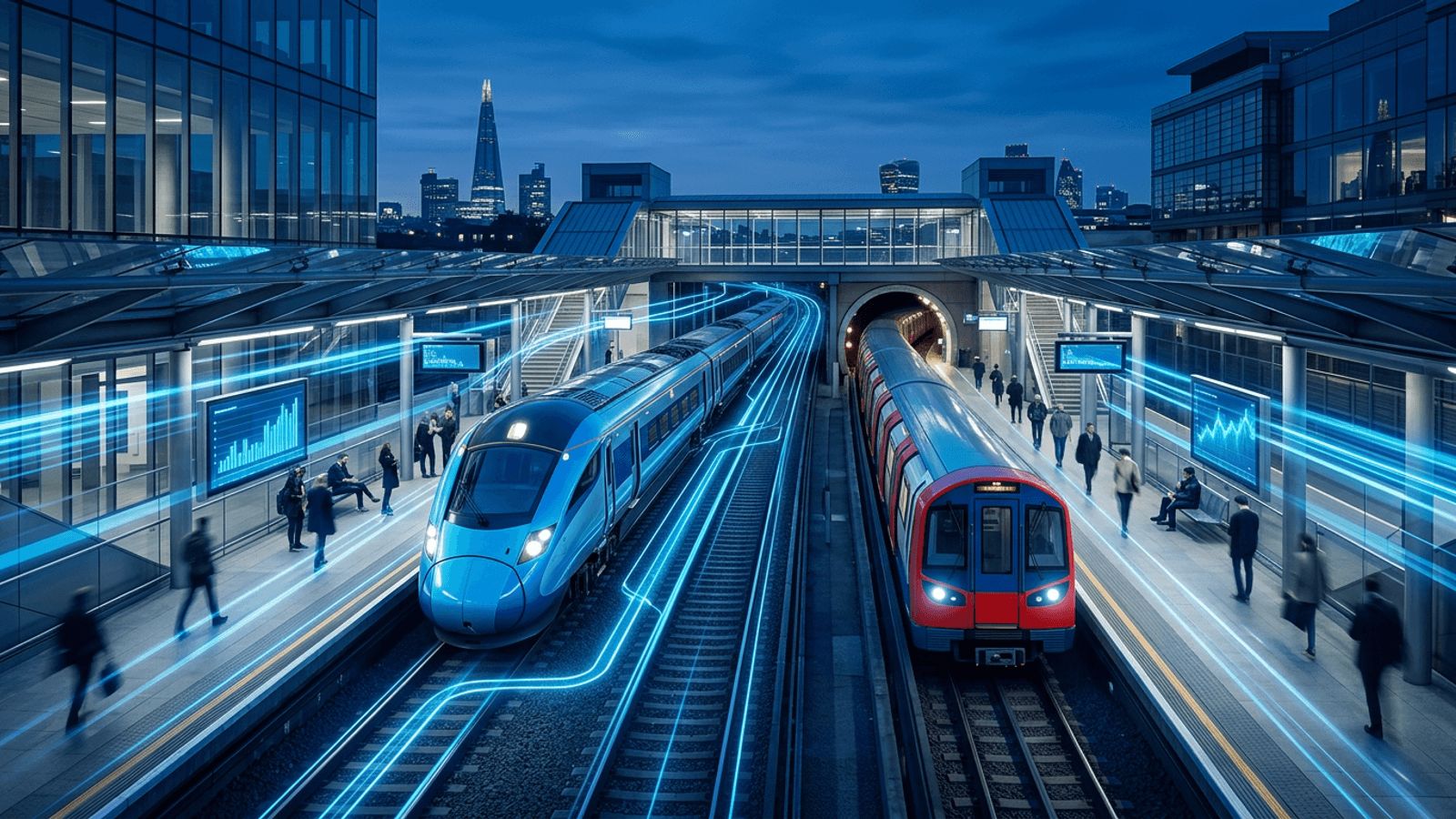
Rail Connectivity Across South Norfolk
Rail is arguably the single most important transport asset in South Norfolk. The Great Eastern Main Line passes through Diss, providing direct services toward Norwich in one direction and Ipswich and London Liverpool Street in the other. The Breckland Line serves Wymondham, linking Norwich with Thetford, Ely and Cambridge, and opening up onward connections across the Midlands and the north.
These two stations do a great deal of work. Diss serves a wide rural catchment extending well into north Suffolk, with substantial park-and-ride style demand from drivers who prefer a shorter drive and a direct London train to a long motorway journey. Wymondham serves both its own growing population and commuters heading toward Cambridge, whose economy draws increasing numbers of South Norfolk residents.
The Top 10 Railway Operators and Rail Organisations
1. Greater Anglia
The principal operator for the district and the one most residents use daily. It runs intercity services between Norwich and London via Diss as well as regional services on the Breckland Line through Wymondham. Its modern fleet, introduced in recent years, brought air conditioning, improved accessibility, better reliability and consistent onboard power and connectivity, and it transformed perceptions of rail travel in the region.
2. Network Rail
Not a train operator but the infrastructure owner responsible for track, signalling, bridges and the stations themselves. Its investment programmes in level crossings, drainage resilience and signalling directly determine the reliability that passengers experience across the district’s two lines.
3. CrossCountry
Reached through connections at Cambridge, Ely and Peterborough, CrossCountry provides long-distance links toward Birmingham, the north of England and the south west. For South Norfolk travellers heading beyond the immediate region, it is frequently the second leg of the journey.
4. Great Northern
Accessible via Cambridge and Ely, Great Northern offers services toward London King’s Cross and destinations across Hertfordshire and Bedfordshire. It provides a useful alternative routing into London for travellers using Wymondham and the Breckland Line.
5. Thameslink
Connecting through Cambridge, Thameslink allows cross-London travel without changing stations, running through central London toward Gatwick Airport and Brighton. For South Norfolk residents flying from Gatwick, this is often the simplest public transport option available.
6. East Midlands Railway
Reached via Ely and Peterborough, this operator provides connections toward Leicester, Nottingham, Derby and Sheffield. It matters for business travel and university journeys from the district toward the East Midlands.
7. c2c and Other London Connecting Operators
Once travellers reach Liverpool Street, the wider London network becomes accessible, including operators serving Essex and the Thames corridor. Understanding onward connections from Liverpool Street significantly reduces total journey time for destinations east and south of the capital.
8. Mid-Norfolk Railway
A heritage railway operating from Wymondham Abbey toward Dereham, offering preserved diesel and steam services. Beyond its tourism value, it is a significant volunteer organisation, an educational resource and a genuine visitor attraction that contributes meaningfully to the local economy.
9. Bure Valley Railway
A narrow gauge heritage line within reach of the district, popular with families and often combined with boat trips on the Broads. It represents the leisure end of Norfolk’s railway offer and is a reliable wet-weather day out.
10. Community Rail Partnerships
Local partnerships work with operators to improve station environments, promote line use, coordinate with bus services and support station adoption groups. Their work on the Breckland Line and around Diss has improved passenger experience and integration in ways that are easy to overlook but genuinely valuable.
Ticketing and Getting Better Value
Advance tickets bought ahead of travel offer the deepest discounts on longer journeys, particularly toward London, but they tie you to a specific train. Off-peak and super off-peak fares provide flexibility at moderate cost. Anytime tickets are the most expensive and are rarely necessary unless plans are genuinely uncertain.
Railcards deliver substantial savings for eligible travellers and usually pay for themselves within a couple of journeys. Season tickets and flexible carnet-style products suit commuters, with flexible options designed for people travelling to an office only two or three days a week. Split ticketing, where a journey is booked as consecutive segments, can reduce fares legitimately provided the train calls at the split point.
Digital ticketing is now standard, and holding tickets in an app avoids queues and lost paper. Check whether your fare includes onward travel or is valid via a particular route, as routing restrictions catch out even experienced travellers.
Accessibility and Station Facilities
Assisted travel can be booked in advance through operators, and staff will meet passengers, provide ramps and help with connections. Both Diss and Wymondham have their own access characteristics, and it is worth confirming step-free routes between platforms before travelling if mobility is a concern.
Parking is a practical consideration. Station car parks in the district fill early on weekdays, so arriving with time in hand matters. Cycle parking has improved, and combining cycling with rail is increasingly viable for shorter access journeys.
Planning Journeys Effectively
Check for planned engineering work before travelling, particularly at weekends and around public holidays when rail replacement buses may operate. Build in connection time at Norwich, Ely and Cambridge, where interchanges can involve platform changes. For airport journeys, allow substantially more time than the timetable suggests and consider travelling the evening before for early departures.
Trends Shaping Regional Rail
Fleet modernisation across the region has improved reliability and comfort significantly. Flexible ticketing continues to evolve in response to hybrid working patterns, which have reshaped demand away from the traditional five-day commute. Investment in resilience, particularly drainage and level crossing upgrades, is addressing weather-related disruption. There is also growing integration between rail, bus and cycling, supported by community rail partnerships working at station level.
Final Thoughts
Rail gives South Norfolk connectivity that its rural character would not otherwise support, with Diss and Wymondham functioning as genuine gateways to London, Cambridge and beyond. Greater Anglia carries the bulk of local journeys, while connecting operators extend reach nationally and the heritage lines add a different kind of value. Book in advance where you can, use a railcard if eligible, and plan connections with realistic margins.
Want your brand featured in front of decision-makers? Publish a guest post or get a link insertion in our guides through AAMAX's guest post and link insertion service.
Helpful Links
 SponsoredAAMAX — Full-Service Digital Agency
Write for Us
Share your expertise with our readers. We welcome guest contributions from industry specialists.
Pitch your idea