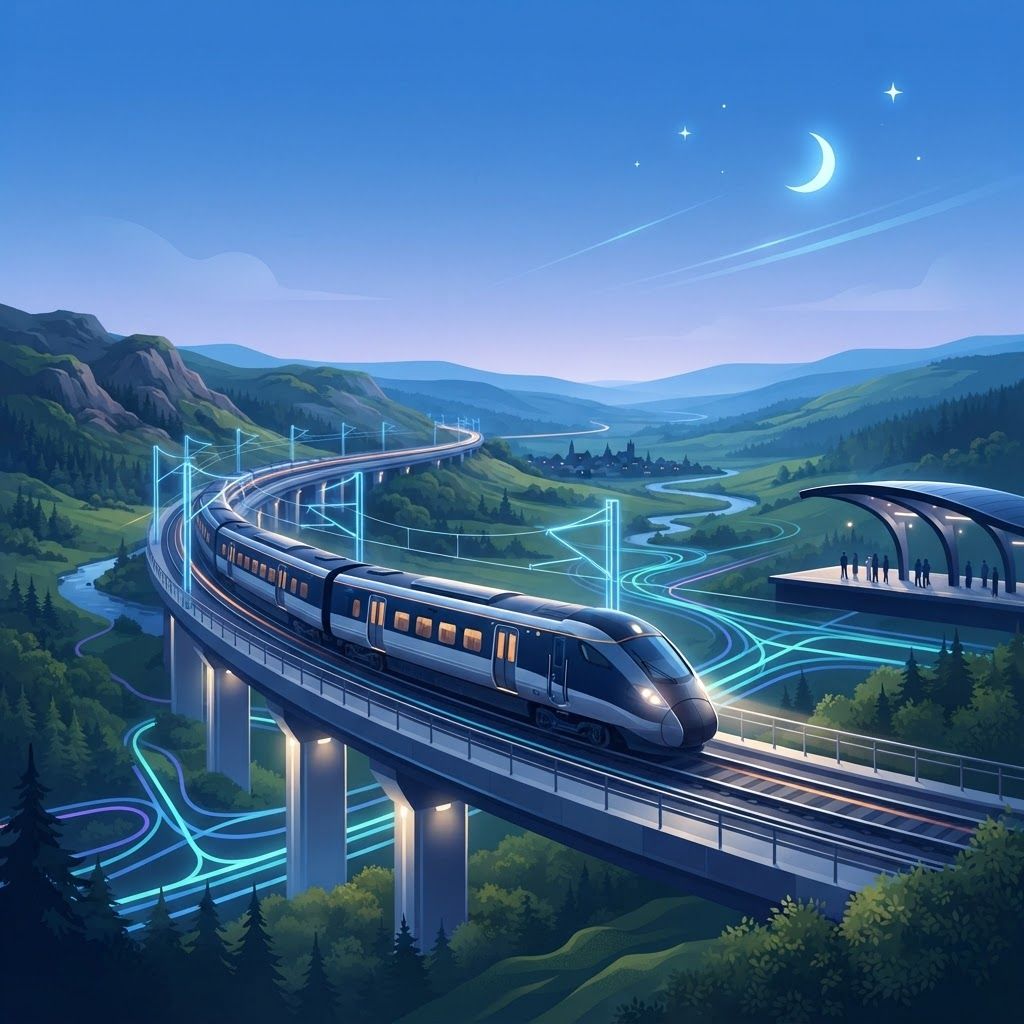
Rail at the Heart of the Valleys
Railways built the South Wales valleys. The lines that now carry commuters to Cardiff were originally constructed to move coal from pit to port, and their alignments still follow the valley floors that made that traffic possible. Today those same routes, known collectively as the Core Valley Lines, form one of the most intensively used regional rail networks in the United Kingdom outside major conurbations, and they are undergoing the most significant transformation in their history.
Within Rhondda Cynon Taff, the network reaches Treherbert at the head of the Rhondda Fawr, Aberdare in the Cynon valley, and passes through Pontypridd, Porth, Trehafod, Treforest, Taffs Well, Mountain Ash and numerous other stations. Pontypridd functions as the principal interchange, where the Rhondda, Merthyr and Aberdare lines converge before running south to Cardiff. For thousands of residents these services provide the daily link to employment, education and healthcare in the capital.
The Railway Operators and Bodies Serving the Area
1. Transport for Wales
Transport for Wales operates the passenger services across the Core Valley Lines and is the dominant railway presence in the county borough. It has introduced new tri-mode and electric multiple unit trains, improved service frequencies, refurbished stations and expanded ticketing options. Its performance directly determines the daily travel experience of most valley rail passengers.
2. Transport for Wales Rail Limited infrastructure operations
Unusually within the British rail system, the Core Valley Lines infrastructure was transferred from Network Rail to Welsh public ownership, allowing integrated management of track and trains. This has enabled the electrification and signalling upgrades central to the Metro programme, with works delivered under Welsh Government direction.
3. Network Rail
Network Rail continues to own and manage the main line network beyond the Core Valley Lines, including the South Wales Main Line through Cardiff and Newport. Its performance affects connections for valley passengers travelling onwards to Bristol, London, Birmingham and beyond.
4. Great Western Railway
Great Western Railway operates long distance services from Cardiff Central to London Paddington, Bristol and Southwest England. Valley passengers reach these services by interchange at Cardiff Central, and GWR's electric intercity trains have substantially reduced journey times to London.
5. CrossCountry
CrossCountry provides services linking Cardiff with Birmingham, the North of England and Scotland, giving valley residents access to a wide national network with a single change. For journeys towards Manchester, Newcastle and Edinburgh it is the principal option.
6. Freight operating companies
Freight operators including those handling aggregates, steel, cement and intermodal traffic use the South Wales network, supporting industry across the region. Rail freight offers significantly lower emissions per tonne than road haulage and is receiving renewed attention as businesses address carbon reporting.
7. Heritage railway operations in South Wales
Preserved railways across the region operate steam and heritage diesel services, maintaining the engineering and cultural legacy of Welsh railways. These attractions draw visitors, support local tourism and provide volunteering and skills opportunities within valley communities.
8. Rail Delivery Group and industry bodies
Industry-wide bodies coordinate ticketing standards, fares structures, retail systems and passenger information across operators. Their work is largely invisible to passengers but determines how through tickets, railcards and compensation schemes function across journeys involving multiple operators.
9. Transport Focus and passenger representation
Independent passenger watchdogs monitor performance, conduct satisfaction research and advocate for improvements. Their reporting provides objective evidence on punctuality, crowding and customer satisfaction that holds operators accountable.
10. Rail engineering and infrastructure contractors
Specialist contractors delivering electrification, track renewal, signalling and station upgrades have been highly active across the Core Valley Lines. Their work has created substantial engineering employment in the region and represents one of the largest infrastructure investments the valleys have seen in generations.
The South Wales Metro Transformation
The Metro programme is the defining development for rail in Rhondda Cynon Taff. It involves electrification of the Core Valley Lines, new tri-mode and battery-capable rolling stock, resignalling, station accessibility improvements and substantially increased service frequencies. The intended outcome is a turn-up-and-go network with several trains per hour on key corridors, faster journey times to Cardiff and better integration with bus services.
The implications are significant. Improved connectivity strengthens the case for living in the valleys while working in Cardiff, which supports property values near stations and helps retain younger residents. Reduced car dependency addresses both congestion and emissions. Better accessibility opens rail travel to passengers who previously could not use stepped stations. And more frequent evening and weekend services support the night-time economy and leisure travel in both directions, bringing visitors into the valleys as well as taking residents out.
Practical Advice for Passengers
Buy tickets in advance where possible, as advance purchase fares for longer journeys are considerably cheaper than on-the-day purchases. Railcards including the Two Together, Family and Friends, Senior and 16 to 25 options deliver substantial savings. Check for engineering works before travelling, since the upgrade programme continues to require weekend closures with rail replacement buses. Use Pontypridd as the natural interchange point for cross-valley journeys. Combined bus and rail ticketing is improving, so ask about integrated options for the final leg of a journey.
Looking Forward
Rail in Rhondda Cynon Taff is in a genuinely optimistic phase. The lines that once carried coal out of the valleys are being modernised to carry people in and out with the frequency and reliability of a metro system. Delivery has not been without disruption, and passengers have endured lengthy engineering work, but the long-term prize is a transport network that reconnects these communities to opportunity in a way that road investment alone never achieved.
Want your brand featured in front of decision-makers? Publish a guest post or get a link insertion in our guides through AAMAX's guest post and link insertion service.
Helpful Links
 SponsoredAAMAX — Full-Service Digital Agency
Write for Us
Share your expertise with our readers. We welcome guest contributions from industry specialists.
Pitch your idea