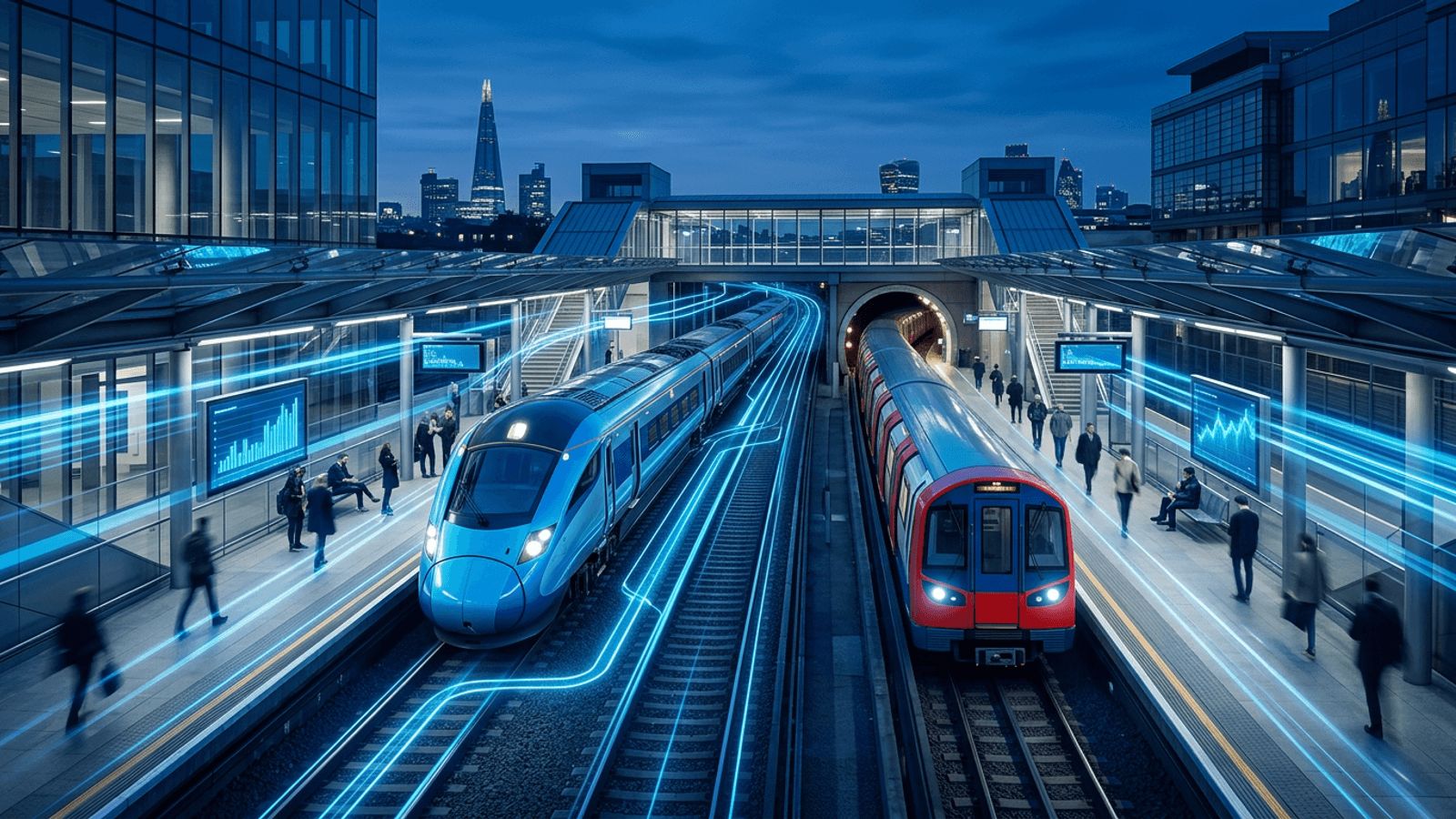
Rail at the Heart of Mid Sussex
Few English districts are as defined by their railway as Mid Sussex. The Brighton Main Line cuts north to south through the district, with principal stations at Haywards Heath and Burgess Hill, secondary stops at Wivelsfield, Hassocks and Balcombe, and a separate branch serving East Grinstead. That infrastructure explains the district's development pattern: towns grew around stations, and today a large share of residents commute by train to London, Gatwick, Croydon and Brighton.
Rail here is not one service but several overlapping layers. Fast intercity style services connect London with the coast. Commuter stopping services link the towns and villages. Airport services run continuously through Gatwick. Freight paths carry aggregates and construction materials overnight. And one of the country's best known heritage railways operates from Sheffield Park through Horsted Keynes towards East Grinstead, drawing visitors from across the world.
What Passengers Should Judge Operators On
Punctuality and cancellation rates matter most, and both are published openly. Beyond that, judge operators on rolling stock comfort and capacity at peak times, ticketing flexibility including smartcards and mobile tickets, accessibility provision at stations and on trains, and the quality of information during disruption. The last point is decisive: delays are inevitable on a busy two track main line, but clear, honest communication and workable alternative routes make the difference between inconvenience and a ruined day.
Ten Railway Operators and Rail Organisations Serving Mid Sussex
1. Southern Rail Services
The principal commuter operator through the district, providing the bulk of services from Haywards Heath and Burgess Hill towards London Victoria, London Bridge and Brighton. Frequency and network coverage are its greatest strengths, and it is the default option for most local journeys.
2. Thameslink Cross London Services
Operating through services that continue north of London without requiring a change, these trains are especially valuable for commuters heading to the City, St Pancras and destinations towards Bedford and Cambridge.
3. Gatwick Express Airport Services
A dedicated airport operation offering fast, luggage friendly journeys between London and Gatwick, frequently used by Mid Sussex travellers connecting northbound to the terminal.
4. Great Western Regional Connections
Providing westbound regional links from the Sussex coast towards Hampshire and beyond, useful for residents making longer cross country journeys without travelling via London.
5. Bluebell Heritage Railway
One of the country's most celebrated preserved lines, running restored steam locomotives through the Sussex Weald between Sheffield Park, Horsted Keynes and East Grinstead. It is both a major visitor attraction and a significant local employer and volunteer organisation.
6. Network Infrastructure Southern Region
The infrastructure body responsible for track, signalling, bridges and stations on the main line. Its renewal programmes on the Brighton Main Line directly determine reliability across the district.
7. Sussex Rail Freight Operations
Freight haulage using overnight and off peak paths to move aggregates, cement and engineering materials, supporting construction projects across Sussex while keeping heavy lorries off local roads.
8. East Grinstead Branch Services
The commuter branch operation serving the north of the district, providing direct links towards London and connections at Oxted, and a crucial service for a town without main line access.
9. Mid Sussex Community Rail Partnership
A partnership organisation working with operators, councils and volunteers on station adoption, gardens, accessibility improvements and initiatives that encourage rail use for leisure travel.
10. Southern Charter and Excursion Rail
Specialists in charter trains and rail excursions, running scheduled special services and private hire for events, tours and enthusiast trips through Sussex.
Trends Shaping Local Rail
Several changes are underway. Digital signalling and infrastructure renewal on the Brighton Main Line aim to squeeze more reliable capacity from a constrained two track route. Ticketing continues to modernise, with pay as you go and smartcard coverage extending further south. Travel patterns have shifted permanently towards three day commuting weeks, which has increased demand for flexible season products over traditional annual tickets. Electrification is already complete on these routes, so the remaining environmental gains come from newer, more efficient rolling stock and better station facilities including secure cycle parking and electric vehicle charging.
Practical Advice for Rail Travellers
Compare route options rather than defaulting to one, since London bound passengers from Mid Sussex can often choose between Victoria, London Bridge and cross London services depending on final destination. Book advance tickets for longer journeys, and check whether split ticketing or a flexible season product suits your actual travel pattern. Claim delay compensation when eligible, because the schemes are straightforward and widely underused. For heritage rail visits, book timed tickets in peak season and during special event weekends, which sell out early.
Final Thoughts
Rail is the single most important transport asset in Mid Sussex, connecting the district to London, the coast and one of Europe's busiest airports while supporting a heritage railway of national significance. Understanding which operator and route suits each journey, and using flexible ticketing sensibly, turns a busy main line into a genuinely efficient way to travel.
Want your brand featured in front of decision-makers? Publish a guest post or get a link insertion in our guides through AAMAX's guest post and link insertion service.
Helpful Links
 SponsoredAAMAX — Full-Service Digital Agency
Write for Us
Share your expertise with our readers. We welcome guest contributions from industry specialists.
Pitch your idea