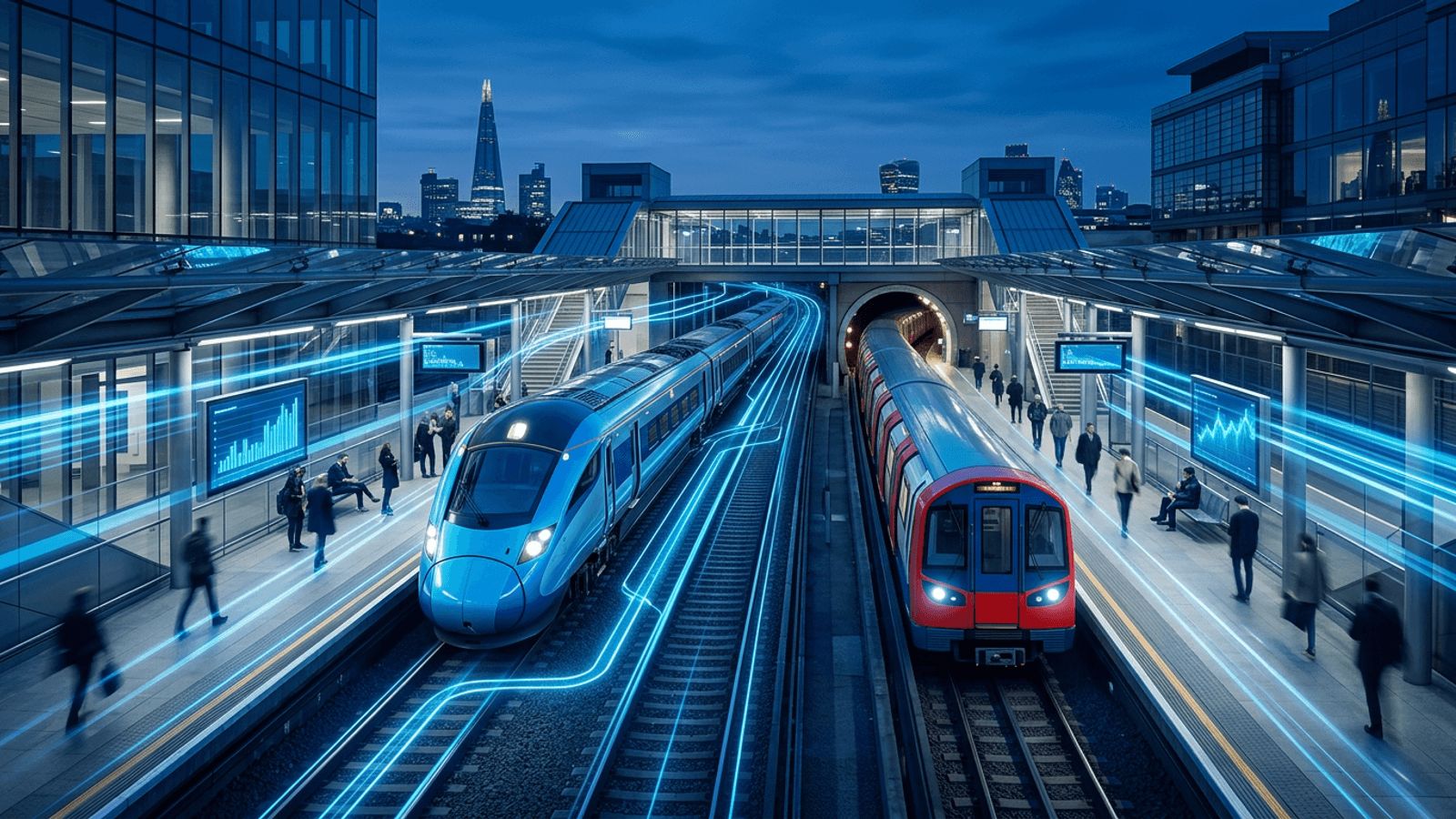
Islington's Remarkable Rail Geography
Few London boroughs are as densely served by rail as Islington. Within its boundaries sit major interchanges at King's Cross St Pancras, Angel, Old Street, Highbury and Islington, Finsbury Park, and Archway, alongside a string of Overground and national rail stations. The result is a borough where the majority of residents live within a comfortable walk of a rail service, and where journey options are genuinely competitive rather than captive to a single line.
This density is historical. Islington was crossed by some of the earliest railway construction in Britain, and the King's Cross and St Pancras termini sit on its southern edge. Later came the Underground, then the reinvention of neglected orbital lines as the Overground. Understanding which operator runs which service helps enormously when planning journeys, buying tickets, or deciding where to live.
The Top 10 Railway Operators Serving Islington
1. Transport for London — London Underground — The Underground is the backbone of Islington travel. The Northern line serves Angel, Old Street, Archway, Tufnell Park, and Highgate; the Victoria line runs through Highbury and Islington and Finsbury Park; the Piccadilly line calls at Finsbury Park, Arsenal, and Holloway Road. Frequencies during peak periods are high enough that timetables become irrelevant. The Underground's strengths are reliability, integrated contactless ticketing with daily and weekly capping, and step-free access at a growing number of stations. Night Tube services on the Northern, Victoria, and Piccadilly lines make weekend travel genuinely practical.
2. London Overground — The Overground transformed Islington's east-west connectivity. The North London Line through Highbury and Islington and Caledonian Road and Barnsbury links the borough to Camden, Hampstead, Stratford, and beyond without passing through zone one. The line to Dalston and on to south London opened up journeys that previously required two changes. Operated under TfL specification, it shares the Underground's fare integration and turn-up-and-go frequencies, and its air-conditioned rolling stock is among the more comfortable in London.
3. Great Northern — Part of the Govia Thameslink Railway family, Great Northern operates the suburban services from Moorgate and King's Cross through Essex Road, Highbury and Islington, Drayton Park, and Finsbury Park towards Hertfordshire and Cambridgeshire. For Islington residents commuting to the City, the Moorgate branch is often faster and less crowded than the Underground alternative. The operator has invested in newer electric units, improving both capacity and journey quality.
4. Thameslink — Thameslink's north-south route through St Pancras International gives Islington residents direct access to Gatwick Airport, Brighton, Luton Airport, and Bedford without crossing London by tube. The core section runs at high frequency, and the through-running design removes the need to change at a terminus. For anyone who travels regularly to the south coast or either of London's secondary airports, Thameslink is transformative.
5. LNER — London North Eastern Railway operates the East Coast Main Line from King's Cross, connecting Islington directly to York, Newcastle, Edinburgh, and Leeds. Its Azuma fleet offers substantially improved journey times and comfort, and the operator's advance fare structure rewards planning. For business travel to the north of England and Scotland, LNER competes credibly with flying once city-centre-to-city-centre time is counted.
6. Eurostar — St Pancras International places Islington within walking or one-stop distance of direct high-speed services to Paris, Brussels, Lille, Rotterdam, and Amsterdam. Few residential boroughs anywhere in Europe offer this. For Islington's substantial population working in professional services with continental clients, the ability to reach central Paris in a little over two hours from a station on the doorstep is a genuine lifestyle and business advantage.
7. East Midlands Railway — Operating from St Pancras, East Midlands Railway serves Leicester, Nottingham, Derby, and Sheffield. Its recent fleet investment has improved reliability and comfort on a route that carries significant business and leisure demand. For Islington residents with family or work commitments in the East Midlands, it is the natural choice.
8. Southeastern High Speed — The domestic high-speed service from St Pancras to Kent uses the same infrastructure as Eurostar, reaching Ebbsfleet, Ashford, and Canterbury at speeds unavailable on classic routes. It has made weekend trips to the Kent coast realistic day excursions from Islington, and it serves a meaningful reverse-commute flow.
9. Grand Central — An open-access operator running from King's Cross to Sunderland and Bradford, Grand Central provides useful alternative capacity and often competitive fares on routes where it overlaps with franchised services. Its all-reserved, single-class approach appeals to travellers who value a guaranteed seat over flexibility.
10. Lumo — Lumo's all-electric, single-class service between King's Cross and Edinburgh represents a distinct proposition: low fares, low emissions, and a deliberately simple product. It has attracted travellers who would otherwise fly the London to Edinburgh route, and its environmental credentials are the strongest of any operator on the corridor.
Ticketing and Fares Explained
Within Islington, contactless and Oyster pay-as-you-go covers Underground, Overground, and national rail journeys inside the London fare zones, with automatic daily and weekly capping. This makes local travel straightforward: touch in, touch out, and the system charges the cheapest applicable fare.
For longer-distance journeys on LNER, Thameslink to the south coast, East Midlands Railway, or Eurostar, advance purchase makes an enormous difference. Fares typically open around twelve weeks ahead and rise as departure approaches. Railcards remain one of the best-value products in UK travel for anyone eligible, and season tickets or flexible season products suit regular commuters better than daily purchases.
Accessibility and Station Quality
Step-free access varies considerably across Islington. Highbury and Islington, Finsbury Park, and King's Cross St Pancras offer good step-free provision, while several Northern line stations remain stair-dependent. Anyone with mobility requirements should check station-specific information before travelling, and all operators provide assisted travel booking that works reliably when arranged in advance.
Trends in Islington Rail Travel
Two changes stand out. Travel patterns have flattened: the traditional sharp morning and evening peaks have softened as hybrid working spread, shifting demand towards midweek and creating stronger leisure travel at weekends. Operators have responded with more flexible ticketing.
The second is decarbonisation. Electric operation across most Islington-serving routes already gives rail a strong emissions advantage over road and air, and operators are competing openly on this. For journeys within Britain and to near-continental Europe, rail from Islington is comfortably the lowest-carbon practical option.
Final Thoughts
Islington's rail provision is a genuine asset. Between the Underground's frequency, the Overground's orbital reach, Great Northern's City-bound suburban services, and the long-distance and international operators at King's Cross and St Pancras, residents enjoy options that most of the country cannot match. Knowing which operator does what turns that abundance into practical, everyday advantage.
Want your brand featured in front of decision-makers? Publish a guest post or get a link insertion in our guides through AAMAX's guest post and link insertion service.
Helpful Links
 SponsoredAAMAX — Full-Service Digital Agency
Write for Us
Share your expertise with our readers. We welcome guest contributions from industry specialists.
Pitch your idea