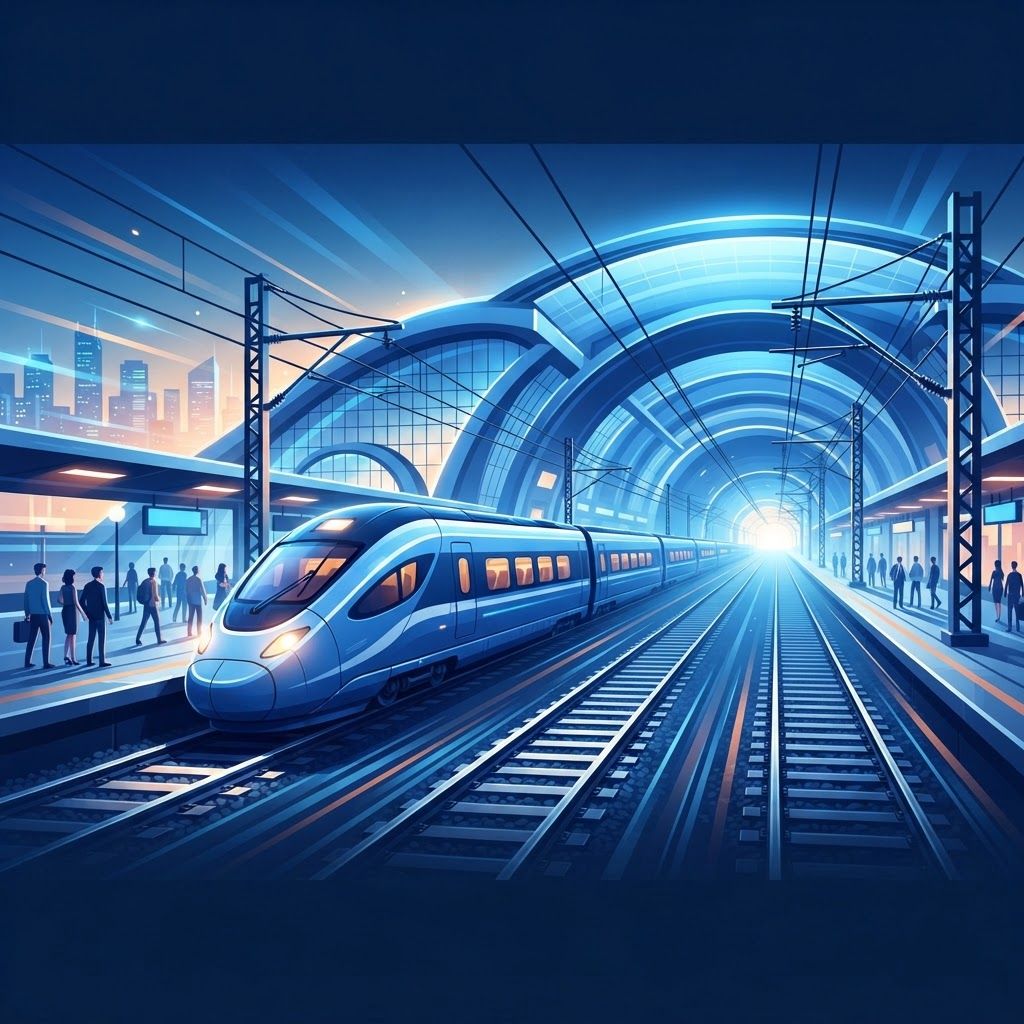
Ipswich Station and Its Network
Ipswich is one of the most important railway locations in East Anglia. The station, opened in the nineteenth century and still recognisably Victorian in character, sits on the Great Eastern Main Line between London Liverpool Street and Norwich. From here, branch lines run to Felixstowe, to Lowestoft along the East Suffolk Line, and to Cambridge and Peterborough via Bury St Edmunds.
It is also a critical freight junction. Container trains from the Port of Felixstowe pass through the area en route to the Midlands and the North, making this one of the busiest freight corridors in the country. The organisations below, both passenger and freight, define rail in Ipswich.
1. Greater Anglia
Greater Anglia is the principal passenger operator at Ipswich, running intercity services to London Liverpool Street and Norwich alongside regional routes across Suffolk, Norfolk and Essex. The operator completed a comprehensive fleet replacement in recent years, introducing new intercity and regional trains with air conditioning, power sockets, improved accessibility and level boarding at many stations. Journey times to London are competitive, and the service frequency makes commuting from Ipswich genuinely viable.
2. The Felixstowe Branch Line Service
The branch to Felixstowe carries both passengers and an intense volume of container freight. For passengers it provides access to the seaside town, the port and Trimley, while for the national economy it is one of the most strategically important short lines in Britain. Investment in passing loops and capacity improvements has increased the number of freight paths available, benefiting both types of traffic.
3. The East Suffolk Line
Running north from Ipswich through Woodbridge, Saxmundham, Beccles and on to Lowestoft, the East Suffolk Line is one of the most scenic routes in the region. It crosses estuaries and marshland and serves communities with limited alternative transport. The line has a notable history of community support, and its survival is frequently cited as an example of the value of local advocacy for rural railways.
4. Network Rail
Network Rail owns and maintains the track, signalling, bridges and stations infrastructure. Its work around Ipswich includes maintaining the tunnel north of the station, managing the junction complexity where multiple routes converge, and delivering capacity enhancements for freight. Passengers rarely think about infrastructure until it fails, but investment decisions made by this organisation determine reliability more than any other single factor.
5. Freightliner
Freightliner is one of the principal intermodal freight operators, running container trains from Felixstowe to inland terminals across the country. Each train removes a substantial number of lorry journeys from the A14, delivering meaningful reductions in congestion and emissions. The company's operations through Ipswich are among the most intensive rail freight flows in the United Kingdom.
6. GB Railfreight
GB Railfreight operates container services from Felixstowe alongside bulk and infrastructure trains. The company has grown considerably and is known for operational flexibility and willingness to develop new flows. For shippers using the port, having multiple competing rail freight operators improves both pricing and service availability.
7. DB Cargo UK
DB Cargo runs intermodal, bulk and industrial freight services across the network, including flows connected to the East Anglian ports. Its scale and European parentage give it capability in cross-border movements, and it handles a diverse range of commodities beyond containers, including aggregates, steel and automotive traffic.
8. Community Rail Partnerships
Community rail partnerships across Suffolk work to increase use of local lines, improve station environments and connect railways with the communities they serve. Activities include station gardens, art installations, guided walks from stations and promotion of leisure travel. Their impact on passenger numbers on rural lines has been measurable, and they provide an important voice in service planning discussions.
9. Heritage Railways in the Region
East Anglia supports several heritage railways operating preserved steam and diesel locomotives on restored lines. These attractions draw visitors, preserve engineering skills and provide volunteering opportunities. For families based in Ipswich, they represent an accessible day out and an introduction to railway history that no museum display can replicate.
10. Rail Industry Suppliers and Engineering Firms
Engineering, signalling and maintenance businesses serving the rail industry operate across the region, supporting infrastructure renewal and rolling stock maintenance. The sector provides skilled technical employment and, with continued investment in the Felixstowe freight corridor and the main line, represents a stable long-term employer in the area.
Travelling by Rail From Ipswich
Advance tickets booked ahead offer the largest savings, particularly for London journeys, while off-peak flexibility suits travellers whose plans may change. Season tickets and the various railcards available to young people, older travellers, families and those travelling in pairs reduce costs substantially. Split ticketing can occasionally produce savings on longer journeys, though the main-line service from Ipswich is usually priced consistently enough that the benefit is modest.
Accessibility and Station Facilities
Ipswich station offers step-free access, assistance services bookable in advance, car parking, cycle storage and a taxi rank. The newer trains introduced across the network provide level boarding at an increasing number of stations, wider aisles and improved accessible toilets, which has materially improved independent travel for disabled passengers across East Anglia.
The Future of Rail in Ipswich
Several developments shape the outlook. Continued investment in the Felixstowe to Nuneaton freight corridor will increase the proportion of containers moving by rail rather than road. Capacity improvements on the Great Eastern Main Line aim to improve reliability and journey times to London, which directly affects Ipswich's attractiveness as a commuter and business location. Decarbonisation strategies, whether through electrification or alternative traction, will progressively address the diesel operations that still dominate the branch lines. For a town whose growth was shaped by the railway in the nineteenth century, rail remains central to its prospects in the twenty-first.
Want your brand featured in front of decision-makers? Publish a guest post or get a link insertion in our guides through AAMAX's guest post and link insertion service.
Helpful Links
 SponsoredAAMAX — Full-Service Digital Agency
Write for Us
Share your expertise with our readers. We welcome guest contributions from industry specialists.
Pitch your idea