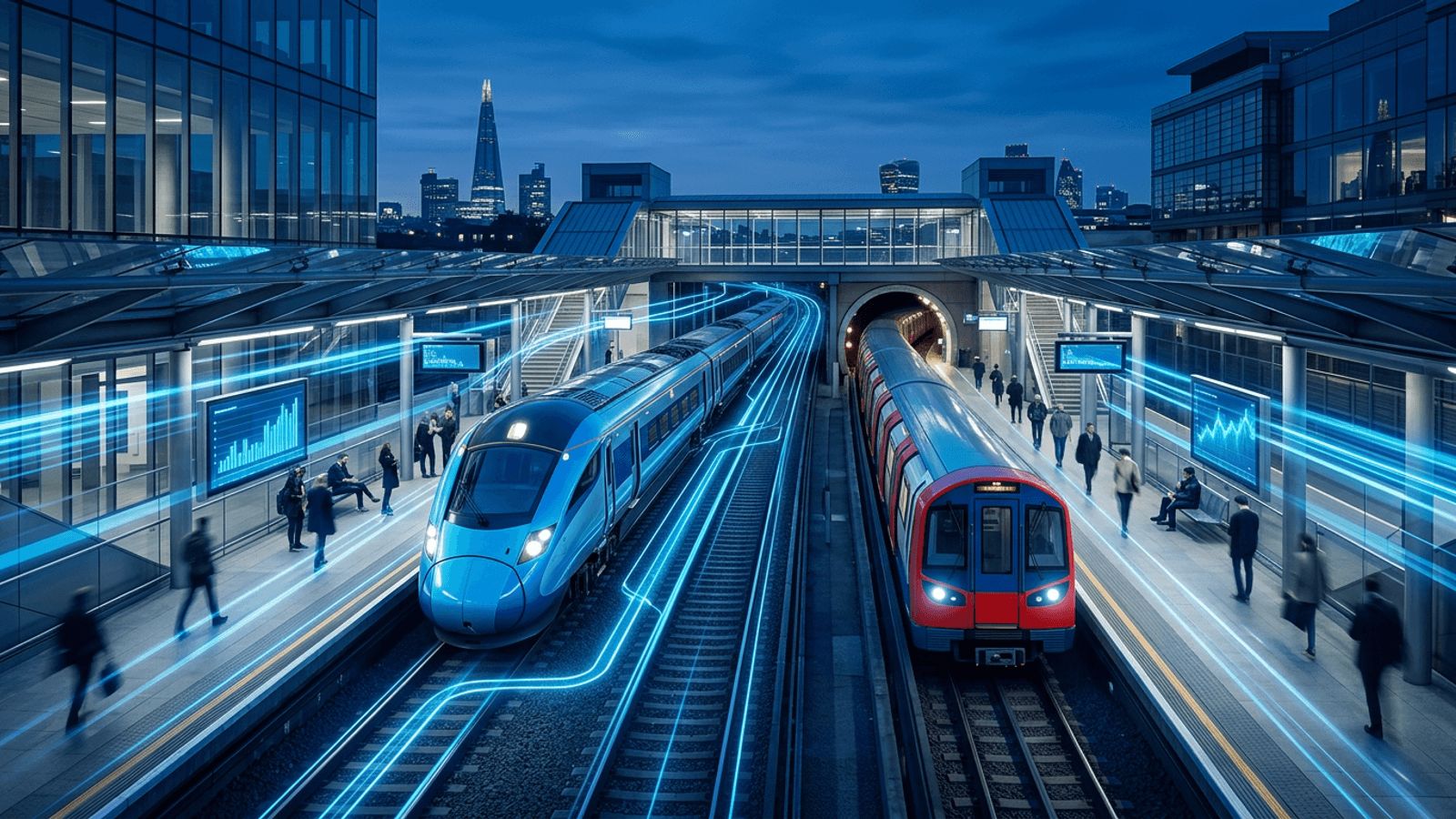
A Borough Built Around the Railway
Hammersmith and Fulham owes much of its shape to the railway. The arrival of the Metropolitan Railway at Hammersmith in the nineteenth century transformed a semi-rural district into a commuter suburb, and later extensions created the interchanges that still define local geography today. The borough now contains a remarkable concentration of stations, including Hammersmith on two separate Underground networks, Shepherd's Bush on both the Central line and the Overground, White City, Fulham Broadway, Parsons Green, West Brompton, Barons Court and Kensington Olympia.
That density means most residents live within a short walk of a rail service, and it explains why car ownership in the borough is comparatively low. Understanding which operator runs which route is genuinely useful, because ticketing, service patterns and reliability vary considerably between them.
How Rail Services Are Organised in West London
Rail in the borough falls into three broad categories. Transport for London operates the Underground lines, the Overground and the Elizabeth line, all using the same contactless and Oyster payment system with daily and weekly capping. National rail operators run longer-distance services that call at or pass through the borough, using their own fare structures alongside pay-as-you-go where applicable. Finally, specialist and heritage operators provide charter and excursion services that occasionally use west London routes.
For most journeys within the borough, the Underground remains the backbone. But the growth of the Overground and the opening of the Elizabeth line have significantly widened options, particularly for east–west journeys that once required a change in the centre.
The Top 10 Railway Operators Serving Hammersmith and Fulham
1. London Underground. The dominant operator in the borough by a wide margin. Six lines serve Hammersmith and Fulham: the District, Piccadilly, Circle, Hammersmith and City, Central and, at the borough edge, connections toward the Bakerloo. Frequencies of every two to four minutes at peak times make the network the default choice for local travel, and step-free access has improved at several stations including Fulham Broadway.
2. London Overground. The Overground's west London route links Shepherd's Bush, Kensington Olympia and West Brompton with Willesden Junction to the north and Clapham Junction to the south. It is invaluable for orbital journeys that avoid the congested central zone, and it provides a useful alternative when the District line is disrupted.
3. Elizabeth Line. Although the Elizabeth line does not stop within the borough itself, its stations at Paddington and Ealing Broadway are quickly reachable and have reshaped travel patterns for local residents. Journeys to Canary Wharf, Liverpool Street, Reading and Heathrow are now considerably faster, with spacious air-conditioned trains and high frequencies.
4. Southern. Southern services run through Kensington Olympia and West Brompton on the West London Line, connecting the borough directly with Clapham Junction, East Croydon and destinations across Surrey and Sussex. For commuters heading to the south coast, boarding in the borough avoids a trip into Victoria.
5. Great Western Railway. GWR operates from nearby Paddington toward Reading, Bristol, Cardiff and the West Country. Its intercity services are the primary long-distance option for borough residents travelling west, and its local Thames Valley stopping services provide useful connections to Slough, Maidenhead and Oxford.
6. South Western Railway. Serving Clapham Junction and Waterloo, South Western Railway is the main gateway to south-west London, Surrey, Hampshire and the Isle of Wight ferry connections. Many Fulham residents use the short Overground hop to Clapham Junction before joining SWR services.
7. Avanti West Coast. Operating from Euston, Avanti West Coast provides fast intercity links to Birmingham, Manchester, Liverpool, the Lake District and Glasgow. Its tilting Pendolino fleet and newer bi-mode trains make it the fastest option for northbound business travel from west London.
8. London North Western Railway. Running commuter and regional services from Euston toward Milton Keynes, Northampton and Birmingham, this operator is a practical, lower-cost alternative to intercity fares for travellers heading up the West Coast corridor.
9. Chiltern Railways. Departing Marylebone for Buckinghamshire, Oxfordshire and Birmingham, Chiltern is consistently well regarded for punctuality and customer service. Its route offers a scenic and often less crowded alternative for journeys toward Oxford and the Midlands.
10. Heathrow Express. For borough residents with an early flight, Heathrow Express provides a fast non-stop link from Paddington to the airport terminals. The premium fare buys speed and generous luggage space, which many business travellers judge worthwhile.
Trends Reshaping Rail Travel in the Borough
Ticketing is becoming simpler. Contactless pay-as-you-go now extends far beyond the traditional zones, and capping means most casual travellers no longer need to calculate the cheapest ticket in advance. Digital season tickets and flexible carnet products have emerged in response to hybrid working, which has flattened the traditional morning peak and spread demand more evenly through the day.
Accessibility investment continues, with step-free routes, tactile platform edges and improved audio-visual information appearing progressively across the network. Meanwhile, decarbonisation is driving electrification and the trial of battery and hydrogen units on non-electrified branches, although central London services are already fully electric.
Practical Tips for Travelling by Rail Locally
Hammersmith is effectively two stations sharing a name, one serving the District and Piccadilly lines and one serving the Circle and Hammersmith and City lines. Check which you need before setting out, as the interchange involves a short walk. Kensington Olympia has an irregular service pattern, so confirm departure times rather than assuming a turn-up-and-go frequency.
During District line engineering works, which are relatively common on the Wimbledon and Richmond branches, the Overground and local bus routes provide reliable alternatives. Signing up for line-specific service alerts is the simplest way to avoid unexpected delays.
Final Thoughts
The railway remains the single most important element of Hammersmith and Fulham's transport system. Between six Underground lines, the Overground, and easy access to five national operators, residents enjoy an unusually rich set of options. Knowing which operator serves your route, how its fares work and where the useful interchanges lie turns that abundance into genuinely faster, cheaper and more comfortable journeys.
Want your brand featured in front of decision-makers? Publish a guest post or get a link insertion in our guides through AAMAX's guest post and link insertion service.
Helpful Links
 SponsoredAAMAX — Full-Service Digital Agency
Write for Us
Share your expertise with our readers. We welcome guest contributions from industry specialists.
Pitch your idea