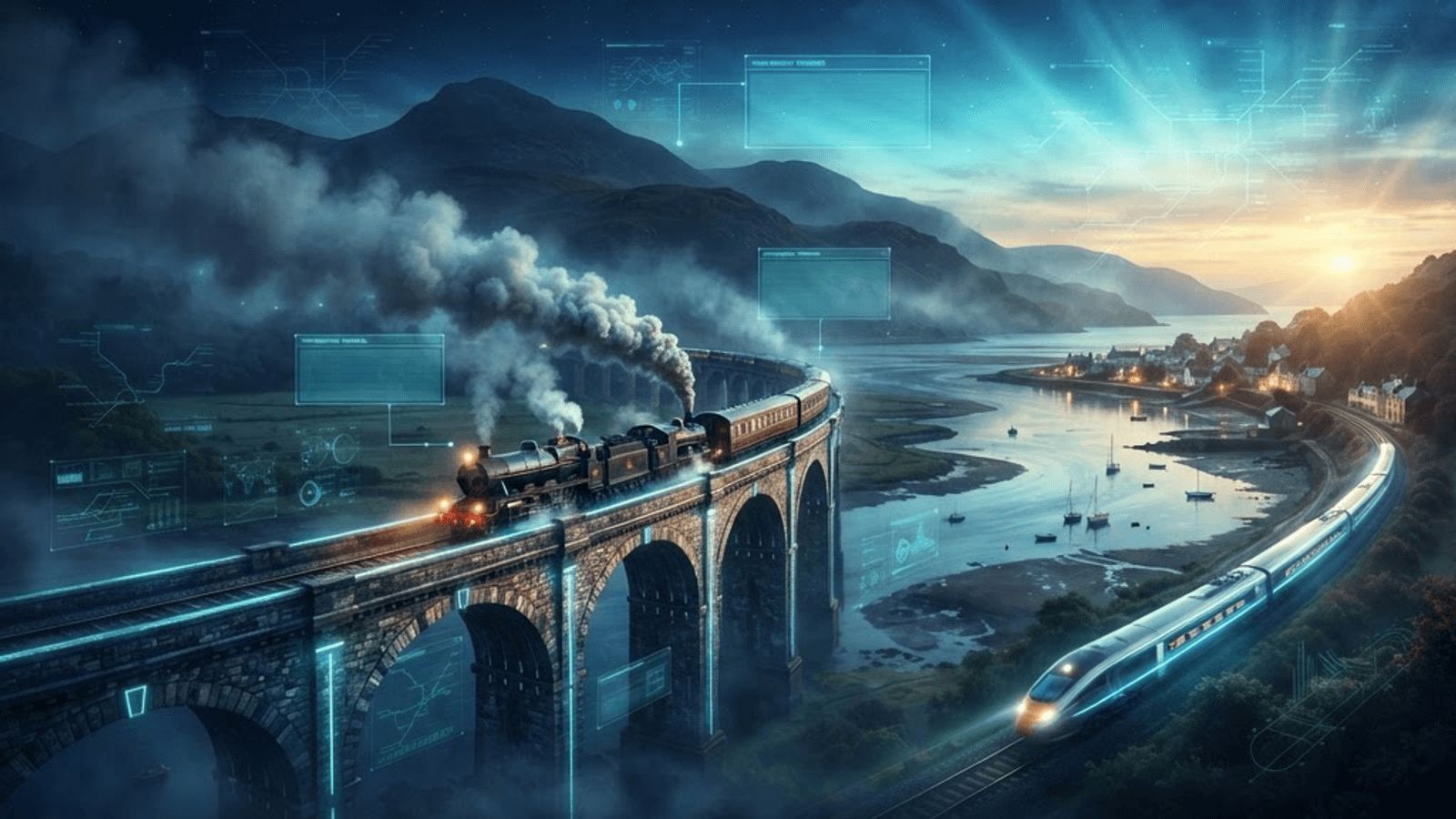
A County Defined by Railways
Few places anywhere associate their identity with railways as strongly as Gwynedd. The county contains the oldest independent railway company in the world still operating, a mountain rack railway climbing to the highest summit in Wales, and a network of narrow-gauge lines originally built to carry slate from quarries to harbours. Alongside these heritage operations run modern mainline services that connect communities along the coast and through the mountains, carrying commuters, students and visitors every day.
The two categories are complementary. Mainline services provide practical connectivity in a region where road journeys are slow and winding. Heritage railways preserve engineering and industrial history while contributing significantly to the visitor economy and employing skilled staff and volunteers across the county.
The Top 10 Railway Operators in Gwynedd
1. Transport for Wales
The principal mainline operator serving the county, Transport for Wales runs services along the North Wales coast through Bangor and operates the Cambrian Coast line, one of the most scenic railway journeys in Britain, hugging the shoreline of Cardigan Bay through Barmouth, Harlech and Pwllheli. It also operates the Conwy Valley line linking the coast to Blaenau Ffestiniog through the mountains. These services carry students, commuters, hospital patients and tourists, and they represent essential public infrastructure rather than merely a travel option.
2. Ffestiniog Railway
Founded in the early nineteenth century, the Ffestiniog Railway is the oldest independent railway company in the world. Originally built to move slate from Blaenau Ffestiniog to the harbour at Porthmadog, it now carries passengers through spectacular mountain scenery on a narrow-gauge line featuring remarkable engineering, including a spiral to gain height. Its historic locomotives, including unique double-ended designs, attract enthusiasts internationally.
3. Welsh Highland Railway
The longest heritage railway in the United Kingdom, the Welsh Highland Railway runs from Caernarfon through the Aberglaslyn Pass to Porthmadog, passing beneath Yr Wyddfa. Restored over decades through immense volunteer and organisational effort, it uses powerful articulated locomotives capable of handling the gradients and delivers one of the most dramatic rail journeys available anywhere in Britain.
4. Snowdon Mountain Railway
The only public rack and pinion railway in the British Isles, this line climbs from Llanberis toward the summit of Yr Wyddfa. Operating since the late nineteenth century, it allows visitors who cannot undertake the demanding walk to experience the summit views, and its engineering remains a significant technical achievement given the gradients involved.
5. Talyllyn Railway
Historically important as the world's first railway to be preserved by volunteers, the Talyllyn Railway runs inland from Tywyn on the southern edge of the county. Its preservation movement inspired heritage railway projects worldwide, and the line retains much original Victorian character in locomotives, carriages and infrastructure.
6. Llanberis Lake Railway
Running along the shore of Llyn Padarn using former quarry railway alignment, this narrow-gauge line offers a gentle, family-friendly journey with views across the water toward the mountains. It connects closely with the area's slate heritage attractions and provides an accessible introduction to the county's railway history.
7. Bala Lake Railway
Operating along the southern shore of Llyn Tegid on a former standard-gauge trackbed, the Bala Lake Railway uses historic quarry locomotives from the slate industry. The route offers extended lake and mountain views, and ongoing development work has aimed to extend the line further into Bala itself.
8. Fairbourne Railway
A miniature railway running along the coast near Barmouth, the Fairbourne Railway connects the village with the ferry point across the Mawddach estuary. Its combination of narrow-gauge charm, beach access and estuary views makes it popular with families, and it functions as genuine local transport as well as an attraction.
9. Corris Railway
A restored section of a historic slate railway in the southern part of the region, the Corris Railway represents the ongoing work of preservation groups rebuilding lines lost during the twentieth century. It offers an intimate insight into how small quarry railways operated and the craftsmanship involved in their restoration.
10. Network Rail Infrastructure
While not a passenger operator, Network Rail maintains the mainline infrastructure that makes services through Gwynedd possible, including coastal defences, viaducts and the historic Barmouth Bridge across the Mawddach estuary. Major refurbishment of such structures is essential to keeping the Cambrian Coast line open, and this work underpins the county's entire mainline connectivity.
Planning Rail Journeys in Gwynedd
Mainline services can be infrequent on rural lines, so checking timetables carefully is essential, particularly for evening returns. Advance tickets offer savings on longer journeys, while rover and explorer tickets can be excellent value for visitors making several trips. Heritage railways typically operate seasonally, with reduced or no service in deep winter and special timetables around holidays, so confirming operating days before travelling is important.
Combining rail with walking works exceptionally well here. Several stations sit close to trailheads, allowing linear walks that would otherwise require two vehicles. The Conwy Valley line to Blaenau Ffestiniog and the Cambrian Coast line both provide access to routes that are awkward to reach by car.
Heritage, Economy and the Future
The slate landscape of North West Wales holds World Heritage status, and the railways are integral to that story. They were not tourist creations but industrial arteries, and understanding them explains how remote mountain communities connected to global markets. Today these lines sustain skilled engineering employment, support volunteering and draw visitors throughout the year.
Looking ahead, the sector faces both opportunity and challenge. Climate resilience is a live issue for coastal railways exposed to storms and rising seas. Recruitment of engineering skills and volunteers requires continual investment. At the same time, interest in lower-carbon travel is increasing rail's appeal, and the combination of practical mainline connectivity with world-class heritage operations gives Gwynedd a railway offer that few regions anywhere can match.
Want your brand featured in front of decision-makers? Publish a guest post or get a link insertion in our guides through AAMAX's guest post and link insertion service.
Helpful Links
 SponsoredAAMAX — Full-Service Digital Agency
Write for Us
Share your expertise with our readers. We welcome guest contributions from industry specialists.
Pitch your idea