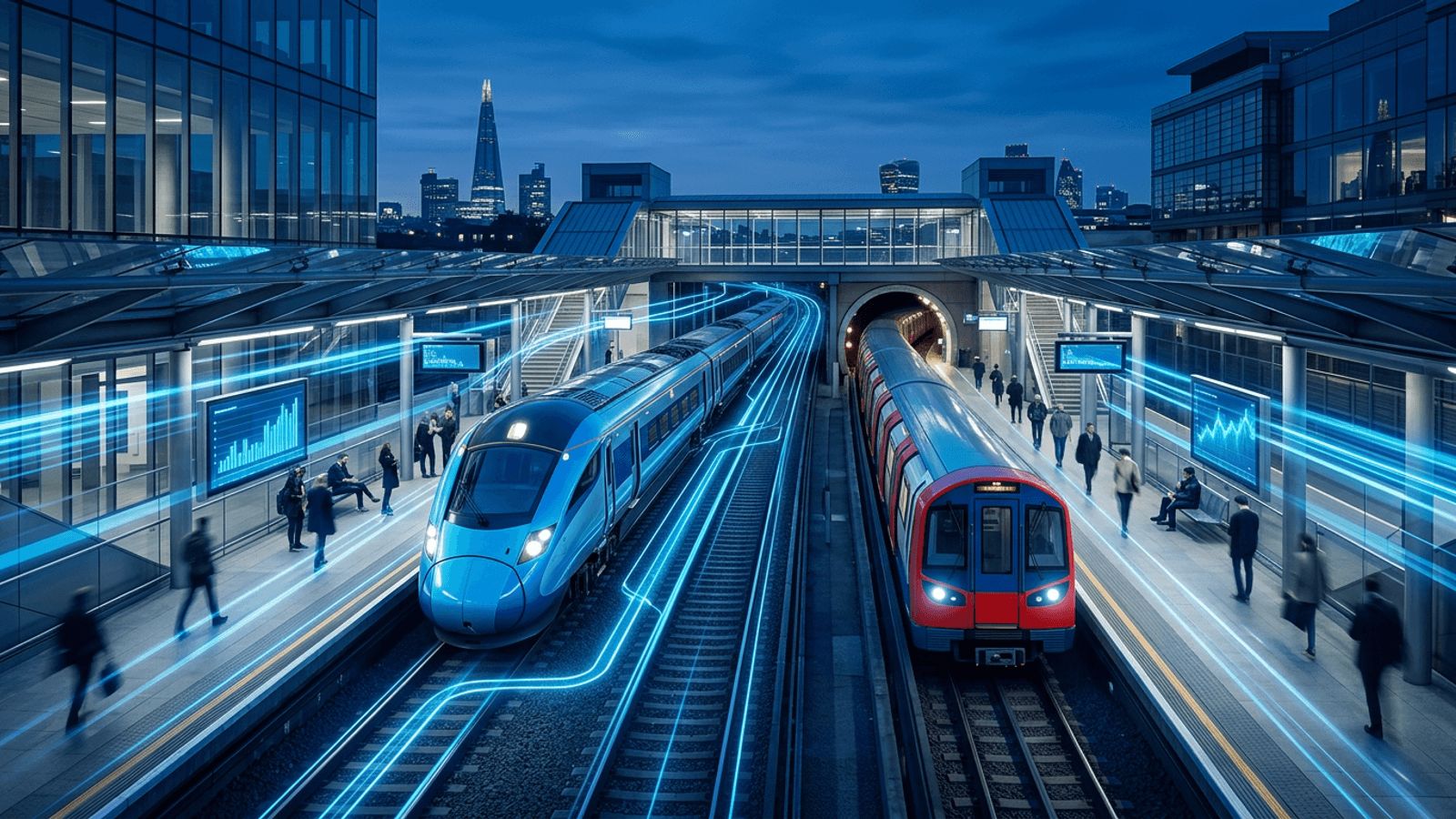
Rail at the Heart of Chelmsford
Few cities of Chelmsford's size depend on the railway as heavily. The station sits on a striking Victorian viaduct above the city centre and forms part of the Great Eastern Main Line between London Liverpool Street and Norwich. Journey times to the capital of around thirty-five minutes have made Chelmsford one of the most popular commuter locations in Essex, and the station consistently ranks among the busiest in the East of England.
Rail also shapes the city's development. Residential growth in Beaulieu Park and the northern districts has been planned around improved rail access, and a new station serving that area has been a long-running strategic priority. For businesses, the rail link is a recruitment advantage, allowing employers to draw staff from both the London labour market and the wider East Anglian region.
Understanding How British Rail Services Are Organised
Passengers often assume a single company runs everything, but the railway is layered. Train operating companies run passenger services under contracts and concessions. Network Rail owns and maintains the track, signalling, bridges and most major stations. Freight operators share the same infrastructure, running goods trains largely outside peak hours. Rolling stock companies own the trains and lease them to operators. Meanwhile, industry bodies handle ticket retailing standards, passenger compensation schemes and independent complaint resolution. Knowing which organisation does what makes it far easier to resolve a problem.
The Top 10 Best Railway Operators and Rail Organisations Serving Chelmsford
1. Greater Anglia
Greater Anglia is the principal passenger operator at Chelmsford and the one that matters most to daily life in the city. Its investment in a completely new fleet transformed the passenger experience on the Great Eastern Main Line, delivering air-conditioned electric units with better acceleration, level boarding, plug sockets, Wi-Fi and improved accessibility. Frequent services towards London Liverpool Street and northwards to Colchester, Ipswich and Norwich make it the backbone of Chelmsford travel.
2. Network Rail Anglia Route
Network Rail maintains the infrastructure that every train depends upon, including the Chelmsford viaduct, the overhead electrification and the signalling on the Great Eastern Main Line. Its route teams manage renewals, resilience work and capacity enhancement schemes, and their performance directly determines punctuality across the whole corridor.
3. c2c
Serving the south Essex corridor between London Fenchurch Street and Shoeburyness, c2c is consistently among the highest-performing operators in the country for punctuality. Chelmsford residents travelling towards Basildon, Southend and the Thames Gateway frequently use it as the second leg of a journey, and its reliability record is a genuine benchmark for the industry.
4. Elizabeth Line
The Elizabeth line has reshaped onward travel for Chelmsford commuters. Arriving at Liverpool Street gives direct access to Elizabeth line services running west towards the City, West End, Paddington and Heathrow, removing several interchanges from what used to be an awkward cross-London journey.
5. London Underground and Transport for London Rail Services
Almost every Chelmsford rail journey to the capital ends with an Underground or Docklands connection. Contactless integration, high frequencies and pay-as-you-go capping make this final leg simple, and understanding which Liverpool Street exit serves which line saves several minutes each day.
6. Stansted Express
Operated as a premium service within the Greater Anglia family, Stansted Express connects the airport with London and provides Chelmsford passengers with a straightforward rail route to Stansted via an interchange. For travellers avoiding parking charges and traffic on the M11, it is an efficient option.
7. Freightliner
Freightliner runs intermodal container trains linking Felixstowe with inland terminals across the country, and those services pass through the Great Eastern corridor. Each train removes a substantial number of lorry movements from the A12 and M25, making rail freight quietly important to the region's road congestion and air quality.
8. GB Railfreight
GB Railfreight operates a diverse portfolio including intermodal, aggregates, infrastructure and charter work. Its trains support construction supply chains across the South East and the engineering programmes that keep the network maintained, often running overnight when passenger demand is lowest.
9. DB Cargo United Kingdom
One of the largest rail freight businesses in the country, DB Cargo moves bulk commodities, automotive traffic and intermodal containers, connecting British industry with continental Europe through the Channel Tunnel. Its operations on the Anglia route contribute to the movement of goods through the East Coast ports.
10. National Rail Enquiries and Passenger Support Bodies
Behind the operators sit the organisations that make the network usable: the national enquiries service providing timetables and live running information, the delay repay compensation framework, and the independent ombudsman that resolves disputes when operators cannot. Knowing these exist turns a frustrating journey into a claimable one.
Trends Shaping the Railway
Structural reform is the biggest change, with the industry moving towards a more unified guiding body coordinating track and train and a simplified fares structure. Digital ticketing has largely replaced paper, with barcode and smartcard tickets, single-leg pricing trials and pay-as-you-go extending further into the commuter belt. Capacity investment continues on the Great Eastern Main Line, aimed at improving reliability and journey times. And travel patterns have shifted permanently, with flexible season products responding to hybrid working rather than the traditional five-day commute.
Practical Advice for Chelmsford Rail Passengers
Buy advance tickets for longer journeys towards Norwich or beyond, where savings can be substantial, but use flexible or season products for regular London travel. If you commute two or three days a week, compare flexi season options against daily returns carefully, as the break-even point is often lower than expected. Claim delay compensation whenever eligible, since the process is quick and many passengers never bother. Check engineering work before weekend travel, as the Anglia route sees regular planned closures. Use park and ride or cycle facilities rather than fighting for station parking. And download a live-running app, because knowing about a cancellation before reaching the platform is worth more than any other travel habit.
Final Thoughts
Chelmsford's railway is the single most important element of its transport infrastructure, underpinning its housing market, its labour market and its business appeal. Greater Anglia provides the daily service, Network Rail keeps the infrastructure running, connecting operators extend reach across London and the South East, and freight companies use the same corridor to keep goods off congested roads. Understanding how those pieces fit together makes rail travel from Chelmsford noticeably cheaper and less stressful.
Want your brand featured in front of decision-makers? Publish a guest post or get a link insertion in our guides through AAMAX's guest post and link insertion service.
Helpful Links
 SponsoredAAMAX — Full-Service Digital Agency
Write for Us
Share your expertise with our readers. We welcome guest contributions from industry specialists.
Pitch your idea