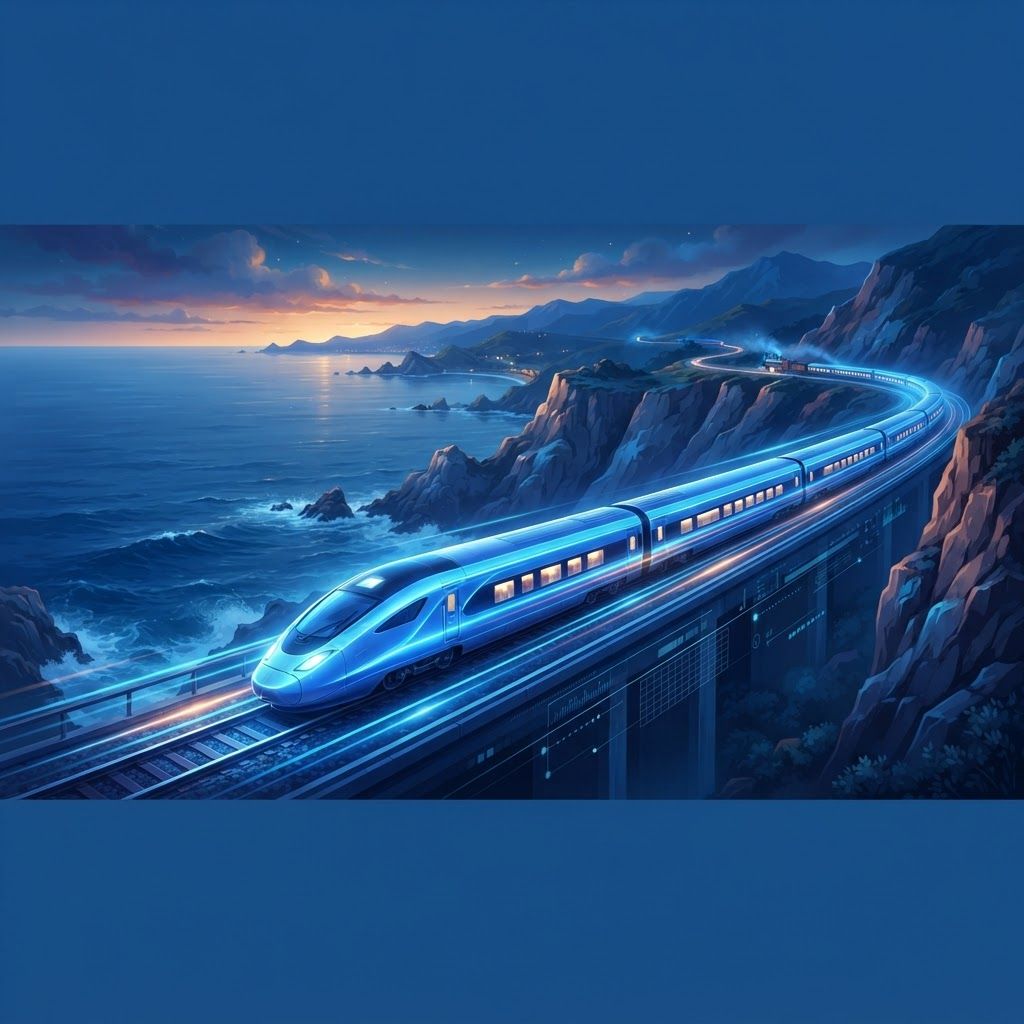
Rail in the Causeway Coast and Glens Context
Few railway journeys in these islands match the Belfast to Derry line as it runs through Causeway Coast and Glens. The stretch between Coleraine and Castlerock, curving along the shore of Lough Foyle beneath Binevenagh and through the tunnels at Downhill, is regularly named among the most beautiful rail journeys in the world. Yet the line is far more than a tourist attraction. It carries daily commuters, students travelling to university and college campuses, shoppers, and visitors arriving without cars.
The borough's rail network centres on Coleraine, which acts as the interchange point. From there the main line continues west through Castlerock, Bellarena and on towards Derry, and east towards Ballymoney, Ballymena and Belfast. A branch line runs north from Coleraine to Portrush, serving one of Northern Ireland's busiest seaside resorts and the University of Ulster campus area.
Who Operates Rail Services in the Borough
Northern Ireland Railways, operating under the Translink umbrella, is the principal passenger operator. It runs all scheduled services on the Belfast to Derry line and the Portrush branch, using modern diesel multiple unit trains with air conditioning, accessible toilets, wheelchair spaces, bicycle provision and power sockets. Translink also manages station facilities, ticketing and integration with connecting bus services.
Translink's Enterprise brand, operated jointly with Iarnród Éireann, does not serve the borough directly but is relevant for onward travel, since passengers from Coleraine can connect at Belfast for cross border services to Dublin.
Infrastructure responsibility also sits with Translink and the Department for Infrastructure, which together have overseen substantial investment in the line, including track relaying, the rebuilding of Coleraine station facilities, the comprehensive redevelopment of Portrush station ahead of major golf events, and passing loop improvements designed to increase service frequency.
Heritage rail forms a distinct and much loved category. Northern Ireland's preserved railway movement, including groups operating historic steam and diesel locomotives, periodically runs special excursions along the north coast line. The Railway Preservation Society of Ireland regularly operates steam hauled charters that pass through the borough, and the narrow gauge heritage tradition associated with the historic Giant's Causeway tramway remains part of the area's rail story.
What Makes Rail Service Quality
Frequency and timetable structure determine whether rail is genuinely usable. The service pattern between Coleraine and Belfast has improved markedly over the past decade, with hourly services for much of the day and enhanced provision during summer and major events. The Portrush branch sees intensified service during peak tourist season and for significant sporting occasions.
Reliability on a largely single track railway with passing loops requires careful operational discipline. A delay to one service can cascade across the timetable, so investment in additional loops and signalling upgrades has direct passenger benefit.
Station quality has a disproportionate effect on perception. Well lit, sheltered, accessible stations with clear real time information, secure cycle parking and good bus interchange encourage use. Coleraine and Portrush have both benefited from significant redevelopment, while smaller halts like Bellarena and Castlerock serve important rural catchments.
Rolling stock comfort matters for a line where journeys can exceed an hour. Modern units with generous window glazing suit the scenic route particularly well, and provision for bicycles supports the growing cycle tourism market along the coast.
Trends in Regional Rail
Decarbonisation is the dominant strategic theme. With transport a major contributor to regional emissions, rail's inherent efficiency advantage is being reinforced by planning for battery, hybrid and potentially hydrogen traction on regional lines. Electrification of the full network is expensive, so alternative traction technologies are receiving serious consideration.
Capacity expansion is under active discussion. Proposals to increase frequency on the Derry line and to improve journey times have strong regional support, and further passing loop construction is the practical enabler. Faster, more frequent services would make rail competitive with car travel for the Coleraine to Belfast commute in a way it has not always been.
Integrated ticketing and digital retailing continue to develop. Mobile ticketing, contactless payment at stations, and smartcard products that work across bus and rail simplify multi modal journeys, which is essential in a borough where most rail trips involve a bus connection at one end.
Tourism-led rail travel is growing. Marketing the coastal line as a destination experience in itself, combined with rail and bus combination tickets for attractions, has proved effective at shifting visitor journeys away from cars, easing parking pressure at honeypot sites.
Active travel integration is another clear trend. Secure cycle storage at stations and improved bicycle carriage on trains support combined rail and cycle journeys along the coastal route, which is one of the most attractive cycling destinations in Ireland.
Practical Guidance for Rail Users
Book ahead where possible. Advance and off peak fares offer meaningful savings compared with walk up prices, and popular summer services to Portrush can be extremely busy. Multi journey and monthly passes represent strong value for regular commuters.
Plan connections carefully. Bus links from Coleraine to Ballycastle, Bushmills and the Causeway are timed with rail arrivals, but checking the combined timetable before travelling avoids long waits, particularly on Sundays and in winter when frequencies reduce.
Consider travelling outside peak hours for the best experience of the scenic sections. Midday services are quieter and offer better opportunity to appreciate the Lough Foyle and Downhill stretches.
For group travel, enquire about group discounts and about carrying bicycles, as reservation requirements can apply during busy periods.
Why Rail Deserves Consideration
Environmental performance is the clearest advantage. Rail produces substantially lower emissions per passenger kilometre than private car travel, and for a borough whose economy depends on the quality of its natural environment, that alignment matters.
Journey quality is the second argument. Rail travel allows passengers to read, work or simply watch the coastline pass, none of which is possible when driving. For the Belfast commute, that transforms dead travel time into useful or restful time.
Congestion and parking relief is a practical benefit for coastal towns. Portrush and Portstewart face acute parking pressure during summer weekends, and rail arrivals reduce that strain considerably.
Accessibility is another consideration. Modern trains and upgraded stations provide step free access, assistance services and wheelchair spaces, offering independent travel options for passengers who cannot drive.
Final Thoughts
Rail in Causeway Coast and Glens is served principally by a single major operator, supported by infrastructure investment and enriched by a lively heritage rail tradition. The combination of practical commuter utility and world class scenery makes the network unusually valuable. Continued investment in frequency, traction technology and station quality will determine how much of the borough's travel demand rail can capture in the years ahead, but for residents and visitors today it already offers one of the most comfortable and scenic ways to move through the region.
Want your brand featured in front of decision-makers? Publish a guest post or get a link insertion in our guides through AAMAX's guest post and link insertion service.
Helpful Links
 SponsoredAAMAX — Full-Service Digital Agency
Write for Us
Share your expertise with our readers. We welcome guest contributions from industry specialists.
Pitch your idea