Why Camden Is One of the Most Rail-Connected Places in Britain
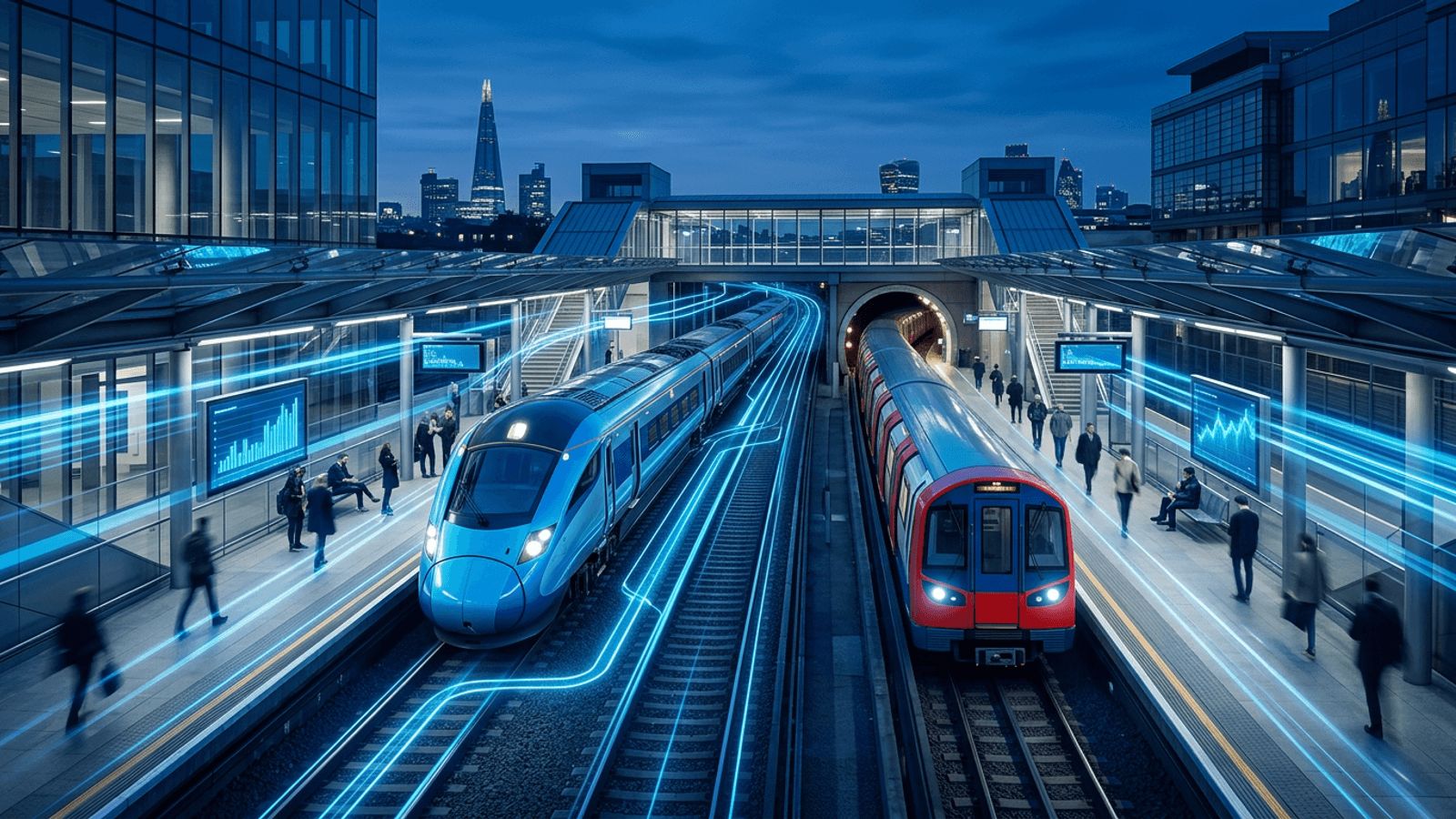
Few urban districts anywhere in the world are as thoroughly stitched into a railway network as Camden. The borough contains two of the country's busiest mainline termini, a web of suburban and orbital lines, and a cluster of interchange stations where national services, regional commuter routes and metro-style lines all meet. The famous Camden Road junctions and the approach tracks north of the termini form one of the most intensively used pieces of railway infrastructure in Europe, carrying long-distance intercity trains, freight paths and high-frequency local services on the same corridors.
For residents and visitors, this density is a genuine advantage: most journeys out of Camden can be made without a car, and many can be made without changing trains. It also means the operator you travel with matters. Different railway operators serving Camden have very different pricing structures, ticketing systems, reliability records, accessibility provisions and onboard standards. Understanding those differences is the difference between a smooth journey and an expensive, stressful one.
How Britain's Railway Operators Are Structured
Britain's railway is vertically separated. Network Rail owns and maintains the track, signalling, tunnels, bridges and the largest stations, while train operating companies run the services that use that infrastructure. Some operators are private companies working under contract, some are publicly owned through the Department for Transport's operator of last resort arrangements, some are devolved to Transport for London or regional transport bodies, and a small number are open-access operators competing commercially on specific routes.
This structure explains a lot of the variation passengers experience. An operator running a devolved metro service is measured on frequency and turn-up-and-go convenience. An intercity operator is measured on journey time, seat comfort and yield management. An open-access operator competes primarily on price and customer service. None of these models is inherently better; they are optimised for different kinds of journeys.
The Leading Railway Operators Serving Camden
Avanti West Coast operates long-distance intercity services from Camden's western mainline terminus toward the West Midlands, the North West, North Wales and central Scotland. It is the operator of choice for business travel and long journeys where tilting high-speed stock, reserved seating, catering and first-class provision matter. Advance fares booked early are typically far cheaper than walk-up prices.
London North Eastern Railway runs the East Coast route from the borough's eastern terminus toward Yorkshire, the North East and Scotland. Publicly owned, LNER has built a strong reputation for its simplified single-leg pricing trials, its flagship bi-mode fleet and consistently high customer satisfaction on long-distance comfort.
London Overground, contracted by Transport for London, provides the orbital services through Camden Road and neighbouring stations that link the borough east–west across north London without going through the centre. It is turn-up-and-go, contactless, integrated with the wider fare structure, and indispensable for local cross-city commuting.
Thameslink delivers high-frequency north–south cross-London services through the borough's southern edge, connecting Bedfordshire and Cambridgeshire with Gatwick and Brighton. Its automatic train operation through the central core allows exceptionally dense timetabling.
Southeastern, also publicly owned, uses the same north–south corridor for services toward Kent, offering Camden travellers direct access to the south-eastern commuter belt and coastal towns.
Great Northern covers the Hertfordshire and Cambridgeshire commuter market, running the inner suburban services that many Camden professionals rely on for reverse commuting to business parks north of the capital.
West Midlands Trains, operating as London Northwestern Railway, runs the semi-fast and stopping services on the West Coast corridor, offering considerably cheaper fares than intercity alternatives for anyone willing to accept a longer journey.
Lumo is the open-access, all-electric operator on the East Coast route, built around a single-class, low-fare, digital-only model. It has become popular with price-conscious leisure travellers heading north and has one of the lowest carbon footprints per passenger mile in the industry.
Grand Central, another open-access operator, serves communities on the East Coast route that would otherwise have no direct link to the capital, and is known for straightforward pricing and attentive onboard service.
Eurostar completes the picture, running international high-speed services from the borough's eastern international terminal to Paris, Brussels, Lille, Rotterdam and Amsterdam, with dedicated border controls and premium cabin options.
Industry Trends Shaping Rail Travel in Camden
Three shifts are reshaping the passenger experience. The first is decarbonisation. Bi-mode and battery-assisted fleets are replacing older diesel stock, and fully electric operators are marketing their emissions advantage aggressively to a market that increasingly compares rail against short-haul flying on carbon as well as cost.
The second is ticketing reform. Pay-as-you-go contactless coverage keeps expanding outward from the capital, single-leg pricing pilots are dismantling the illogic of return fares, and digital season tickets now flex around hybrid working patterns rather than assuming five days in the office. Camden commuters who still buy paper annual seasons out of habit are often overpaying.
The third is structural reform of the industry itself, with contracts progressively transferring into a unified public body. In practice this should mean more consistent standards, but during transition it also means brand changes and evolving compensation policies that passengers should keep an eye on.
How to Choose the Right Operator for Your Journey
Match the operator to the trip. For time-critical long-distance travel, the intercity operators justify their premium through speed and seat reservations. For value on the same corridors, the semi-fast and open-access operators frequently undercut them by a wide margin if you can travel off-peak and book ahead. For local movement within north London, the metro-style operators are almost always faster than they look on a map because frequency beats raw speed on short hops.
Check accessibility provision before you travel. Step-free access varies significantly between Camden's stations, and passenger assistance is best booked in advance even though most operators now accept requests with very short notice. Families should compare child fare policies and luggage allowances, which differ more than most passengers realise. Anyone travelling with a bicycle should verify reservation requirements, as intercity services restrict cycle spaces while orbital services are generally more permissive outside peak hours.
Making the Most of Camden's Rail Network
The practical advice for Camden travellers is to think of the borough's stations as a single system rather than as separate destinations. A ten-minute walk or one stop on an orbital service often unlocks a cheaper or faster option on an entirely different operator. Split-ticketing remains legitimate and can produce meaningful savings on longer routes. Delay repay compensation is worth claiming; operators pay out reliably, and most claims take only a few minutes to submit.
Camden's railway heritage is not just decorative history. The engine sheds, the canal-side goods yards and the deep cuttings that shaped the district in the nineteenth century are the same corridors carrying today's passengers. Choosing the right operator for the right journey is how modern travellers get the best out of that inheritance.
Want your brand featured in front of decision-makers? Publish a guest post or get a link insertion in our guides through AAMAX's guest post and link insertion service.
Helpful Links
 SponsoredAAMAX — Full-Service Digital Agency
Write for Us
Share your expertise with our readers. We welcome guest contributions from industry specialists.
Pitch your idea