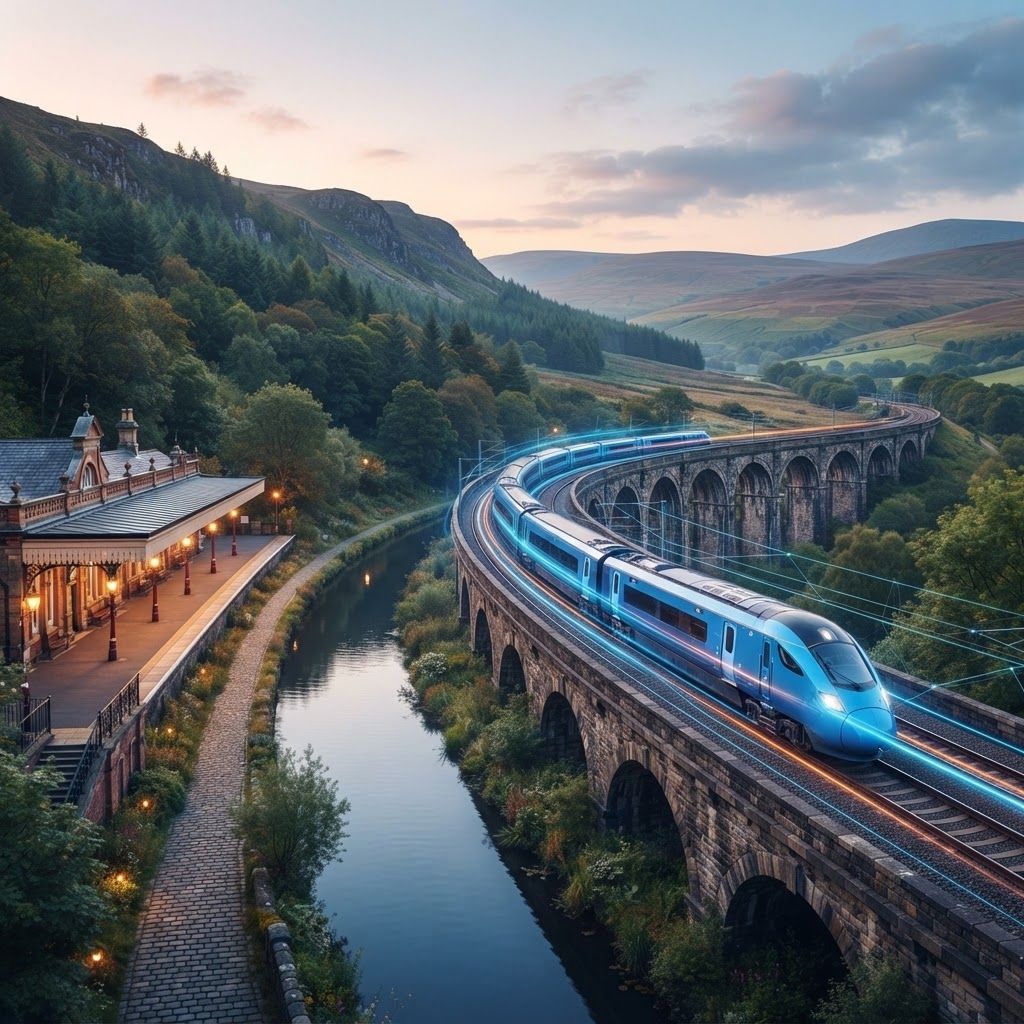
The Calder Valley Line and Its Importance
Few districts of Calderdale's size depend on a railway as heavily as this one. The Calder Valley line threads along the valley floor, serving Halifax, Sowerby Bridge, Mytholmroyd, Hebden Bridge and Todmorden, with connections onward to Leeds, Bradford, Manchester, Preston and Blackpool. Additional services run through Brighouse and Elland towards Huddersfield and Wakefield.
The line does three jobs at once. It carries commuters to the Leeds and Manchester economies, making Calderdale a viable place to live for people working in either city. It brings visitors into the valley, supporting the tourism economy in Hebden Bridge and Halifax. And it provides essential local mobility for residents without cars, in a district where road journeys along the valley are frequently congested.
Stations such as Hebden Bridge and Halifax are also notable in their own right, the former for its restored period character and the latter as a significant regional interchange with the bus station adjacent.
The Top 10 Railway Operators and Rail Organisations
1. Northern. The principal operator on the Calder Valley line, providing the local stopping services that call at every Calderdale station. The backbone of daily travel in the district, with app ticketing and a steadily modernising fleet.
2. TransPennine Express. Runs faster services on Pennine corridors, valuable for longer journeys towards Manchester Airport, Leeds, York and the North East, offering higher-specification rolling stock.
3. Grand Central. Open-access operator providing direct services to London from West Yorkshire stations, useful for Calderdale travellers connecting at Halifax or Bradford.
4. Network Rail. Owns and maintains the track, signalling, bridges and larger stations. Its work on drainage, embankment stability and flood resilience along the Calder Valley is critical to service reliability.
5. West Yorkshire Combined Authority Transport. The regional transport body responsible for local ticketing schemes, station investment and integration between rail and bus, including multi-modal passes.
6. Keighley and Worth Valley Railway. Nearby heritage railway with strong visitor appeal and Brontë-country associations, frequently combined with Calderdale itineraries by tourists.
7. East Lancashire Railway. Heritage operator across the Pennine boundary, accessible from the western end of the district and popular for family days out.
8. Rail Freight Operators on the Calder Valley Route. Freight services using the corridor for aggregates, intermodal containers and engineering trains, an often-overlooked but economically significant use of the line.
9. Community Rail Partnerships for the Calder Valley. Volunteer-supported organisations improving station environments, gardens, artwork and local promotion, with a measurable effect on passenger experience and station usage.
10. Rail Replacement and Engineering Support Operators. Contracted coach and logistics providers who maintain connectivity during planned engineering works, a routine but essential part of the network's operation.
Travelling Effectively by Rail
Buy the right ticket. Advance fares offer significant savings on longer journeys to London, Manchester or the North East, but are tied to specific trains. Off-peak returns provide flexibility for day trips, and regional multi-modal passes covering rail and bus are excellent value for exploring the valley.
Season tickets and flexible carnet-style products suit commuters, particularly those working hybrid patterns who no longer need five days of travel. Railcards produce substantial discounts for eligible passengers and pay for themselves quickly on Leeds or Manchester journeys.
Check engineering works before travelling, especially at weekends and bank holidays, when the Pennine routes see regular renewal work. Plan for capacity on summer weekends, when trains towards Manchester and the coast fill early.
Rail as a Tourism Asset
The line is arguably Calderdale's most effective tourism infrastructure. Walkers can travel to Hebden Bridge or Todmorden, complete a linear moorland route and return by train from a different station, which is far more satisfying than out-and-back walking. The Pennine Way, Calderdale Way and Rochdale Canal towpath are all accessible directly from stations.
This also supports the district's sustainability credentials, allowing genuinely car-free visits to a rural upland area, which remains unusual in England.
Challenges and Investment
The route faces real constraints. It runs through a narrow, flood-prone valley, and severe weather events have caused significant disruption. Substantial resilience work on drainage and embankments has followed. Capacity is limited by single and double track sections shared with freight, and journey times reflect the alignment's Victorian engineering.
Investment priorities include electrification of Pennine routes, further rolling stock renewal, station accessibility improvements including step-free access, and better integration of ticketing across rail and bus. Improvements at Halifax station and continued community rail activity at smaller stations have already improved perceptions markedly.
Final Thoughts
The railway is central to how Calderdale works, connecting a rural Pennine district to two major city economies while opening the moors to visitors arriving without a car. Northern provides the essential local service, longer-distance and open-access operators extend the reach, and the infrastructure and community organisations quietly keep it functioning. Learn the ticketing options, check engineering works, and the Calder Valley line becomes one of the most useful assets available to residents and visitors alike.
Want your brand featured in front of decision-makers? Publish a guest post or get a link insertion in our guides through AAMAX's guest post and link insertion service.
Helpful Links
 SponsoredAAMAX — Full-Service Digital Agency
Write for Us
Share your expertise with our readers. We welcome guest contributions from industry specialists.
Pitch your idea